


NARMA Launches PXN Flight Control Software for U.S. Drone Makers
NARMA has launched PXN in the U.S., a security hardened flight control software platform built for drone manufacturers, integrators, and enterprise operators.

Lantronix and DoD Solution have completed integration of DoD Solution's AURA AI autonomy platform with Lantronix's Open-Q 6490CS edge compute solution, with initial production now underway for drone systems used in Ukraine.
LG Innotek and TDK Corporation have partnered to develop vision and tactile sensing modules for physical AI systems, including robot modules that detect contact and pressure.
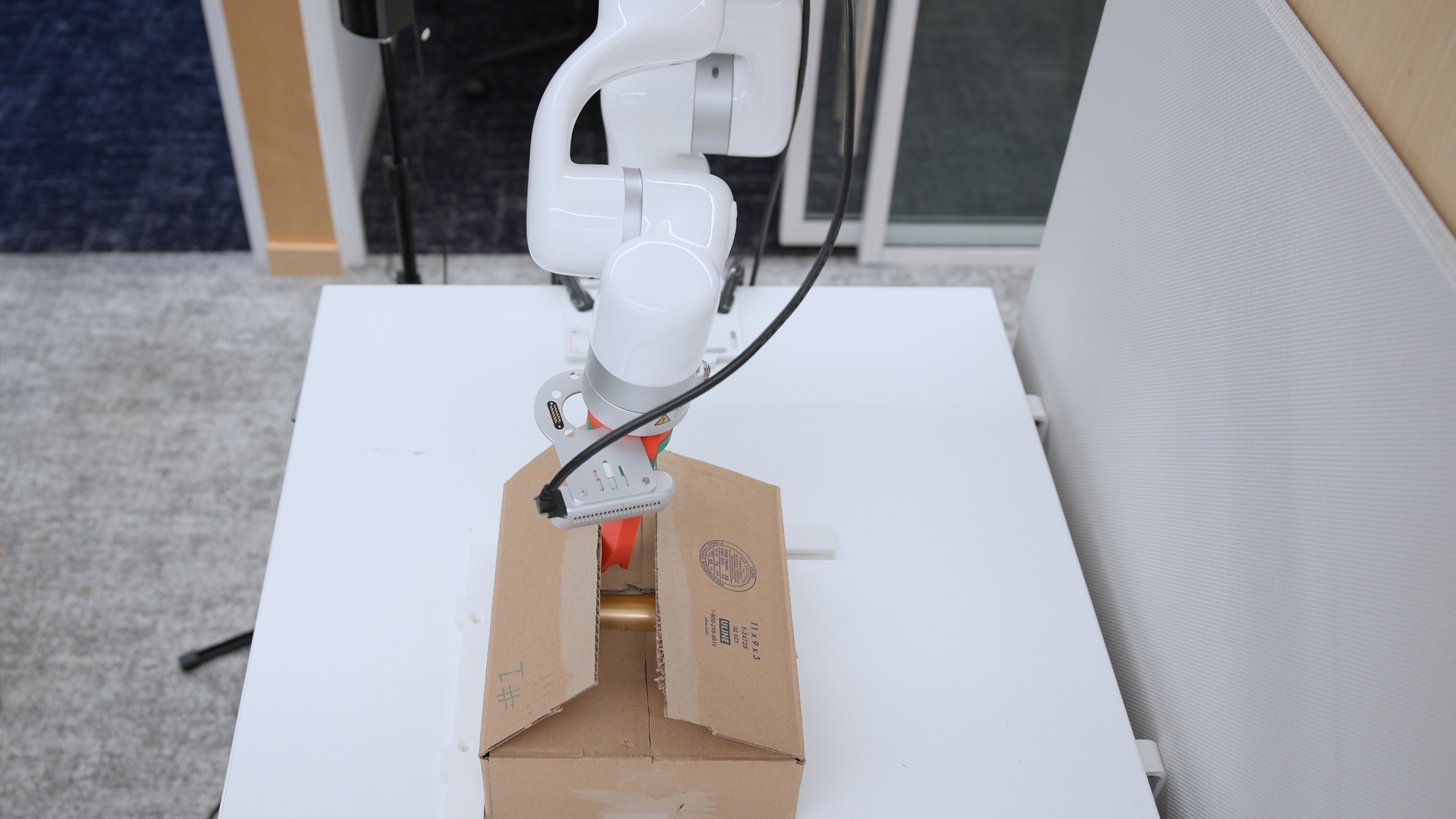
Tacta Systems has unveiled TactaBot, a robotic hand system for high value manufacturing tasks. The system combines the Tacta Hand, Skill Capture, and a Dexterous Intelligence AI model, with shipments planned for early 2027.
Enigma has raised a $70 million seed round to test how people communicate with robots through an online experiment using more than 100 proprietary robots.
deliverz.ai has introduced its AI powered hospital logistics orchestration platform to healthcare organizations in the United States.
Shanghai Electric showed humanoid robots, pipe processing robots, robot components, and 51 industrial AI agents at WAIC 2026 in Shanghai.
BAUHAUS has deployed an XYZ Robotics goods receiving automation system at its central warehouse in Krefeld, Germany, using Rocky robots to unload, sort, and palletize incoming cartons.
Hyundai Motor Group Executive Chair Euisun Chung presented a Physical AI strategy at the San Francisco AI Summit, covering vehicles, robots, AI factories, and city level systems.
Skydio's X10, Dock for X10, and R10 have been added to the Blue UAS Cleared List, making the systems eligible for federal procurement and grant programs without additional waivers.
HDT Robotics, doing business as BLADE, was selected as one of five partners for the U.S. Army Project Sustainment initiative and will propose its Dire WOLF unmanned ground vehicle.
Ultra Maritime's Sea Spear sonar system detected, tracked, and classified unmanned underwater vehicles during the U.S. Navy Lanternfish 2026 exercise in Washington.
Amap, Alibaba’s location-based services platform, has released a full stack upgrade to its ABot embodied AI system, adding new models for navigation, manipulation, reasoning, memory, and motion control.
TARS presented its AWE 3.5 embodied foundation model at WAIC 2026 in Shanghai, earning the prestigious SAIL Award for technical innovation. The model improves efficiency and performance in real-world robotic tasks through advanced perception and control capabilities.
Moon Surgical has entered a strategic commercial collaboration with KARL STORZ to integrate the Maestro platform with KARL STORZ 3D visualization and instrumentation, aiming to expand access to advanced laparoscopic surgery.
Sentante has received CE marking for its haptic endovascular robotic platform designed for remote vascular procedures. The system captures force, torque, and motion data from each procedure, laying the groundwork for future AI-supported endovascular interventions.
MDA Space Ltd. has received a pre-authorisation contract from OHB System AG to provide advanced lunar landing sensors for the European Space Agency's Argonaut mission. The sensors will support autonomous lunar landings through LiDAR-based hazard detection and avoidance technology.
Uforce has signed a memorandum of understanding with U.S. boat builder Reconcraft to jointly produce autonomous surface vessels in the United States. The deal will bring Uforce's combat-proven MAGURA drone technology to American manufacturing under the Arsenal of Freedom initiative.
The Alliance for OpenUSD announced new members including ByteDance, Huawei, Physicl, and Unity, alongside progress on ISO certification for its Core Specification 1.1 at SIGGRAPH 2026, extending OpenUSD’s role in AI and 3D data interoperability.
Microagi has announced a collaboration with Google Cloud that uses NVIDIA’s Blackwell platform to accelerate the training of AI models for robotics. The partnership will allow Microagi to scale its infrastructure and deliver customizable robotics software for enterprise use.