ROBOTERA's VPP2 Tops RoboDojo Robot Manipulation Benchmark
Oct 12, 2026
Robotics
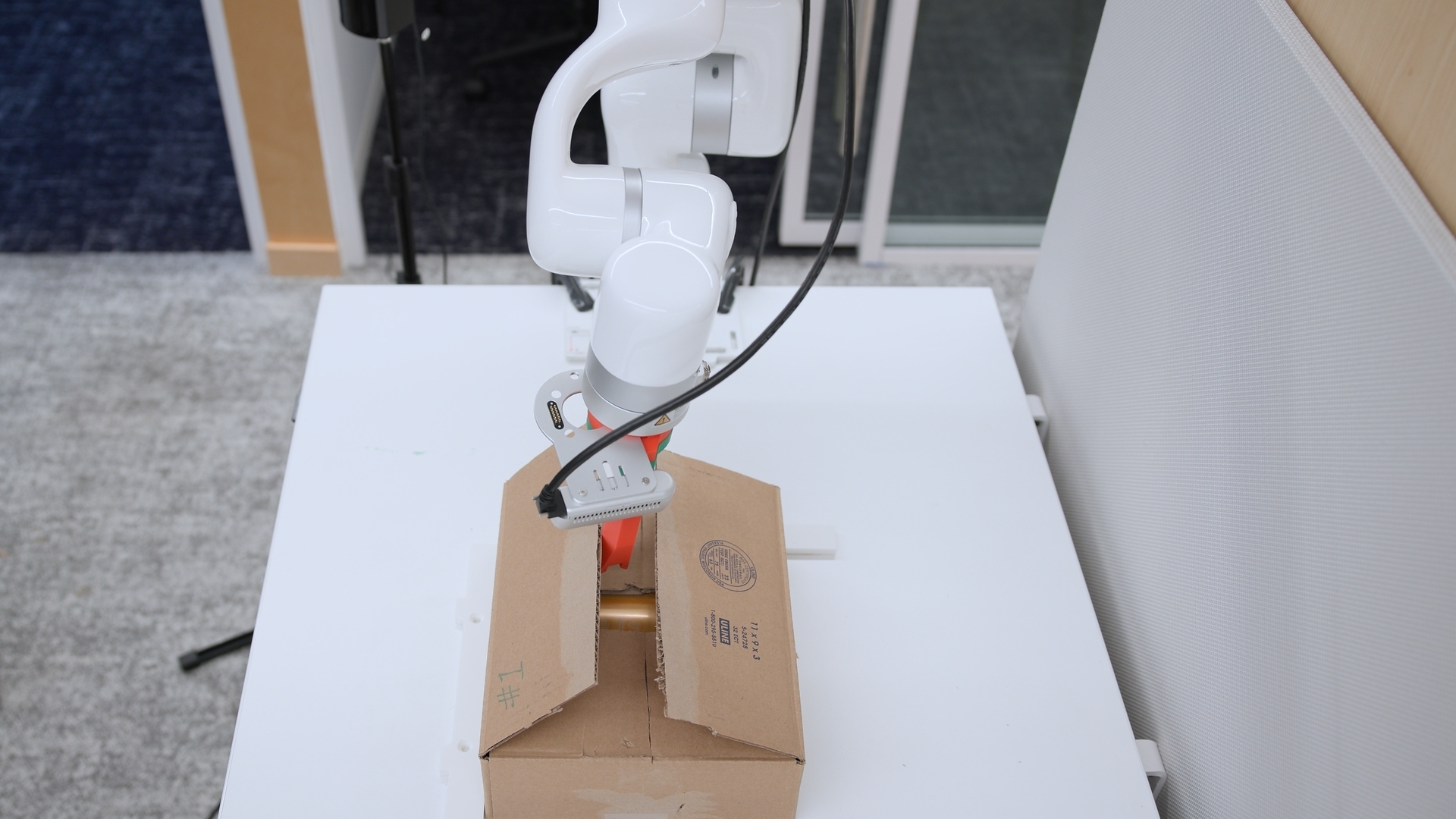
Viam AI will debut BoxBot at IROS 2026 in Pittsburgh from September 27 to October 3, the company announced in a press release. The research robot uses image based visual servoing to cut tape seams and a vision language action model to open cardboard box flaps.
The system runs a fine tuned SmolVLA model locally on an NVIDIA Jetson Orin Nano. Engineers trained it from 125 human demonstrations collected with a virtual reality controller over about five hours across four days, then tuned the model with LeRobot on Hugging Face Jobs.
Viam released the code and training data publicly on Hugging Face. IROS attendees can watch BoxBot operate and test virtual reality teleoperation and SO-101 leader follower stations at Booth 828.
Consider subscribing to one of our newsletters like Robotics Brief, Industrial AI Weekly or Daily AI Brief.
Also, consider following us on social media:
The latest advancements in smart manufacturing, predictive maintenance, AI-driven quality control, supply chain & more.

The largest announced contracts to buy chips or cloud capacity for AI

 Tensordyne
This Tensordyne whitepaper presents Napier, an inference-focused AI processor and rack-scale system based on the company’s TDN Math logarithmic number system. It examines infrastructure requirements for large mixture-of-experts and agentic models, compares major inference architecture approaches, and details the TDN AIP processor, TDN72 pod, TDN Link fabric, and Napier Ultra configuration. The paper reports simulation-based performance, cost, and accuracy-validation results, including Tensordyne’s projected comparison of one Napier rack with a nine-rack Nvidia Rubin plus Groq deployment; the chip is reported as taped out and in fabrication.
Read moreDaily AI Brief: the AI news that matters, in your inbox.