Volkswagen Builds Autonomous Vehicle Data System With NVIDIA, Microsoft and Voxel51
Oct 21, 2026
Autonomous Vehicles
Qvyon, a startup that builds validation software for robots and autonomous vehicles, has launched with $8 million in funding led by MaC Venture Capital, with BDC Capital, BKR Capital and Spotlight VP participating, SiliconANGLE reported.
Its first product, Mimic Core, takes camera, lidar and radar recordings from the field, rebuilds the scenes in 3D over time and generates harder variations, such as a car cutting in front of a truck in heavy rain or a blocked robot sensor. Engineers can then test AI models against those scenarios in simulation instead of collecting new field data each time, and get traceable datasets as evidence that a system is ready.
Mimic Core is available now as a cloud service with a 14-day guided evaluation or as self-hosted software. "Companies need to test what happens in their own vehicles and factories by using their own recordings," said co-founder and CEO Frantz Saintellemy. The money funds a rollout in the US, Europe and Japan, with two more products planned for 2027.
Consider subscribing to one of our newsletters like AI Funding Brief, Robotics Brief or Daily AI Brief.
Also, consider following us on social media:
Weekly coverage of AI-driven robotics advances in industrial automation, autonomous vehicles, and robotic systems.
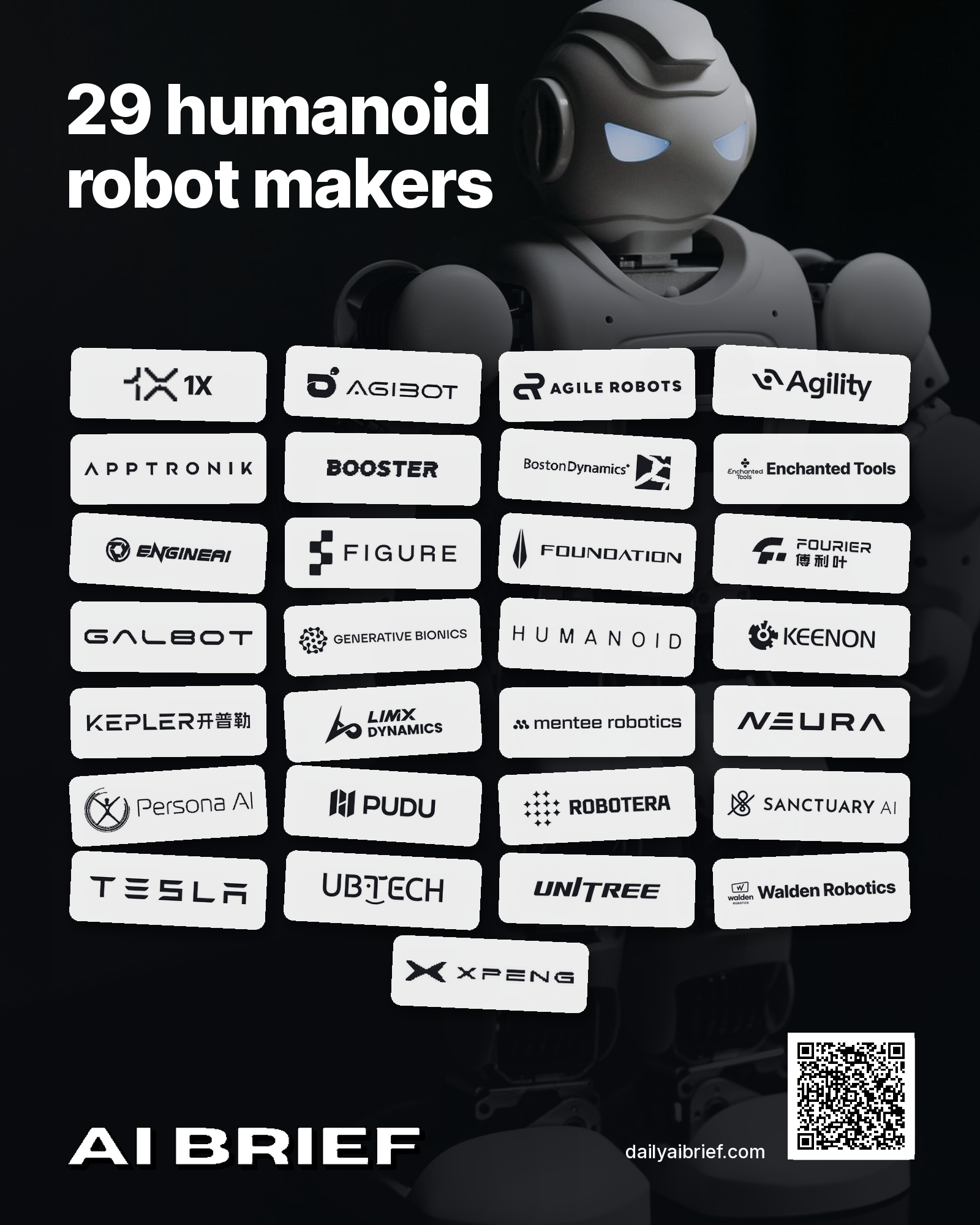
Companies building humanoid robots, from startups to Tesla and Boston Dynamics

 Tensordyne
This Tensordyne whitepaper presents Napier, an inference-focused AI processor and rack-scale system based on the company’s TDN Math logarithmic number system. It examines infrastructure requirements for large mixture-of-experts and agentic models, compares major inference architecture approaches, and details the TDN AIP processor, TDN72 pod, TDN Link fabric, and Napier Ultra configuration. The paper reports simulation-based performance, cost, and accuracy-validation results, including Tensordyne’s projected comparison of one Napier rack with a nine-rack Nvidia Rubin plus Groq deployment; the chip is reported as taped out and in fabrication.
Read moreDaily AI Brief: the AI news that matters, in your inbox.