Mastercard Opens Agent Pay for Machines to Early Access
Oct 20, 2026
FinTech
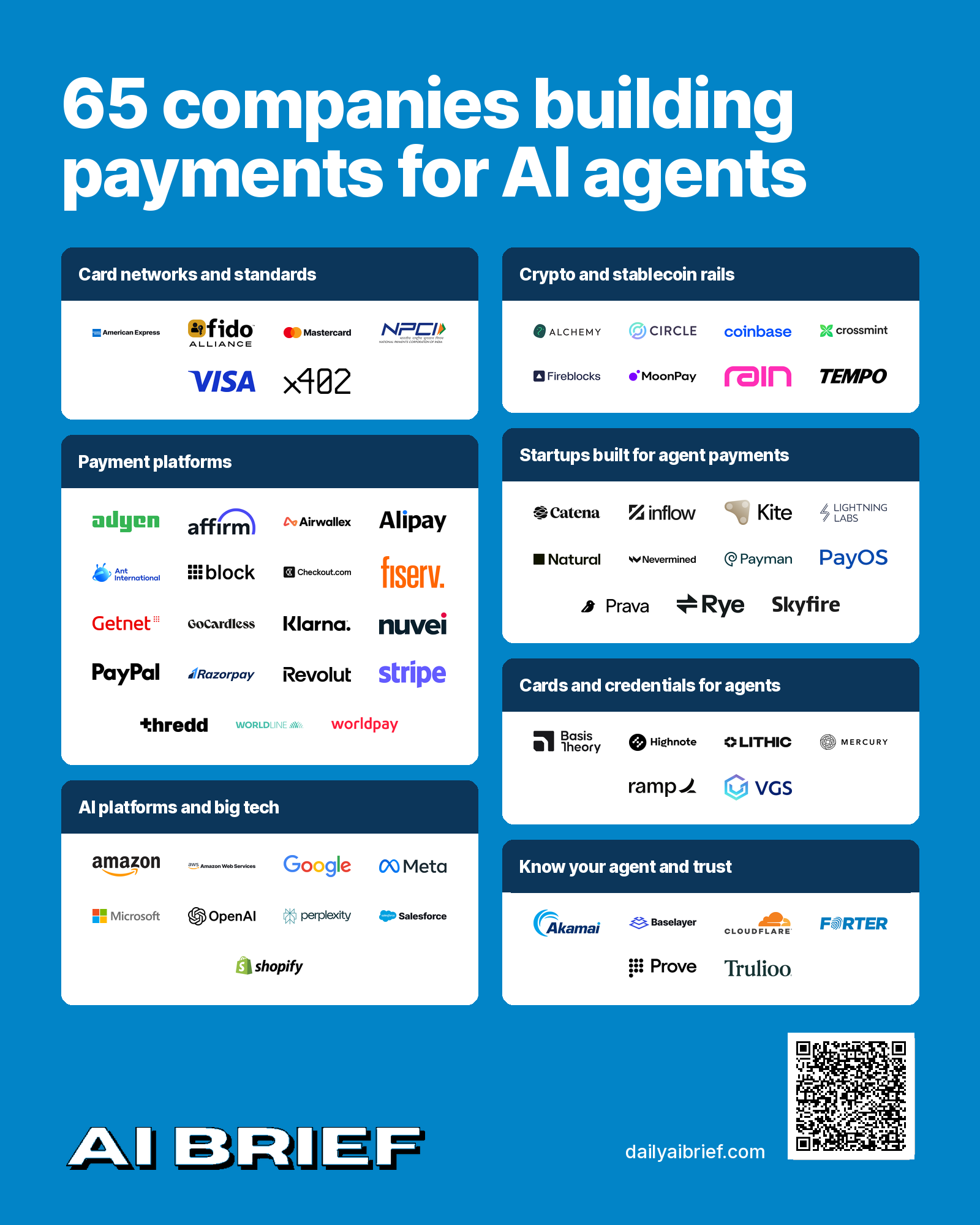
Mastercard and TenPay Global, the cross-border payment platform of Tencent, signed a memorandum of understanding on 2 November to explore agentic payments and cross-border payment interoperability, PYMNTS reported, citing Mastercard's press release. The proposed collaboration covers QR acceptance for international visitors in mainland China, remittances into the Weixin and WeChat ecosystem, and AI-enabled commerce.
For AI-enabled commerce, the two companies will explore Mastercard Agent Pay, Mastercard Agent Connect and Virtual C-Suite. "Looking ahead, the collaboration will explore how the same principles of interoperability, trust and security can extend to agentic commerce, as AI agents reshape how consumers and businesses discover, decide and transact," Mastercard said.
The memorandum follows a broad strategic partnership with OpenAI that Mastercard chief executive Michael Miebach described on the company's 29 October earnings call. "Our agreement establishes collaboration across payments, joint services growth and AI transformation," he said, adding that it includes Agent Pay, the company's tokenized payment infrastructure for AI shopping agents.
Consider subscribing to one of our newsletters like Finance AI Weekly, Enterprise AI Brief or Daily AI Brief.
Also, consider following us on social media:
Weekly newsletter about AI in finance. Covers AI-driven trading, fintech innovations, and data analytics transforming markets

 Tensordyne
This Tensordyne whitepaper presents Napier, an inference-focused AI processor and rack-scale system based on the company’s TDN Math logarithmic number system. It examines infrastructure requirements for large mixture-of-experts and agentic models, compares major inference architecture approaches, and details the TDN AIP processor, TDN72 pod, TDN Link fabric, and Napier Ultra configuration. The paper reports simulation-based performance, cost, and accuracy-validation results, including Tensordyne’s projected comparison of one Napier rack with a nine-rack Nvidia Rubin plus Groq deployment; the chip is reported as taped out and in fabrication.
Read moreDaily AI Brief: the AI news that matters, in your inbox.