Physical Intelligence Seeks $20 Billion Valuation in Funding Talks
Oct 27, 2026
Funding
Physicl raised $10 million in seed funding from Inovia Capital, according to TechCrunch. The startup provides realistic 3D simulations and synthetic data for training robots and physical AI models.
Physicl is releasing Studio with 10,000 3D environments and 100,000 digital assets. Customers can create scenes that target specific problems, such as recognizing a cup on a cluttered counter or in shadow.
Founder and CEO Alex de Vigan previously built nfinite, a platform for creating 3D product models and images for retailers. Physicl uses technology from that business to convert incomplete real world information into digital representations with defined geometry, materials and physics.
World model company SpAItial used Physicl data to improve its models, including Echo-3. Physicl plans to let customers convert large collections of images and LIDAR captures into 3D environments that can generate multiple training scenarios.
Consider subscribing to one of our newsletters like AI Funding Brief, Robotics Brief or Daily AI Brief.
Also, consider following us on social media:
Weekly coverage of AI-driven robotics advances in industrial automation, autonomous vehicles, and robotic systems.
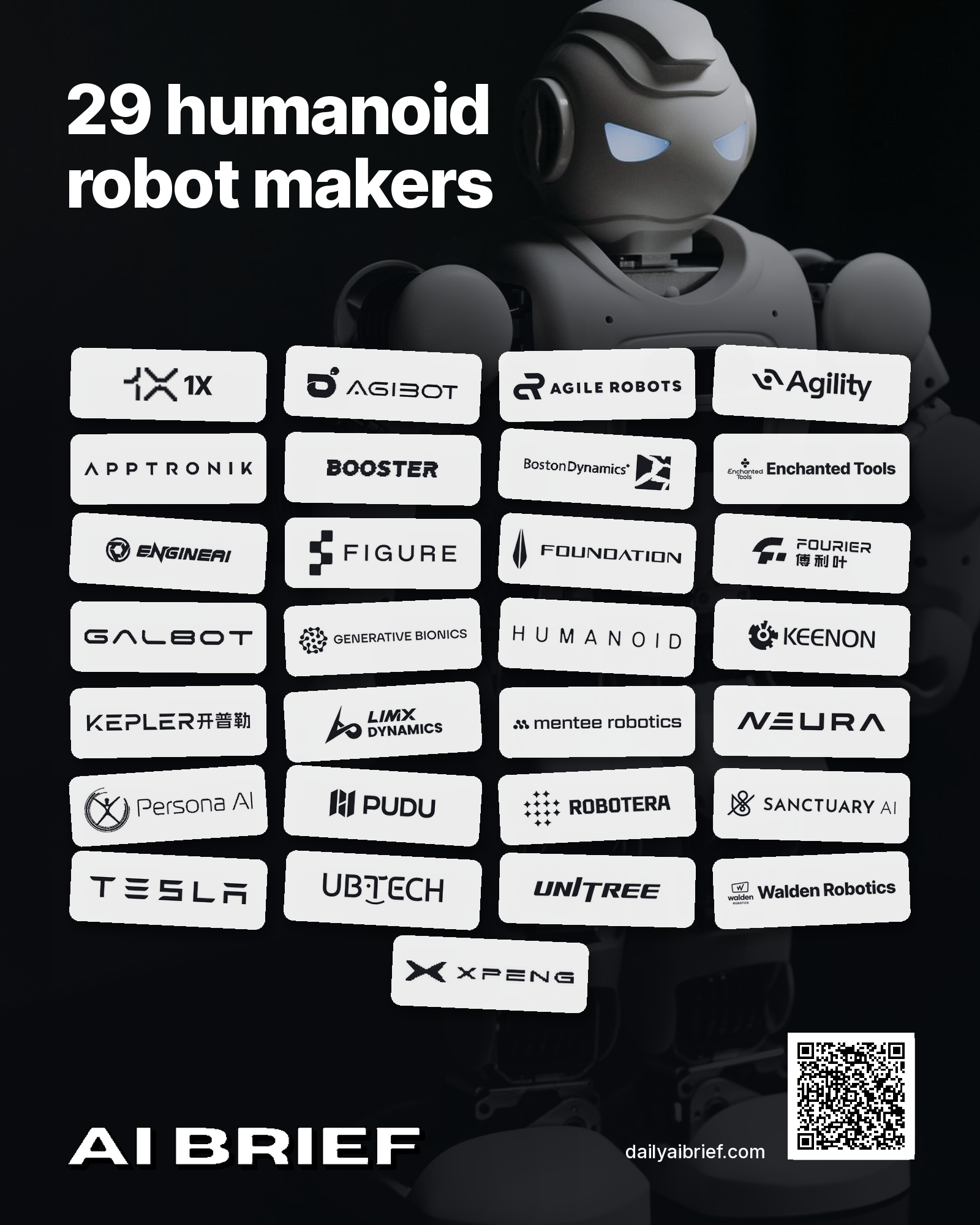
Companies building humanoid robots, from startups to Tesla and Boston Dynamics

 Tensordyne
This Tensordyne whitepaper presents Napier, an inference-focused AI processor and rack-scale system based on the company’s TDN Math logarithmic number system. It examines infrastructure requirements for large mixture-of-experts and agentic models, compares major inference architecture approaches, and details the TDN AIP processor, TDN72 pod, TDN Link fabric, and Napier Ultra configuration. The paper reports simulation-based performance, cost, and accuracy-validation results, including Tensordyne’s projected comparison of one Napier rack with a nine-rack Nvidia Rubin plus Groq deployment; the chip is reported as taped out and in fabrication.
Read moreDaily AI Brief: the AI news that matters, in your inbox.