Teradyne Robotics and Sereact Partner on Industrial Robot AI
Oct 21, 2026
Robotics
Serve Robotics is launching a business called Physical AI Services to supply connectivity and data tools to other robotics companies, according to TechCrunch. The company will continue operating its sidewalk delivery robots and hospital robots while selling technology developed for its own fleets.
The business offers three products. Serve Link connects robots in the field with AI systems in data centers. A data curation tool identifies edge cases in information collected by robots, while a foundation model data catalog provides data from Serve's sidewalk robots for training models to understand human environments.
Bedrock Robotics, which develops autonomous systems for construction equipment, is a customer. Serve is also working with T-Mobile to bring AI computing resources closer to robots.
Consider subscribing to one of our newsletters like Robotics Brief or Daily AI Brief.
Also, consider following us on social media:
Weekly coverage of AI-driven robotics advances in industrial automation, autonomous vehicles, and robotic systems.
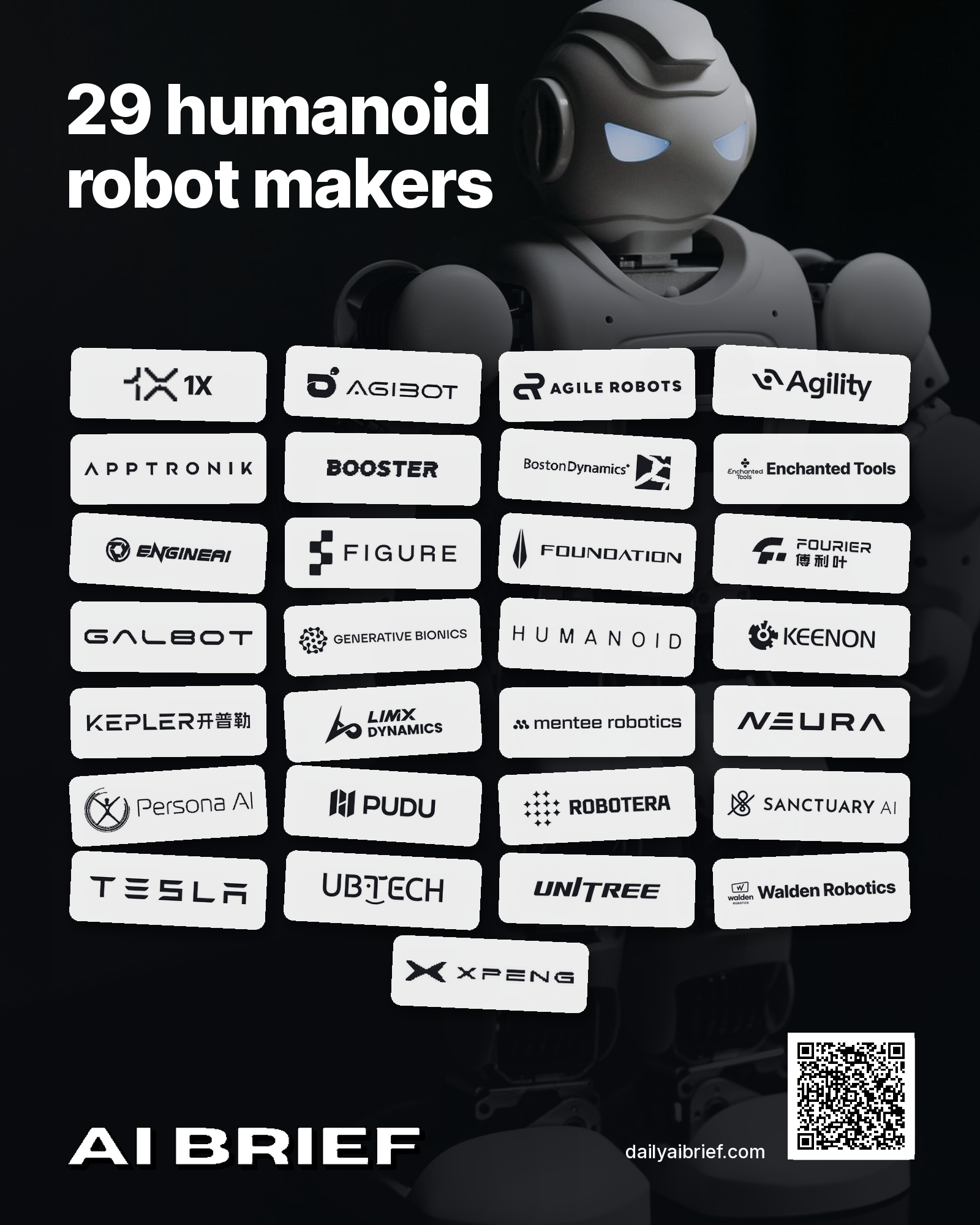
Companies building humanoid robots, from startups to Tesla and Boston Dynamics

 Tensordyne
This Tensordyne whitepaper presents Napier, an inference-focused AI processor and rack-scale system based on the company’s TDN Math logarithmic number system. It examines infrastructure requirements for large mixture-of-experts and agentic models, compares major inference architecture approaches, and details the TDN AIP processor, TDN72 pod, TDN Link fabric, and Napier Ultra configuration. The paper reports simulation-based performance, cost, and accuracy-validation results, including Tensordyne’s projected comparison of one Napier rack with a nine-rack Nvidia Rubin plus Groq deployment; the chip is reported as taped out and in fabrication.
Read moreDaily AI Brief: the AI news that matters, in your inbox.