NVIDIA Partners Expand European AI Clouds and Agent Controls
Oct 21, 2026
AI Agents
NVIDIA detailed how European retailers use its open models and physical AI tools, in a blog post published around GTC Berlin. The biggest number came from Shopify: it post-trained NVIDIA's Nemotron 3.5 Lightning for a GraphQL subagent in Sidekick, its assistant for merchants, and says the model beat a leading frontier model on its internal benchmark while cutting serving costs by 90% and answering 7 times faster.
Online pet retailer Zooplus rebuilt its product search with Infosys and reached 86% search accuracy in a prototype running in its AWS environment. Photoroom standardizes about 40,000 listing images a day for Vestiaire Collective; those listings sold at a 5% higher rate. Mirakl's Catalog Transformer, which runs open models on its own infrastructure and European clouds such as Scaleway, has onboarded more than 70 million products.
On the physical side, Otto Group extended its simulated, human-supervised autonomous warehouse project, built with Reply on NVIDIA Omniverse, to its largest fulfillment center in Haldensleben, Germany. L'Oréal is using NVIDIA ALCHEMI to screen ingredient combinations in hours instead of months, and virtual try-on company CATCHES reported conversion up 55% in its deployment with AMIRI.
Consider subscribing to one of our newsletters like Robotics Brief, Retail & Ecommerce AI Weekly or Daily AI Brief.
Also, consider following us on social media:
The weekly on AI in retail and ecommerce: shopping agents, online stores and marketplaces, checkout, and AI inside physical stores.


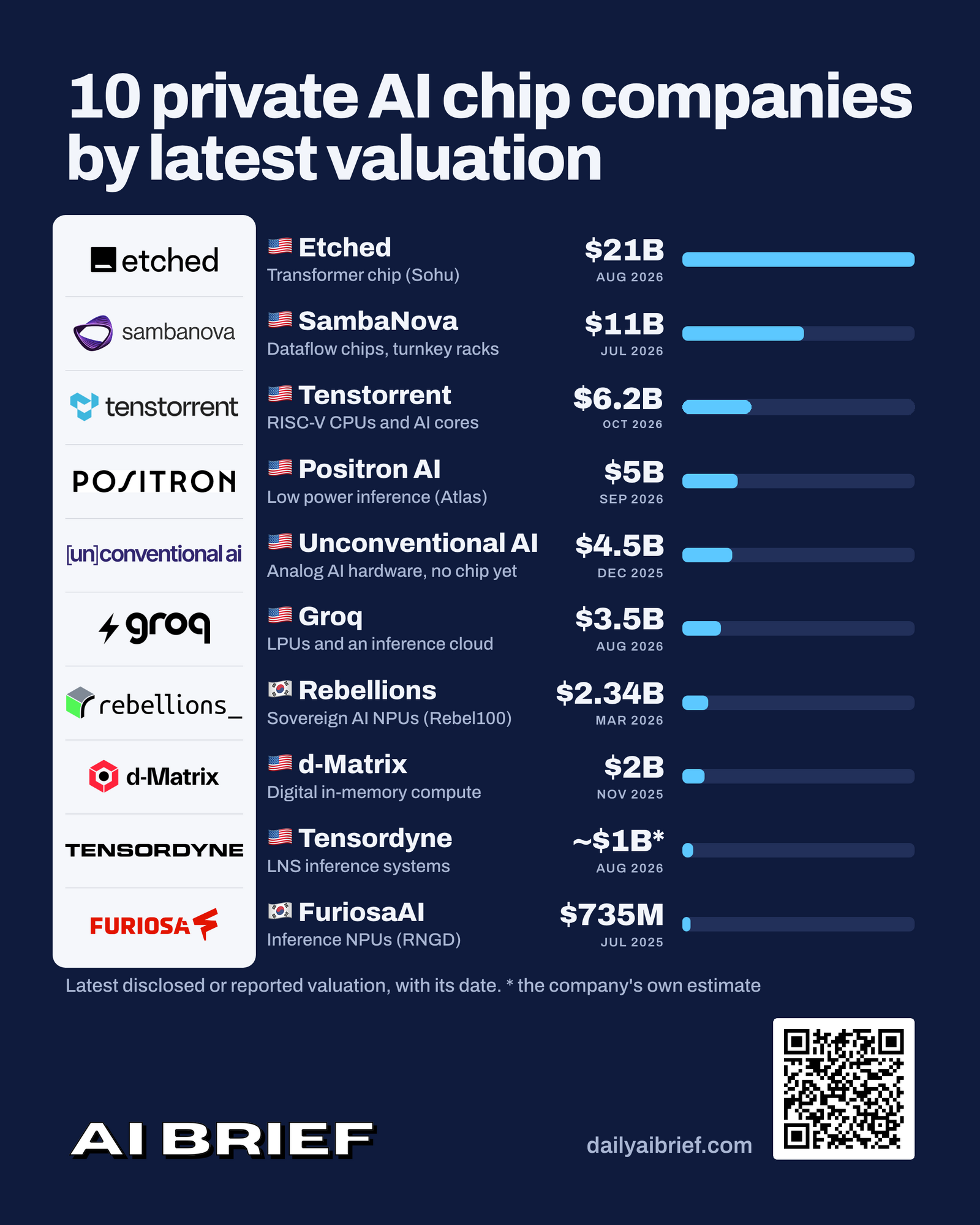
 Tensordyne
This Tensordyne whitepaper presents Napier, an inference-focused AI processor and rack-scale system based on the company’s TDN Math logarithmic number system. It examines infrastructure requirements for large mixture-of-experts and agentic models, compares major inference architecture approaches, and details the TDN AIP processor, TDN72 pod, TDN Link fabric, and Napier Ultra configuration. The paper reports simulation-based performance, cost, and accuracy-validation results, including Tensordyne’s projected comparison of one Napier rack with a nine-rack Nvidia Rubin plus Groq deployment; the chip is reported as taped out and in fabrication.
Read moreDaily AI Brief: the AI news that matters, in your inbox.