Unanimous AI Study Finds Agent Networks Speed Team Problem Solving
Oct 15, 2026
AI Agents

Unanimous AI has received a Phase I contract from AFWERX to bring its Hypercom AI technology to command and control applications for the U.S. Air Force, the company announced in a press release.
The project will be conducted with Carnegie Mellon University. The work will measure how Hypercom AI affects communication across large distributed teams handling urgent tasks.
Hypercom AI routes simultaneous communications so team members can respond in parallel instead of waiting in sequence. The company said the system is designed to reduce distractions and cognitive load in control center settings.
Consider subscribing to one of our newsletters like Defense AI Brief, Enterprise AI Brief or Daily AI Brief.
Also, consider following us on social media:
Weekly report on AI business applications, enterprise software releases, automation tools, and industry implementations.
 Tensordyne
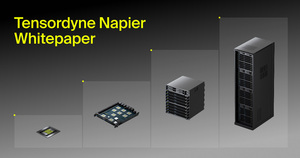
This Tensordyne whitepaper presents Napier, an inference-focused AI processor and rack-scale system based on the company’s TDN Math logarithmic number system. It examines infrastructure requirements for large mixture-of-experts and agentic models, compares major inference architecture approaches, and details the TDN AIP processor, TDN72 pod, TDN Link fabric, and Napier Ultra configuration. The paper reports simulation-based performance, cost, and accuracy-validation results, including Tensordyne’s projected comparison of one Napier rack with a nine-rack Nvidia Rubin plus Groq deployment; the chip is reported as taped out and in fabrication.
Read moreDaily AI Brief: the AI news that matters, in your inbox.