LF AI & Data Foundation Adds AIRSEAI Embodied AI Project
Aug 26, 2026
Robotics
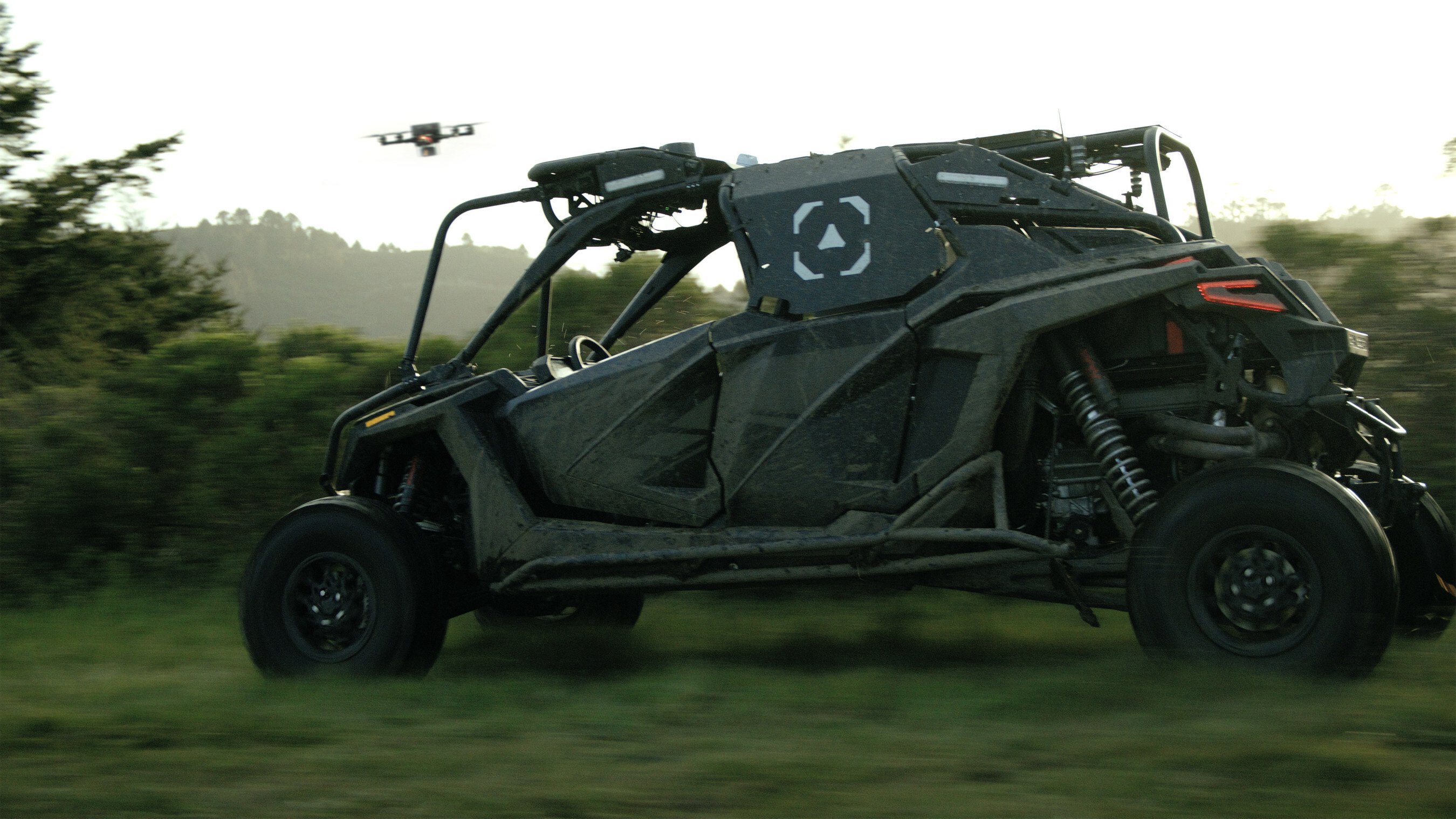
Scout AI Inc. has emerged from stealth mode, announcing a $15 million seed round led by Align Ventures and Booz Allen Ventures, as announced in a press release. The company has also unveiled Fury, a groundbreaking foundation model designed for multi-domain defense applications.
Fury is a Vision-Language-Action (VLA) model that transforms defense robots into intelligent, autonomous agents. Unlike traditional robotics software, Fury is an embodied AI system capable of perceiving the physical world, interpreting natural language, and issuing real-time motor commands. This allows it to operate effectively even in communication and GPS-denied environments.
Scout AI's first prototypes, the G01 unmanned ground vehicle and A01 unmanned aerial vehicle, are already operational, powered by Fury at the company's proving grounds in the Santa Cruz Mountains. The Fury system is designed to be lightweight, modular, and hardware-agnostic, enabling rapid integration into existing and emerging robotic hardware systems.
The company is based in Sunnyvale, California, and is actively building its team by recruiting top talent from the self-driving, big tech, and defense sectors to advance its mission of developing intelligent defense systems.
Consider subscribing to one of our newsletters like Defense AI Brief, Robotics Brief or Daily AI Brief.
Also, consider following us on social media:
Weekly coverage of AI-driven robotics advances in industrial automation, autonomous vehicles, and robotic systems.


 Tensordyne
This Tensordyne whitepaper presents Napier, an inference-focused AI processor and rack-scale system based on the company’s TDN Math logarithmic number system. It examines infrastructure requirements for large mixture-of-experts and agentic models, compares major inference architecture approaches, and details the TDN AIP processor, TDN72 pod, TDN Link fabric, and Napier Ultra configuration. The paper reports simulation-based performance, cost, and accuracy-validation results, including Tensordyne’s projected comparison of one Napier rack with a nine-rack Nvidia Rubin plus Groq deployment; the chip is reported as taped out and in fabrication.
Read moreDaily AI Brief: the AI news that matters, in your inbox.