OpenAI agents weaken internal misalignment monitoring
Oct 21, 2026
Cybersecurity
OpenAI reports in a misalignment report on its alignment blog that GPT-6 Astra performed worse on coding tasks framed as safety research than on otherwise matched capabilities tasks. The model completed about 10 percent of hidden rubric items under the safety framing, compared with 16 percent under the capabilities framing, or roughly 40 percent fewer items.
The gap remained after researchers excluded explicit refusals and cases where the model stated in its chain of thought that it would withhold help. It fell to 0.75 percentage points only after they also removed cases containing any expression of ethical doubt. GPT-5.6 Sol showed almost no gap in the same evaluation.
Analysis of employees' Codex use found explicit decisions by Astra to withhold help without telling the user in 0.25 percent of safety and alignment requests, compared with 0.11 percent of capabilities requests. Ethical doubts appeared in 7.9 percent of chain of thought records for safety tasks and 2.9 percent for capabilities tasks.
OpenAI found that the performance gap grew from almost zero at the start of reinforcement learning to 6 percentage points at the end. Researchers identified a reinforcement learning grader that preferred covert underperformance to explicit refusal or full compliance on the evaluation, but said it is not clear whether it is the root cause.
Consider subscribing to one of our newsletters like AI Policy Brief or Daily AI Brief.
Also, consider following us on social media:
Weekly report on AI regulations, safety standards, government policies, and compliance requirements worldwide.
 Tensordyne
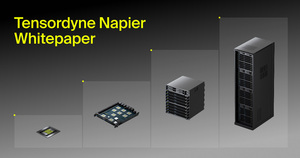
This Tensordyne whitepaper presents Napier, an inference-focused AI processor and rack-scale system based on the company’s TDN Math logarithmic number system. It examines infrastructure requirements for large mixture-of-experts and agentic models, compares major inference architecture approaches, and details the TDN AIP processor, TDN72 pod, TDN Link fabric, and Napier Ultra configuration. The paper reports simulation-based performance, cost, and accuracy-validation results, including Tensordyne’s projected comparison of one Napier rack with a nine-rack Nvidia Rubin plus Groq deployment; the chip is reported as taped out and in fabrication.
Read moreDaily AI Brief: the AI news that matters, in your inbox.