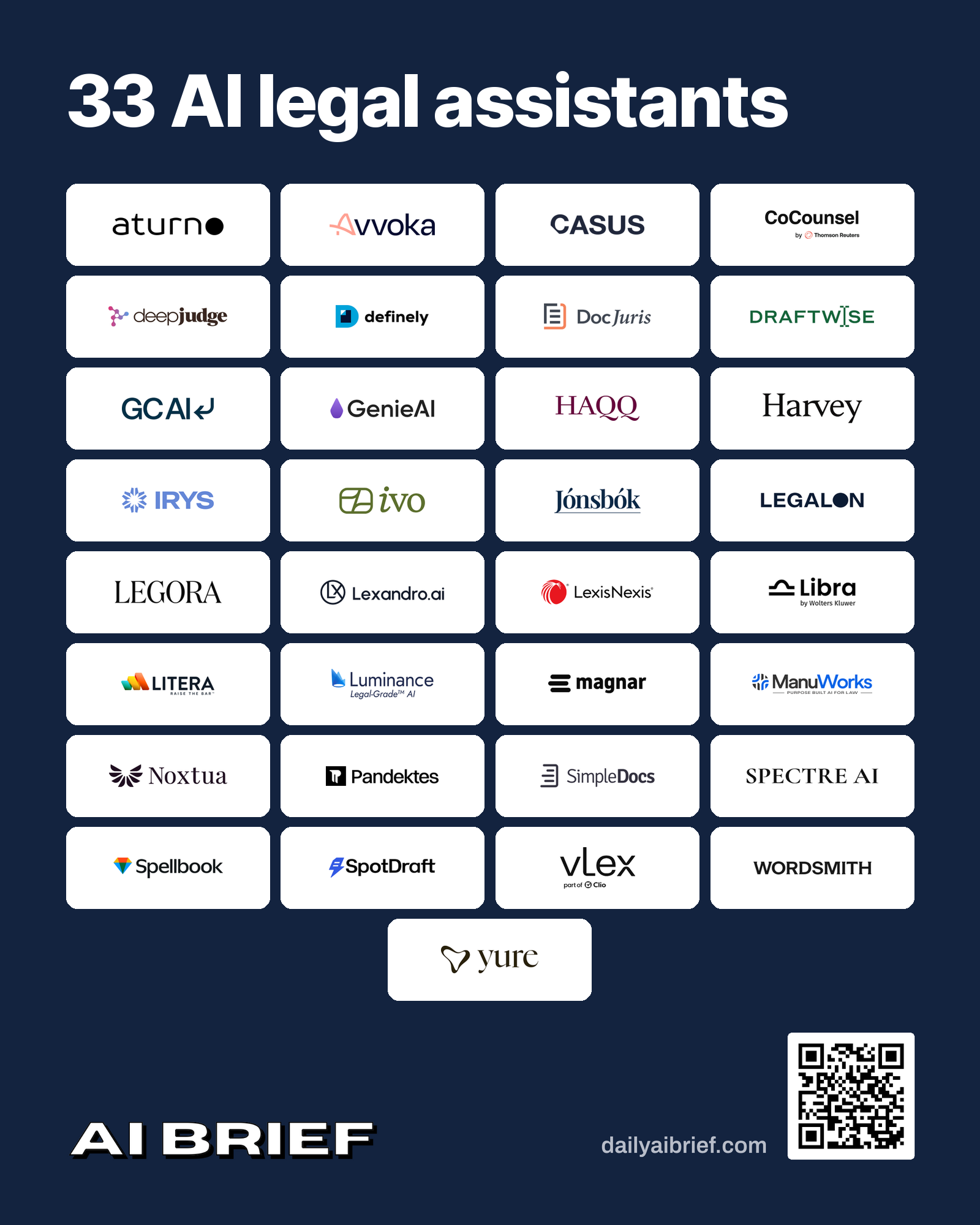
Jones Day to Roll Out Legora to 2,500 Lawyers
Oct 22, 2026
Legal AI
The Faculty of Law at the National University of Singapore has joined the Legal AI Scholars Program from Legora, giving faculty and students complimentary access to the platform for legal research, document review and drafting, IT Brief Asia reports.
NUS Law plans to introduce the platform only after students have built core legal foundations. Teaching will focus on when AI should be used, how its outputs should be assessed and students' responsibility for their own arguments. Legora's Singapore team will run training sessions and work with NUS Libraries to support access.
"Good lawyering, however, still starts with reading cases closely, building a sound argument and taking responsibility for it. We will therefore introduce Legora only once students have established these foundations," said Professor Tan Cheng Han SC, chief strategy officer at the NUS Faculty of Law.
NUS Law joins Singapore Management University in the program's Asia Pacific group. Other participants include Stanford Law School, Northwestern Pritzker School of Law, the University of Chicago Law School and King's College London. Legora also works with academic staff to build AI exercises and assignments into existing courses.
Consider subscribing to one of our newsletters like Legal AI Weekly, AI in Education or Daily AI Brief.
Also, consider following us on social media:
The source for the Legal AI software news, analysis, emerging applications: contract review, e-discovery, research.

 Tensordyne
This Tensordyne whitepaper presents Napier, an inference-focused AI processor and rack-scale system based on the company’s TDN Math logarithmic number system. It examines infrastructure requirements for large mixture-of-experts and agentic models, compares major inference architecture approaches, and details the TDN AIP processor, TDN72 pod, TDN Link fabric, and Napier Ultra configuration. The paper reports simulation-based performance, cost, and accuracy-validation results, including Tensordyne’s projected comparison of one Napier rack with a nine-rack Nvidia Rubin plus Groq deployment; the chip is reported as taped out and in fabrication.
Read moreDaily AI Brief: the AI news that matters, in your inbox.