Saab Completes Sea Trials of Large Uncrewed Underwater Vehicle
Oct 16, 2026
Defense
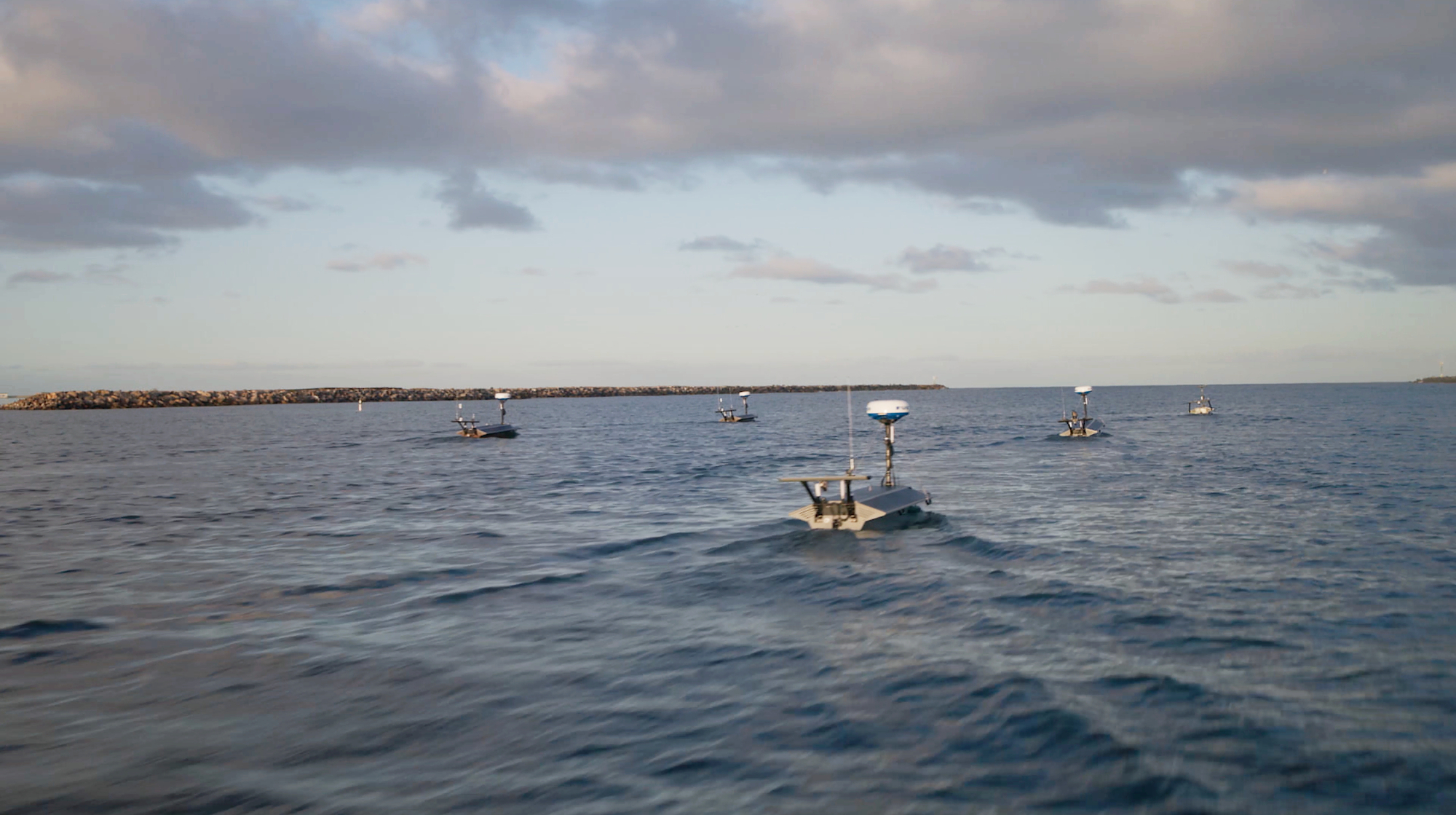
Seasats said in a press release that it booked more than $24 million in new orders during one month. The committed orders cover unmanned surface vessel purchases and Robot as a Service contracts for several United States government customers.
The orders include Lightfish vessels for the United States Marine Corps and Navy. The vessels are about 11 feet long, weigh 360 pounds, use solar power, and can operate for several months. Two people can launch one from a boat ramp.
Lightfish has a modular payload bay that can carry electro optical and infrared cameras, surveillance equipment, and sonar systems. Seasats said it has secured more than $100 million in customer contracts and has vessels operating with the Navy, NOAA, and research institutions.
Consider subscribing to one of our newsletters like Robotics Brief, Defense AI Brief or Daily AI Brief.
Also, consider following us on social media:
Your weekly intelligence briefing on the technology shaping modern warfare and national security.


 Tensordyne
This Tensordyne whitepaper presents Napier, an inference-focused AI processor and rack-scale system based on the company’s TDN Math logarithmic number system. It examines infrastructure requirements for large mixture-of-experts and agentic models, compares major inference architecture approaches, and details the TDN AIP processor, TDN72 pod, TDN Link fabric, and Napier Ultra configuration. The paper reports simulation-based performance, cost, and accuracy-validation results, including Tensordyne’s projected comparison of one Napier rack with a nine-rack Nvidia Rubin plus Groq deployment; the chip is reported as taped out and in fabrication.
Read moreDaily AI Brief: the AI news that matters, in your inbox.