Huawei Proposes AI Data Center Focused Network Architecture
Oct 15, 2026
Data Centers

Huawei unveiled a grid interactive AI data center solution at the Green Energy Development Conference and International Digital Energy Expo 2026 in Shenzhen, the company said in a press release. The system coordinates computing and electricity to increase tokens generated per watt while addressing power supply, cooling, construction and maintenance.
Huawei organizes the system around power, computing, heat and construction. Its power components include energy storage, renewable energy integration, controls that help stabilize the grid and uninterruptible power supplies designed to support grid operations.
The thermal system combines a Thermal Management Unit with an AI enabled liquid cooling system for megawatt scale facilities. AI tools monitor operations, optimize performance and identify potential faults, while prefabricated and modular components are intended to shorten deployment.
Consider subscribing to one of our newsletters like Silicon Brief or Daily AI Brief.
Also, consider following us on social media:
Weekly coverage of AI hardware developments including chips, GPUs, cloud platforms, and data center technology.

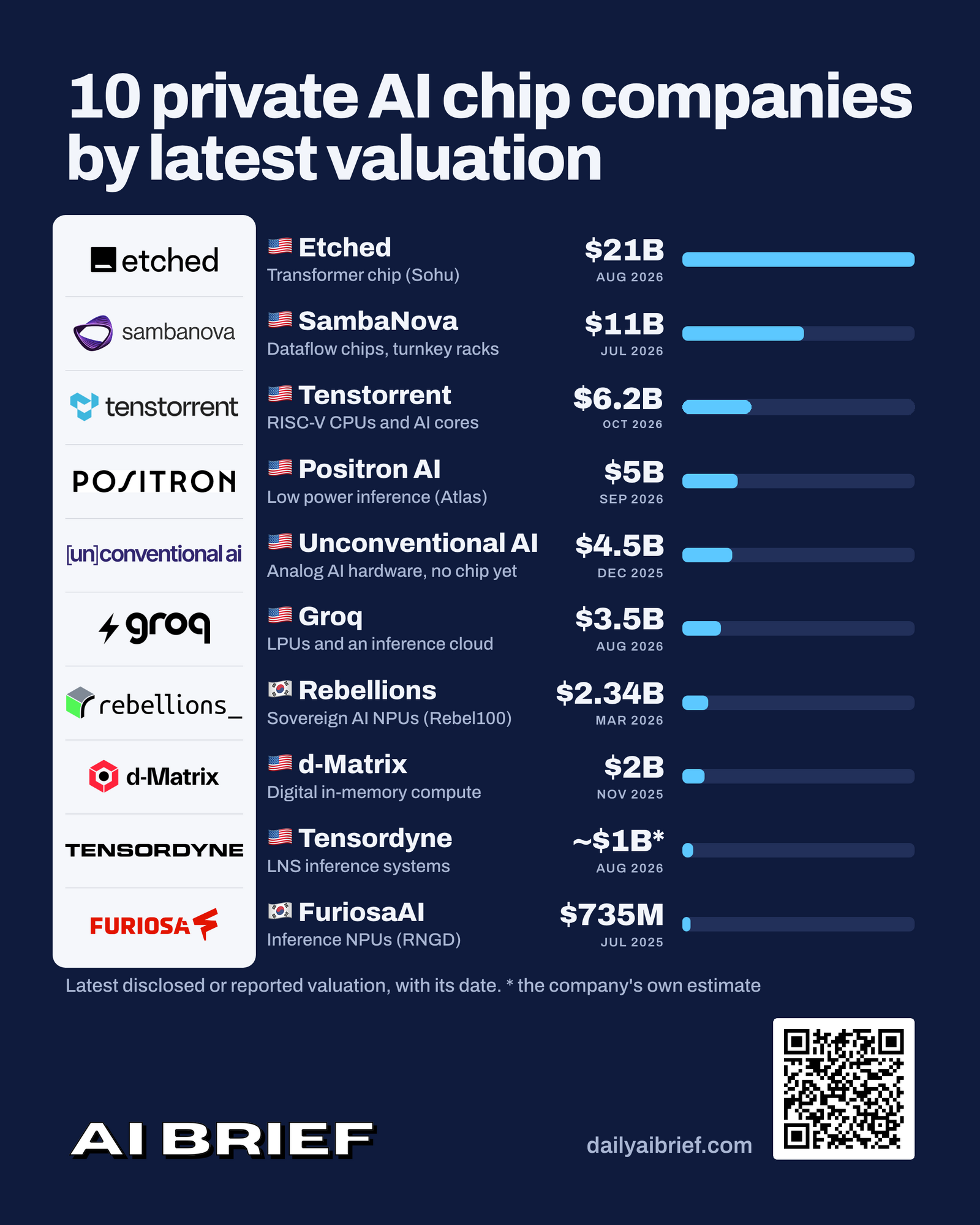
 Tensordyne
This Tensordyne whitepaper presents Napier, an inference-focused AI processor and rack-scale system based on the company’s TDN Math logarithmic number system. It examines infrastructure requirements for large mixture-of-experts and agentic models, compares major inference architecture approaches, and details the TDN AIP processor, TDN72 pod, TDN Link fabric, and Napier Ultra configuration. The paper reports simulation-based performance, cost, and accuracy-validation results, including Tensordyne’s projected comparison of one Napier rack with a nine-rack Nvidia Rubin plus Groq deployment; the chip is reported as taped out and in fabrication.
Read moreDaily AI Brief: the AI news that matters, in your inbox.