BCG Finds Nearly Half of Companies Generate Value From AI
Sep 30, 2026
Analyst and Vendor Research
GEP and University of Virginia have published joint research showing that only 5% of supply chain AI initiatives achieve enterprise scale, while most remain in pilot or planning stages. The findings were announced in a press release.
The study, based on input from nearly 200 large enterprises, reports that the small group of successful companies achieved triple-digit productivity gains, faster response times, and lower error rates. Researchers found that success was linked to management discipline rather than technology or budget.
According to the study, organizations that scaled AI effectively shared several practices. These included establishing formal governance through AI steering committees, managing AI projects as structured portfolios, maintaining auditability through digital trails, and aligning workforce incentives with AI-enabled operations.
One example cited in the report described a standardized purchase requisition validation process that enabled about 80% of transactions to auto-clear, leading to significant productivity improvements within weeks.
Consider subscribing to one of our newsletters like Enterprise AI Brief, Industrial AI Weekly or Daily AI Brief.
Also, consider following us on social media:
Weekly report on AI business applications, enterprise software releases, automation tools, and industry implementations.

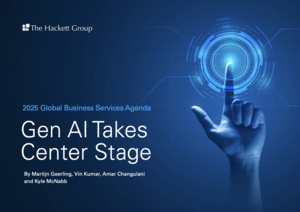
This industry analysis by The Hackett Group explores the transformative impact of generative artificial intelligence (Gen AI) on global business services (GBS) in 2025. The study highlights the shift from exploration to acceleration of Gen AI initiatives, with 89% of executives advancing these projects to improve customer satisfaction, innovate products, and reduce costs. The report also discusses the challenges and strategies for successful Gen AI adoption, emphasizing the need for a technology-enabled operating model and the importance of reskilling the workforce.
Read moreDaily AI Brief: the AI news that matters, in your inbox.