Delta Develops Power and Cooling Infrastructure for NVIDIA DSX AI Factories
Sep 17, 2026
Data Centers
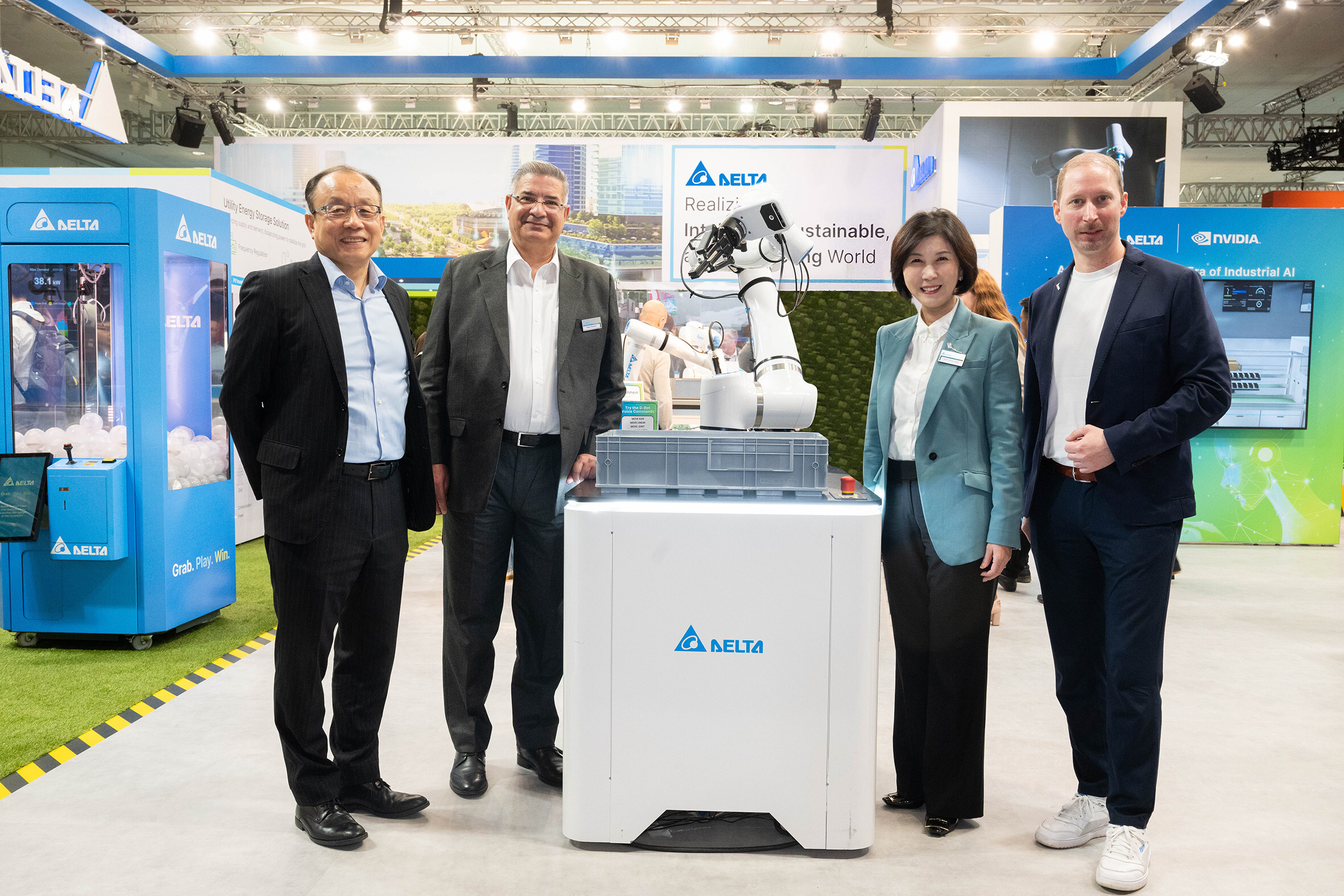
Delta Electronics has showcased its AI-driven solutions at Hannover Messe 2025, highlighting advancements in smart manufacturing and energy management. Announced in a press release, Delta introduced its D-Bot series cobots, which integrate with NVIDIA Omniverse to create digital twins, enhancing safety and performance in manufacturing environments.
The company also presented DeltaGrid, an AI-enabled energy management platform designed to optimize energy consumption and support the integration of renewable energy sources. This platform aims to enhance operational efficiency and reduce energy costs for commercial and industrial facilities.
Additionally, Delta unveiled its MOOVbase Multi-Port Charging System and MOOVair Wireless Charging System, which are designed to improve the efficiency and uptime of industrial e-vehicles. These innovations reflect Delta's commitment to fostering intelligent industries and supporting the sustainable energy transition.
Delta Electronics continues to leverage its expertise in power management and AI to drive advancements in various sectors, including smart manufacturing, logistics, and energy infrastructure.
Consider subscribing to one of our newsletters like Robotics Brief, Industrial AI Weekly or Daily AI Brief.
Also, consider following us on social media:
Weekly coverage of AI-driven robotics advances in industrial automation, autonomous vehicles, and robotic systems.


 Tensordyne
This Tensordyne whitepaper presents Napier, an inference-focused AI processor and rack-scale system based on the company’s TDN Math logarithmic number system. It examines infrastructure requirements for large mixture-of-experts and agentic models, compares major inference architecture approaches, and details the TDN AIP processor, TDN72 pod, TDN Link fabric, and Napier Ultra configuration. The paper reports simulation-based performance, cost, and accuracy-validation results, including Tensordyne’s projected comparison of one Napier rack with a nine-rack Nvidia Rubin plus Groq deployment; the chip is reported as taped out and in fabrication.
Read moreDaily AI Brief: the AI news that matters, in your inbox.