Semperis Report Finds AI Used in 87% of Ransomware Attacks
Oct 14, 2026
Analyst and Vendor Research

C3SA and Mimic have announced a strategic partnership to bolster cyber resilience against ransomware attacks, announced in a press release. This collaboration aims to integrate C3SA's expertise in secure infrastructure with Mimic's advanced ransomware defense platform.
Mimic's platform offers real-time resilience by operating at the kernel level of Windows and Linux systems. It features automated attack deflection, AI-driven decoy data, and application immutability to prevent tampering. Additionally, it provides isolated environments for quick recovery, ensuring business continuity even during active attacks.
The joint effort focuses on delivering proactive protection by embedding real-time resilience into critical applications. This approach allows organizations to withstand ransomware attacks without losing operational control or data integrity. The partnership is set to enhance the security posture of organizations across various sectors, ensuring they remain secure even in the face of evolving cyber threats.
Consider subscribing to one of our newsletters like Cybersecurity AI Weekly or Daily AI Brief.
Also, consider following us on social media:
Weekly newsletter about AI in Cybersecurity.

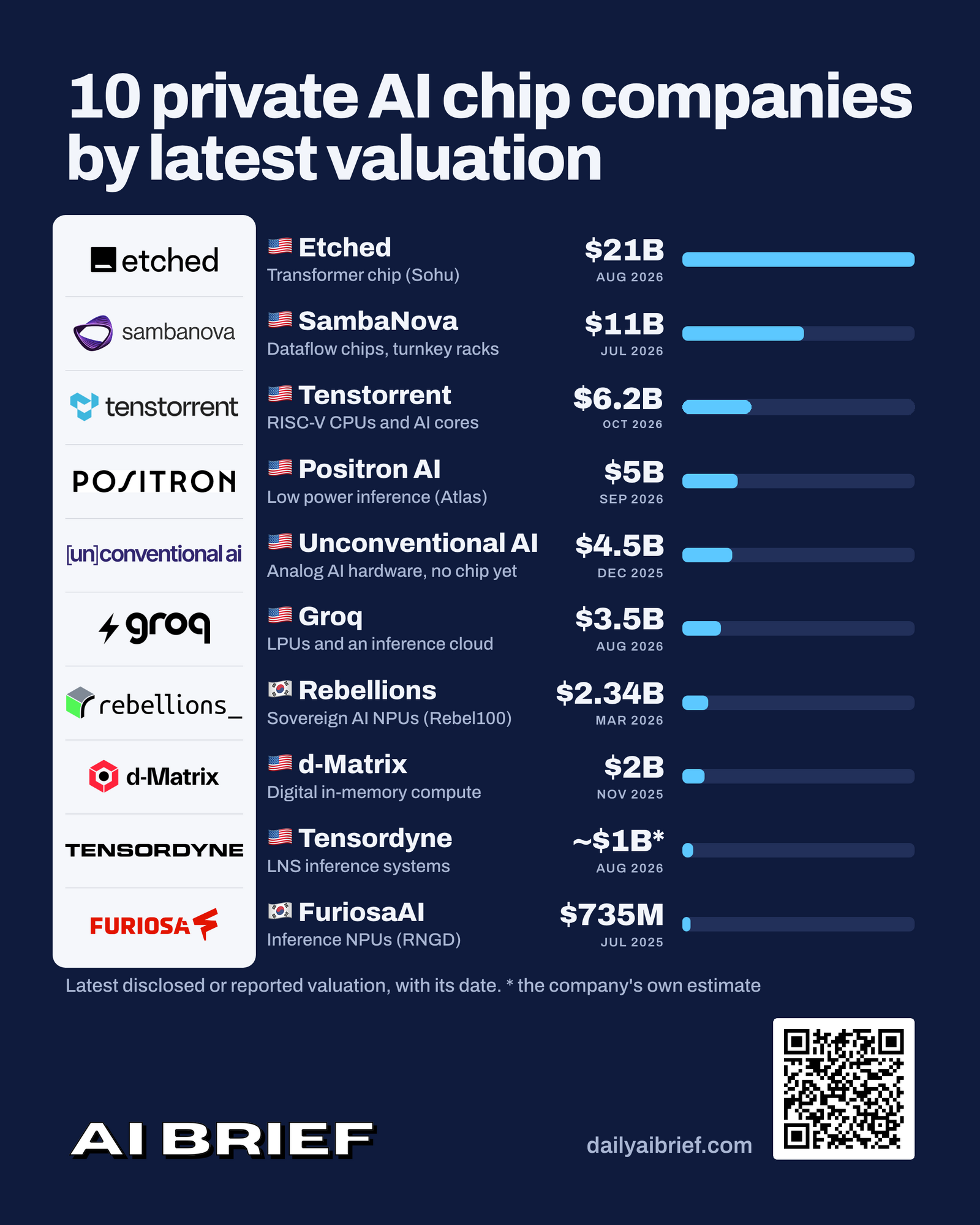
 Tensordyne
This Tensordyne whitepaper presents Napier, an inference-focused AI processor and rack-scale system based on the company’s TDN Math logarithmic number system. It examines infrastructure requirements for large mixture-of-experts and agentic models, compares major inference architecture approaches, and details the TDN AIP processor, TDN72 pod, TDN Link fabric, and Napier Ultra configuration. The paper reports simulation-based performance, cost, and accuracy-validation results, including Tensordyne’s projected comparison of one Napier rack with a nine-rack Nvidia Rubin plus Groq deployment; the chip is reported as taped out and in fabrication.
Read moreDaily AI Brief: the AI news that matters, in your inbox.