ADLM to Brief Congress on Healthcare AI Policy
Oct 12, 2026
Healthcare
Association for Diagnostics & Laboratory Medicine (ADLM) submitted comments on potential updates to the Clinical Laboratory Improvement Amendments (CLIA), recommending that AI tools used in laboratory medicine remain subject to the professional expertise, quality systems, validation requirements and monitoring standards that apply to traditional laboratory testing.
ADLM identified risks including errors that vary by case, unsupported generative AI outputs, omitted clinical information and changes in behavior after updates to models, prompts or knowledge bases. It recommends coordinated oversight by the Centers for Medicare and Medicaid Services, Centers for Disease Control and Prevention and Food and Drug Administration.
The recommendations call for regulators to distinguish conventional software from AI models and adopt a risk based, technology appropriate approach with clear quality expectations. ADLM also says facilities that independently analyze patient data or provide specialized interpretations should receive appropriate CLIA oversight, and that AI should be evaluated as part of the total testing process under the existing CLIA framework rather than regulated as standalone software. ADLM says it represents more than 70,000 laboratory professionals, physicians, research scientists and business leaders in 110 countries.
Consider subscribing to one of our newsletters like AI Policy Brief, Life AI Weekly or Daily AI Brief.
Also, consider following us on social media:
Weekly report on AI regulations, safety standards, government policies, and compliance requirements worldwide.
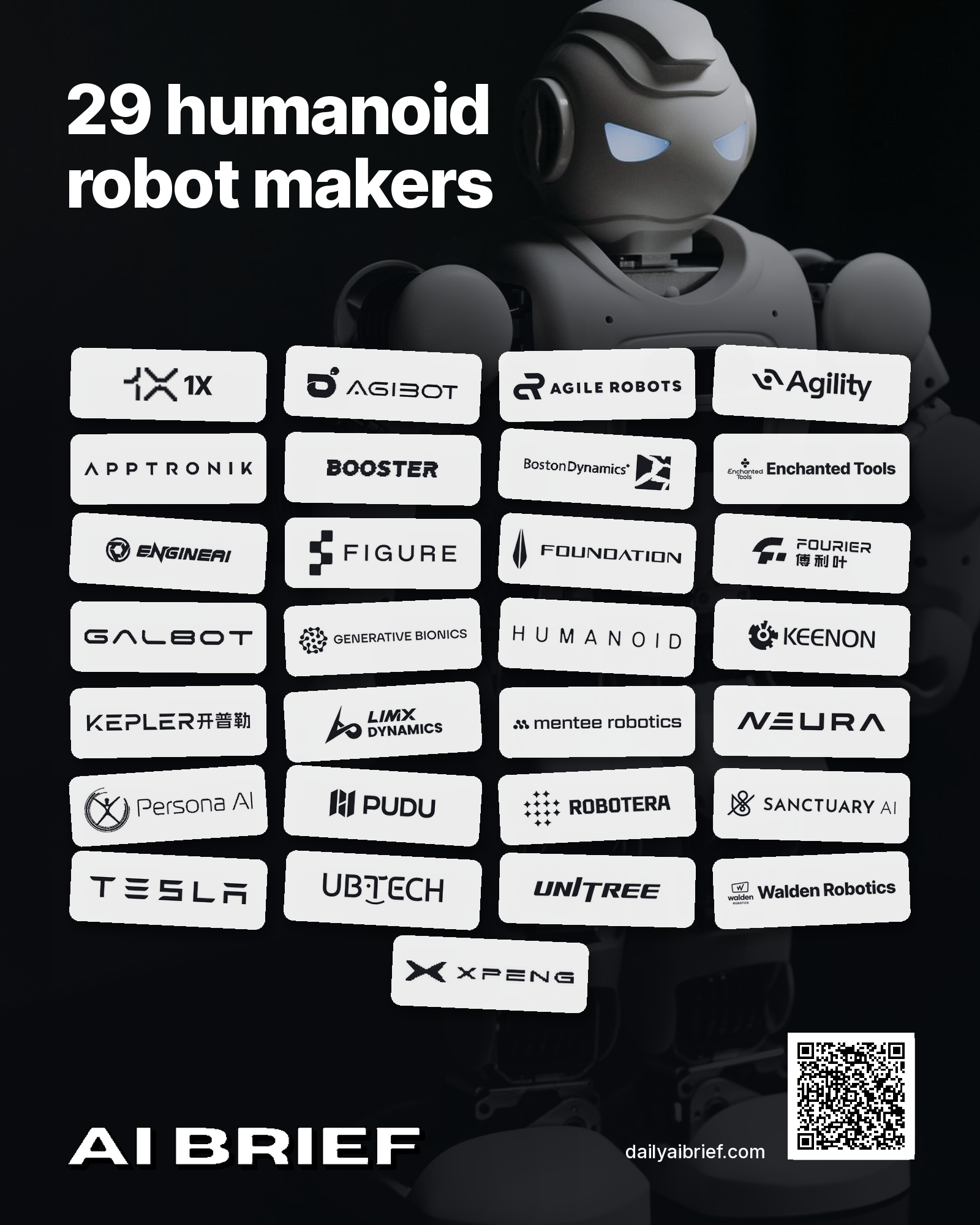
Companies building humanoid robots, from startups to Tesla and Boston Dynamics

 Thomson Reuters
This report by Thomson Reuters explores the integration and impact of generative AI technologies, such as ChatGPT and Microsoft Copilot, within the professional services sector. It highlights the growing adoption of GenAI tools across industries like legal, tax, accounting, and government, and discusses the challenges and opportunities these technologies present. The report also examines professionals' perceptions of GenAI and the need for strategic integration to maximize its value.
Read moreDaily AI Brief: the AI news that matters, in your inbox.