Viabot Raises $24 Million for Outdoor Property Care Robots
Sep 17, 2026
Funding
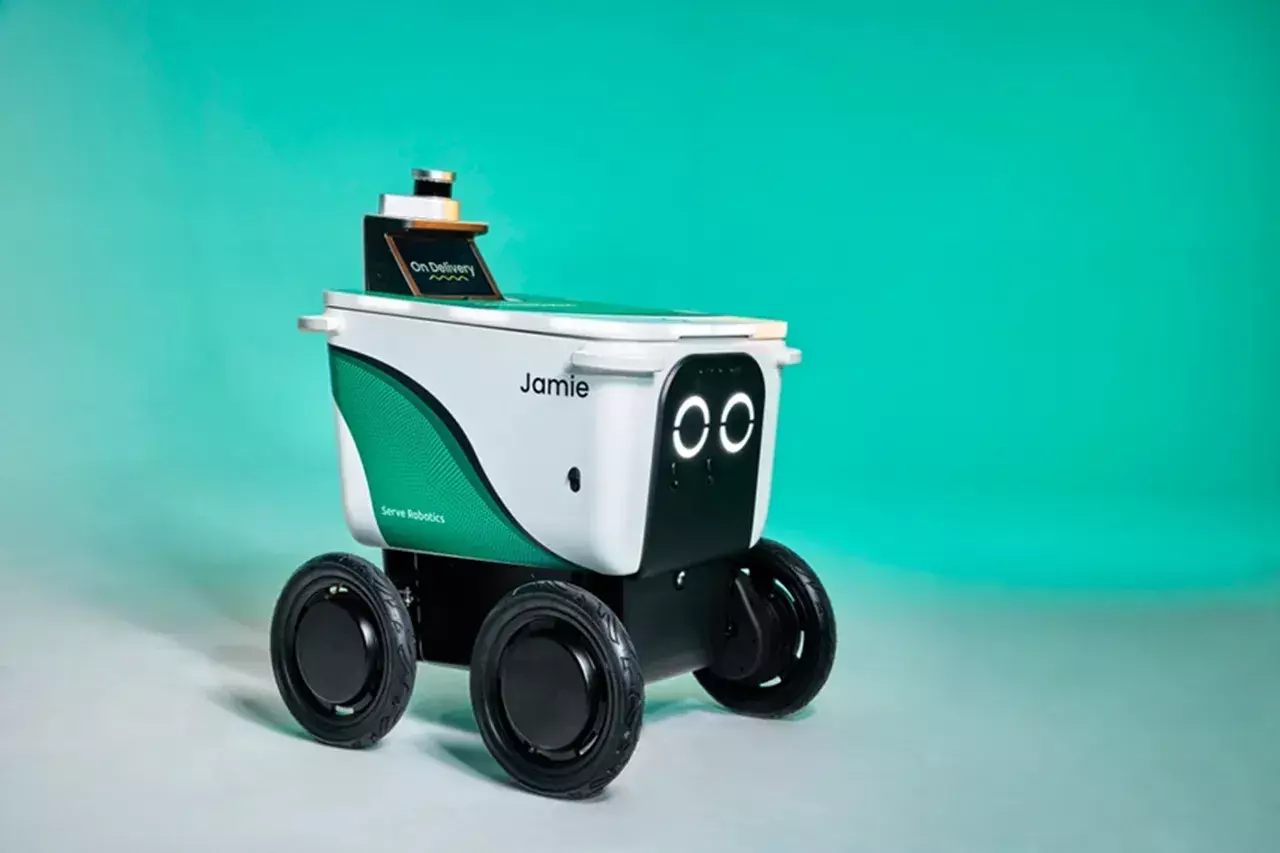
Serve Robotics has acquired Vayu Robotics to enhance its delivery service capabilities. The acquisition is expected to bolster Serve's physical AI capabilities by integrating Vayu's expertise in urban robot navigation and large-scale AI models.
The combination of Serve's autonomy stack and real-world sidewalk dataset with Vayu's AI foundation models and scalable simulation-powered data engine will enable Serve to train more capable models. This fusion of real and simulated data aims to deliver safer, faster, and more generalizable navigation, facilitating the rollout of Serve's delivery robots into new locations and use cases.
Serve Robotics, known for its autonomous sidewalk delivery robots, plans to deploy over 2,000 bots across the United States by the end of the year. The acquisition also includes key personnel from Vayu joining Serve, further strengthening its operational capabilities. The terms of the deal involve an upfront payment in Serve common shares and potential future earnouts based on performance milestones.
Consider subscribing to one of our newsletters like Robotics Brief, AI Funding Brief or Daily AI Brief.
Also, consider following us on social media:
Weekly coverage of AI-driven robotics advances in industrial automation, autonomous vehicles, and robotic systems.


 Tensordyne
This Tensordyne whitepaper presents Napier, an inference-focused AI processor and rack-scale system based on the company’s TDN Math logarithmic number system. It examines infrastructure requirements for large mixture-of-experts and agentic models, compares major inference architecture approaches, and details the TDN AIP processor, TDN72 pod, TDN Link fabric, and Napier Ultra configuration. The paper reports simulation-based performance, cost, and accuracy-validation results, including Tensordyne’s projected comparison of one Napier rack with a nine-rack Nvidia Rubin plus Groq deployment; the chip is reported as taped out and in fabrication.
Read moreDaily AI Brief: the AI news that matters, in your inbox.