
CropX Adds Soil Sensors to New Zealand Farming Trial
Oct 13, 2026
AI in Agriculture

NRGene Canada has announced a major breakthrough in developing clubroot-resistant canola, providing durable protection against emerging virulent pathotypes announced in a press release. This innovation is crucial for Canada's canola industry, which is valued at $43.7 billion annually.
Clubroot, caused by the soilborne fungal disease Plasmodiophora brassicae, poses a significant threat to canola production worldwide. NRGene Canada's latest innovation introduces two new donor lines that demonstrate full resistance to multiple Canadian pathotypes, including the highly aggressive 5X strain. The resistance genes were identified and stabilized using molecular genomics-assisted backcrossing.
The company has identified five key genomic regions associated with resistance and developed advanced breeding lines that show no disease symptoms under severe infection conditions. These resistant lines and DNA markers are now available for commercial breeding programs, enabling the development of high-yielding, clubroot-resistant hybrids suited for both Canadian and global markets.
To facilitate commercialization, NRGene Green has been established as a sister company to NRGene Canada, focusing on canola research and commercialization efforts. NRGene Green is actively partnering with seed companies, growers, and research institutions to accelerate market adoption of these resistant varieties.
Consider subscribing to one of our newsletters like Life AI Weekly or Daily AI Brief.
Also, consider following us on social media:
Weekly coverage of AI applications in healthcare, drug development, biotechnology research, and genomics breakthroughs.
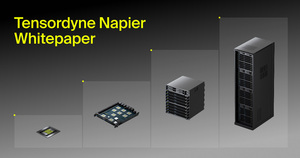
 Tensordyne
This Tensordyne whitepaper presents Napier, an inference-focused AI processor and rack-scale system based on the company’s TDN Math logarithmic number system. It examines infrastructure requirements for large mixture-of-experts and agentic models, compares major inference architecture approaches, and details the TDN AIP processor, TDN72 pod, TDN Link fabric, and Napier Ultra configuration. The paper reports simulation-based performance, cost, and accuracy-validation results, including Tensordyne’s projected comparison of one Napier rack with a nine-rack Nvidia Rubin plus Groq deployment; the chip is reported as taped out and in fabrication.
Read moreDaily AI Brief: the AI news that matters, in your inbox.