MIT study finds many large companies do not disclose AI risks
Nov 03, 2026
Enterprise
Researchers at MIT FutureTech, part of the Massachusetts Institute of Technology, have published the AI Risk Mitigation Repository, a free public database of 2,206 proposed AI safeguards drawn from 47 AI governance and risk-management frameworks, MIT Sloan announced. The University of Queensland and more than 40 collaborators, including IBM Research, Stanford University, the Machine Intelligence Research Institute and the United Nations University, worked on it.
The team sorted each safeguard by the risk it addresses, who must act, when in the AI lifecycle it applies and how it is meant to reduce risk. It found that 55% of proposed mitigations target AI systems directly, while the rest target organisational processes, governance, public policy and wider society. Developers are responsible for about 41% of the safeguards and organisations deploying AI for 33%.
Some areas get little attention. Human oversight of increasingly autonomous AI agents, society's ability to recover from AI-related disruptions and stewardship of computing resources each account for less than 2% of proposals, while organisational accountability is the largest category at 13.4%. The researchers also released PRIMER, a framework for reporting safeguards consistently, and an interactive explorer.
Consider subscribing to one of our newsletters like AI Policy Brief or Daily AI Brief.
Also, consider following us on social media:
Weekly report on AI regulations, safety standards, government policies, and compliance requirements worldwide.

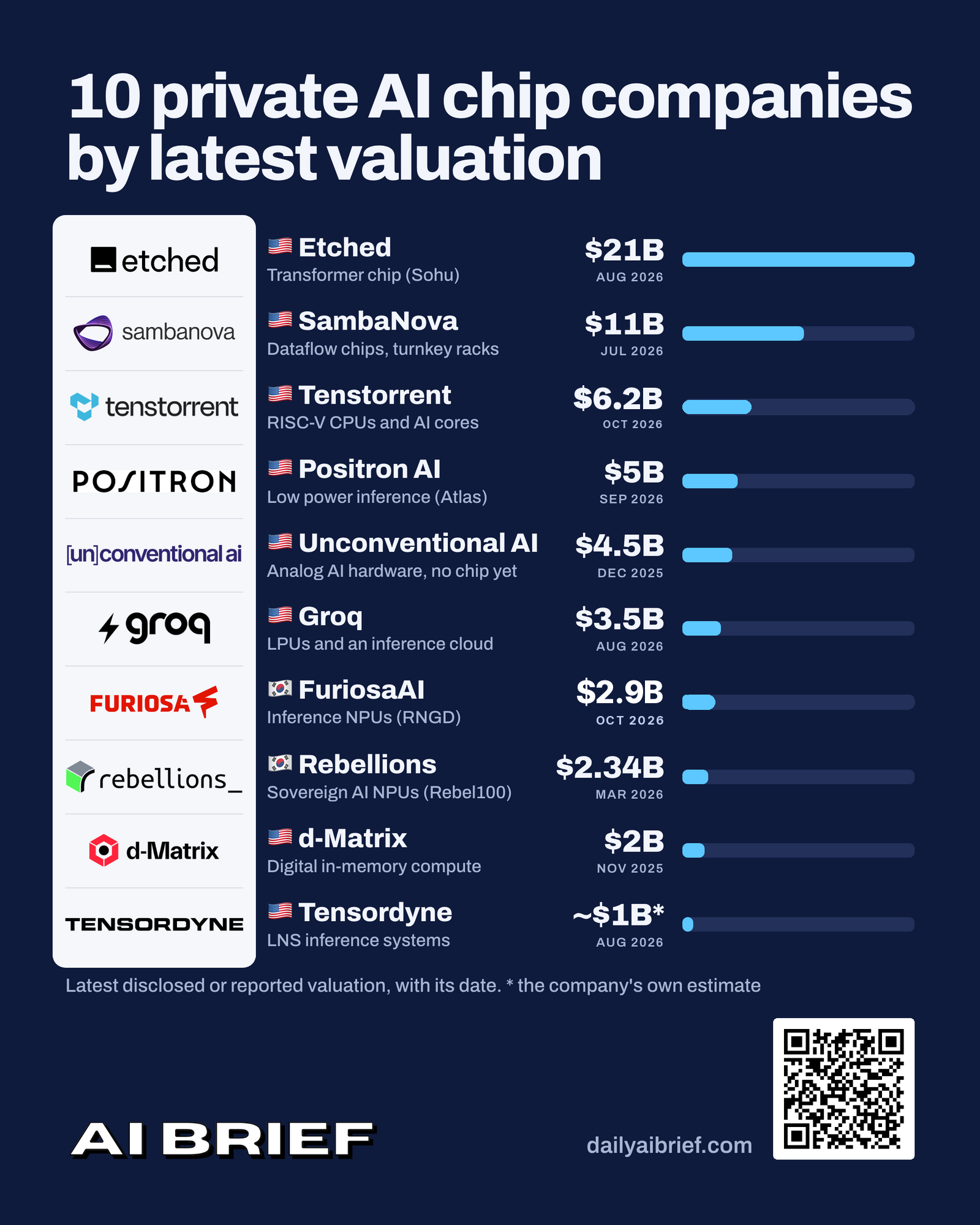
 Tensordyne
This Tensordyne whitepaper presents Napier, an inference-focused AI processor and rack-scale system based on the company’s TDN Math logarithmic number system. It examines infrastructure requirements for large mixture-of-experts and agentic models, compares major inference architecture approaches, and details the TDN AIP processor, TDN72 pod, TDN Link fabric, and Napier Ultra configuration. The paper reports simulation-based performance, cost, and accuracy-validation results, including Tensordyne’s projected comparison of one Napier rack with a nine-rack Nvidia Rubin plus Groq deployment; the chip is reported as taped out and in fabrication.
Read moreDaily AI Brief: the AI news that matters, in your inbox.