Ask.Legal Expands Legal AI Platform to Australia and Singapore
Aug 26, 2026
Legal AI
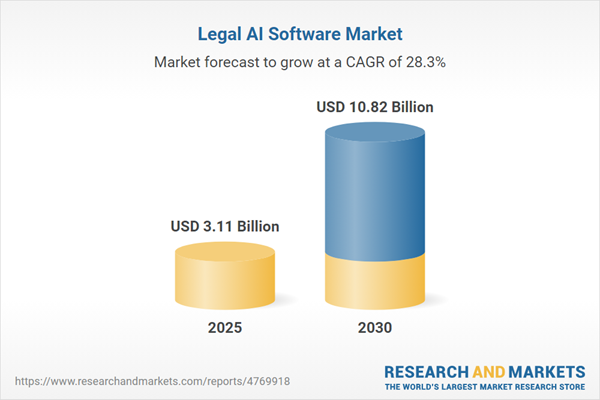
The legal AI software market is forecasted to expand significantly, growing from USD 3.11 billion in 2025 to USD 10.82 billion by 2030, with a compound annual growth rate (CAGR) of 28.3%, announced in a press release. This growth is primarily driven by advancements in generative AI for contract management and AI-powered e-discovery.
Key growth areas include the BFSI sector, which faces increasing regulatory complexities and requires AI for compliance management. Generative AI is expected to register the highest CAGR, enhancing legal workflows through automation and predictive analytics. The Asia Pacific region is anticipated to experience rapid growth, while North America is set to maintain the largest market share.
Major players such as Microsoft, IBM, and LexisNexis are driving the market forward, despite challenges like resistance from traditional practitioners and ethical concerns. The report highlights the importance of AI-driven solutions in streamlining contract management, enhancing legal research, and improving litigation strategies.
Consider subscribing to one of our newsletters like Legal AI Weekly or Daily AI Brief.
Also, consider following us on social media:
The source for the Legal AI software news, analysis, emerging applications: contract review, e-discovery, research.


This industry analysis by The Hackett Group explores the transformative impact of generative artificial intelligence (Gen AI) on global business services (GBS) in 2025. The study highlights the shift from exploration to acceleration of Gen AI initiatives, with 89% of executives advancing these projects to improve customer satisfaction, innovate products, and reduce costs. The report also discusses the challenges and strategies for successful Gen AI adoption, emphasizing the need for a technology-enabled operating model and the importance of reskilling the workforce.
Read more