Zealand Pharma partners with Generate:Biomedicines, MHRA publishes its 2030 strategy, and more - Life AI Weekly #90
Over the past two years AI Brief has grown into a website, 19 LinkedIn pages with more than 81,000 followers and 15 newsletters with more than 41,000 subscribers, Life AI Weekly among them. Thank you for reading, following and passing it on.
Until now, our newsletters were assembled automatically: the news assigned to each newsletter went into a simple template. From this edition, our small team, Maiko, Rene and Stefan, edits every edition so it reads as one storyline: related news together, the important stories explained, the rest kept short. We still use AI tooling throughout, and we decide what goes in and how it is told.
In this edition, covering 14 to 21 October:
- Zealand Pharma will pay Generate:Biomedicines $30 million upfront, with nearly $1.2 billion in potential later payments, for AI designed obesity treatments.
- The UK's MHRA published its 2030 Strategy, with a Centre for AI and Digital Health and an AI medicines development plan due in 2027.
- OpenAI acquired Orchestra Bio, a startup building AI agents for drug development, and will fold its team and technology into Rosalind, its life sciences models and tools.
Pharma partnerships and deals
Denmark's Zealand Pharma will work with US based Generate:Biomedicines to design multispecific protein treatments for obesity and metabolic diseases with generative AI. The deal includes a $30 million upfront payment, up to $35 million in early milestones and nearly $1.2 billion in potential later payments. Generate leads research through candidate selection; Zealand handles clinical development, regulatory work and commercialization. Zealand and Generate
AstraZeneca and Oracle will work on AI and real world data projects for clinical trial recruitment, earlier diagnosis, safety monitoring and care, using deidentified data. The first programme supports hypertension care and research in Abu Dhabi with M42. The collaboration is based on a nonbinding term sheet. AstraZeneca and Oracle
INmune Bio and Quantum Computing Inc. will use quantum optimization, AI and biomedical data to look for new uses, biomarkers and patient groups for XPro, INmune Bio's investigational treatment for Alzheimer's disease and other conditions. The work runs on QCi's Dirac 3S system, and INmune Bio is its first pharmaceutical and biotechnology customer. Boston based PhaseV validated a causal model that predicts weight changes, adverse events such as nausea, and treatment dropout among patients taking GLP-1 and related incretin medicines, trained on licensed MarketScan claims and Veradigm EHR data and tested on unseen patient records. INmune Bio · PhaseV
Trinity acquired Verix, including its Tovana platform and full team. Tovana provides AI powered next best action, dynamic targeting and omnichannel orchestration for pharmaceutical, biotech and specialty pharma companies, and will be integrated into TrinityEDGE, with first joint offerings expected in the first half of 2027. Financial terms were not disclosed. Trinity and Verix
Drug discovery research
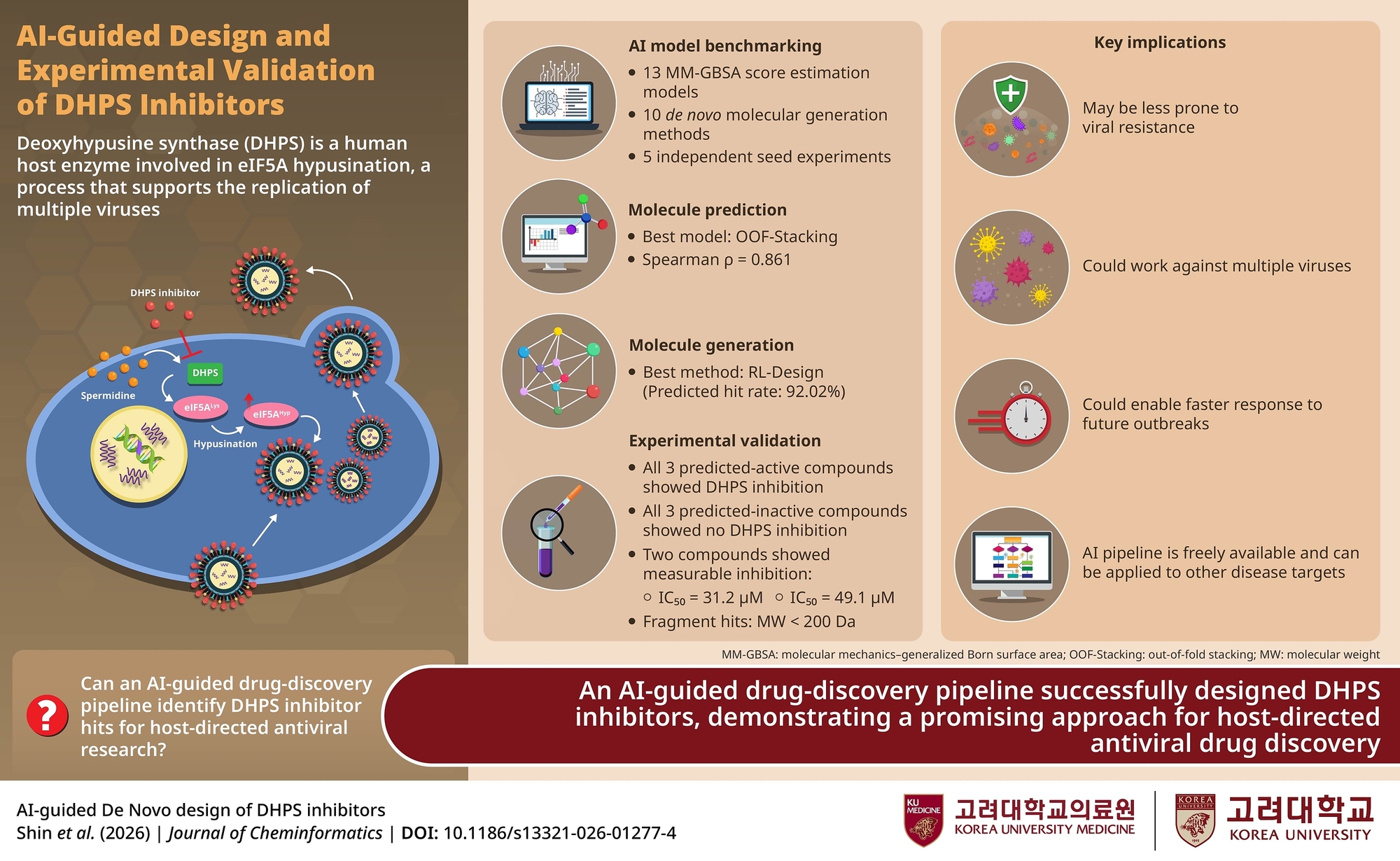
Researchers at Korea University used AI models to design potential inhibitors of DHPS, a human enzyme linked to the replication of viruses including HIV-1 and SARS-CoV-2. Lab tests confirmed activity in all three fragments the AI predicted as active, and an X ray structure showed one compound binding to DHPS. The researchers call the fragments early stage hits, not drug candidates. Korea University
San Francisco based Radical Numerics launched Omnii-1, a biological AI model trained on DNA, RNA, proteins and other molecular data. Researchers used it to design a bacteriophage that was given to a patient with a drug resistant bacterial infection. The company is also developing the model for cancer vaccine design, rare disease research and biodefense, including work with Lawrence Livermore National Laboratory. Radical Numerics
MegaRobo Technologies launched Poreva Open, a global competition for AI designed proteins with five challenges on targets including EGFR, TNF-α and GLP-1R. More than 10,000 designs will go through standardized wet lab testing, with results and data due in April 2027; prizes are $250,000 in cash and $150,000 in wet lab validation credits. In Singapore, HistoIndex and A*STAR signed a memorandum of understanding to use HistoIndex's AI digital pathology in the preclinical evaluation of candidates for fibrotic diseases, including cancer associated fibrosis. MegaRobo · HistoIndex and A*STAR
Research platforms and data
OpenAI launched the Rosalind Academic Plan for eligible US university biology labs, which offers up to 30 sponsored Business Standard seats with access to GPT-Rosalind for 12 months. Research data from these accounts is not used to train OpenAI models by default, and organizational approval is required. OpenAI also acquired Orchestra Bio, a startup building AI agents that help pharmaceutical companies manage drug development, and will fold its team and technology into Rosalind, its life sciences models and tools. Financial terms were not disclosed. The deal follows Anthropic's reported $400 million purchase of Coefficient Bio in April. Rosalind Academic Plan · Orchestra Bio
Inovia Bio launched Falcon, an AI system that it says completes drug development tasks such as clinical study documents, forecasting, literature reviews and pipeline analysis in hours. Human experts review and approve its outputs. Inovia Bio
Benchling launched Science Foundries, which let R&D teams coordinate AI agents, scientists, models, contract research organisations and lab instruments in workflows such as protein production, screening, assay development and process development. Illumina launched its BioInsight Platform, which combines genomic analysis software, purpose built AI and curated biological data, and includes DRAGEN v4.6. It then added three early access capabilities to the platform, for workflow orchestration, AI based variant prioritization and analysis of genomic, multiomic and phenotypic cohorts. Benchling · Illumina · Illumina tools
Ultima Genomics will sequence 80,000 blood samples for an immune profiling study by IMU Biosciences, UK Biobank and Waters Corporation, which will build a single cell immune dataset for AI and may expand to UK Biobank's full 500,000 participant cohort. Colossal Biosciences says its GenoMorph platform identified 2,300 candidate regulatory elements associated with dodo beak size, thickness and breadth, using data from more than 70 bird species, embryonic samples and 3D skull measurements, to prioritize targets for validation and potential editing in Nicobar pigeons. Ultima Genomics · Colossal
Regulators, clearances and coverage
The UK Medicines and Healthcare products Regulatory Agency published its 2030 Strategy on 14 October. It plans to use AI and real world data to spot safety risks earlier, create a Centre for AI and Digital Health and publish an AI medicines development plan in 2027. It also plans simpler Yellow Card reporting, product information in structured digital formats, faster regulatory reviews and stronger enforcement against illegal medicines and medical devices. MHRA
Rick Abramson, director of the FDA Digital Health Center of Excellence, said the agency will issue draft policy on generative AI medical devices within months. The FDA and the MHRA are developing regulatory frameworks that could support faster reviews while maintaining safety, including rules for predetermined change control plans and real world monitoring. FDA
SimBioSys received FDA 510(k) clearance for TumorSight Risk, software that uses breast MRI, pathology and clinical data to estimate five and ten year recurrence risk for women with hormone receptor positive, HER2 negative Stage I to IIIA breast cancer. A validation study of 2,129 patients supported the clearance. Masimo received 510(k) clearance for atrial fibrillation detection on its Radius VSM patient monitor; it flags rhythms suggestive of AFib for further ECG or telemetry evaluation and does not replace ECG confirmation. SimBioSys · Masimo
Swedish company SciBase secured its first US private insurance coverage for Nevisense, its AI based electrical impedance spectroscopy device. The policy covers use by trained dermatologists assessing certain suspicious pigmented lesions where melanoma is being considered and a biopsy may be needed. SciBase
Clinical studies
A study led by Harvard Medical School and Brigham and Women's Hospital, published in JAMA and funded by the US National Institutes of Health, examined 270 million OpenEvidence queries from 950,000 US physicians, physician assistants and nurse practitioners between January 2024 and June 2026. Treatment and management made up 51.9% of queries and diagnosis 13.9%. Clinicians often asked about topics outside their specialties. Separately, OpenEvidence and Doximity settled a Massachusetts legal dispute involving allegations of trade secret theft, doctor impersonation, defamation and misuse of an AI platform. A US district court dismissed the case with prejudice, both companies pay their own legal fees, and other terms were not disclosed. The JAMA study · OpenEvidence and Doximity
Mass General Brigham researchers developed an AI system that estimates biological age and predicts cancer survival from a facial photograph, trained on more than 40 million images. In a study in The Lancet Digital Health, patients who appeared at least five years older than their actual age had a higher risk of death during follow up; the researchers say more testing is needed before clinical use. Penn Medicine's Percival model, trained on about 400,000 CT scans from 50,000 patients, identified conditions including atrial fibrillation, chronic kidney disease, pancreatic cancer, cirrhosis and bacterial pneumonia on routine scans. It remains in preclinical testing. Mass General Brigham · Penn Medicine
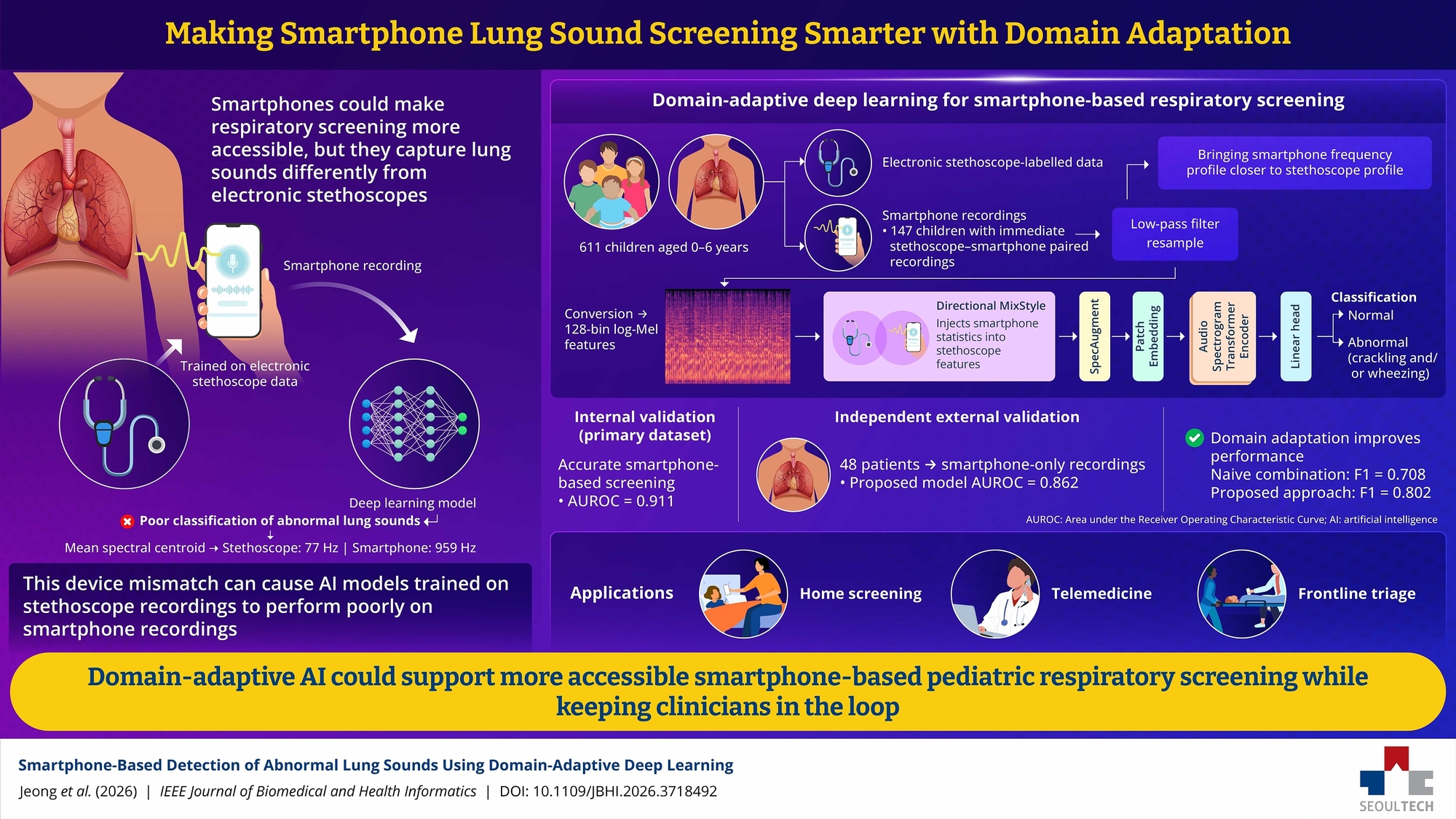
Researchers at MIT, Boston Children's Hospital and Inria developed E(3)-Pose, a deep learning model that tracks fetal head movement during MRI scans to improve image alignment. At Seoul National University of Science and Technology, a model detected abnormal lung sounds in children from smartphone recordings and performed better than other tested approaches, though it needs validation in larger real world studies. E(3)-Pose · SeoulTech
A study of 805 confirmed pediatric growth plate fractures, reported from Ankara Sincan Training and Research Hospital, found that GPT-5 identified a qualifying fracture in the correct region in 72.5% of cases. Misses were most frequent for elbow and distal tibia injuries, and the researchers said a negative model output should not rule out a fracture. GPT-5 fracture study
Two studies looked at bias and agreement in AI models. UT Southwestern researchers found that three open source AI models used for emergency triage could be influenced by stigmatizing details in patient records from Stanford Medicine and Beth Israel Deaconess Medical Center. Information about frequent emergency department visits, psychiatric emergencies and substance use sometimes caused the models to lower the priority of patients who later deteriorated, and nearly 10% of patients were incorrectly downgraded in some cases. At Georgia Tech, Lorenzo de la Loza and Vijay Madisetti tested eight AI models in 1,280 simulated conversations involving delusional beliefs. Instructions discouraging excessive agreement reduced confirmation of those beliefs by 73.8%, and adding self reflection raised the reduction to 77%. The study was accepted for publication in ACM AI Letters but did not test people in clinical settings or establish that the method prevents real world harm. UT Southwestern · Georgia Tech
Pathology, imaging and screening products
Aignostics, a Charité Berlin spin off with operations in Berlin and New York, launched HETA Clinical, a pan cancer AI product family for pathology. Its first four products assess slide quality, tumor presence, mitotic counts and tumor cellularity in whole slide H&E images, so labs can prioritize cases and reduce failed molecular tests. They are for research use only. Sophont launched Holon-S1, a pan cancer model that predicts spatial gene and pathway activity from routine pathology slides, for biomarker discovery, treatment research and analysis of archived tissue. It is for research use only and was evaluated across 16 organ types and more than 15 scanners. Aignostics · Sophont
London based XRlabs, founded by neurosurgeon Ali Haddad, raised a €7.48 million ($8.4 million) seed round led by Playground Global with Eka Ventures for surgical AI that combines scope video, navigation data and CT and MRI scans into a live view of the anatomy. Former Medtronic CEO Omar Ishrak joins as chair. EchoNous introduced Torso NXT, a compact ultrasound probe for its Kosmos platform covering heart, lung, abdominal, bladder and OB/GYN imaging, with more processing power for future AI features; it is available in the United States. XRlabs · EchoNous
Avenda Health added Surgery Mode to its Unfold AI platform, giving surgeons patient specific 3D cancer maps, MRI views and aligned capsule risk scores during robotic and non robotic prostate procedures, plus tools for case management, administrative checks and workflow tracking. TCS planned to present its Bidirectional Haptic Feedback System for robotic surgery, which uses force sensing, real time signal processing and haptic rendering to give surgeons tactile feedback, at The MedTech Conference in Boston on 19 October. Azra AI completed its acquisition of medical imaging AI company Blackford Analysis, which Sopris Capital had bought earlier with a plan to combine it with Azra. The combined platform will link imaging findings with patient records, care coordination, cancer registries and clinical trial matching, and Blackford continues serving its existing customers and partners. Avenda Health · TCS · Azra AI
In screening, Helfie AI and Health Innovation South West will evaluate smartphone based hypertension screening in real world settings, including for underserved populations. South Korea's NTL HEALTHCARE showed its CerviCARE AI cervical screening system at WHX Johannesburg and plans to use South Africa as a base for wider African expansion, after pilots in Zambia, Uganda and Tanzania and a supply to Zimbabwe. Helfie AI · NTL HEALTHCARE
Hospitals and health systems

The Hospital for Sick Children in Toronto and Microsoft Canada agreed a five year partnership to expand SickKids' use of Microsoft Azure, strengthen clinical data systems, support responsible AI and analytics and develop staff skills for more individualized child health care. SickKids and Microsoft
Epic is exploring AI agents that could carry out clinical protocols defined by people, gather patient data and support routine visits while physicians keep oversight. The company is discussing possible uses with health systems but has not set a launch timeline or named organizations using the technology in patient care. Lifemed AI joined the MEDITECH Alliance program as an Accelerator level member, bringing its DeepClaim claims automation platform and Gateway patient access system to MEDITECH hospitals and health systems for claims accuracy, denial management, eligibility checks and revenue recovery. The integration is available at no cost to health systems. Epic · Lifemed AI
Care operations and agents
Sunbound, an AI revenue operations company, completed its acquisition of Richter Healthcare Consultants, which serves senior living, skilled nursing, home health and hospice operators, and closed a $24 million Series A led by TTV Capital, bringing its total funding to $36 million. Jennifer Richter stays on in a role focused on industry partnerships and product strategy. New York and Miami based Sunlight AI launched with $17.4 million in seed funding led by the founder of Basis Set Ventures and acquired Bradford Medical Associates, on undisclosed terms. It plans to use AI, practice management software and human support to reduce administrative costs, improve collections and help independent physicians keep control of their practices. In Singapore, Genie Health, founded by former PropertyGuru CEO Hari Krishnan, raised US$3 million in seed funding from investors including Liminal, a venture studio backed by Temasek. Sunbound · Sunlight AI · Genie Health
Notable introduced Flow Compass in Flow Studio, which helps health systems build, test, monitor and improve AI workflows, with performance data, audit trails and role based controls. WeInfuse and Clarion are integrating Clarion's AI agents with WeInfuse's platform to handle routine patient calls using live order, authorization and appointment data; Medix Infusion is the first provider to use it. Tucuvi joined the Microsoft for Startups Pegasus Program, and health organisations can buy its AI care management platform through Microsoft Marketplace or with existing Azure commitments. Notable · WeInfuse and Clarion · Tucuvi
Specialty1 Partners is investing in AI tools for clinical documentation, patient communication, insurance administration, contract management and productivity across more than 225 dental practices in 29 US states, and plans to assess the results from the first quarter of 2027. RunPractice, which combines websites, booking, patient communication, payments, marketing and AI agents for independent wellness and medical practices, counts Manhattan functional medicine physician Ruth Johnson as an investor and user. Specialty1 Partners · RunPractice
For patients, wisepatientAI launched a feature in its free iOS and Android apps that answers everyday questions from medical records collected from several providers. The company says it is not intended to replace medical advice or diagnosis. Tessa AI launched Newslink, a free tool that checks health news against the research behind it. wisepatientAI · Tessa AI
Appointments

PointClickCare appointed Armughan Ahmad, former Appen CEO and Dell Technologies cloud and AI executive, to its board to support its AI strategy; Rob Eberle leaves the board after more than 11 years. Reveleer named Jean-Luc Neptune chief medical officer, leading clinical strategy across programs serving 12 million covered lives. Attilio, a life optimization company, named Buck Institute president and CEO Eric Verdin cochairman to guide its scientific direction. PointClickCare · Reveleer · Attilio
Also
The Gates Foundation, building on its $1 billion commitment for equitable AI access, updated its principles to emphasize local context, human oversight, privacy, responsible use and accountability, and named more than 60 partners supporting AI tools for health workers, teachers and farmers. Gates Foundation
Georgia Tech received a three year, $1.5 million grant from the National Institute on Disability, Independent Living, and Rehabilitation Research to expand ACCESS for Aging Well with Assistive Technology 2.0, which uses machine learning and predictive analytics to help older adults find assistive technologies. STPI and CIIE at IIT BHU held a conclave in Varanasi, India, on AI for healthcare, accessibility and inclusion. Georgia Tech · STPI and IIT BHU
Waterdrop's 2025 ESG report says its KEYI.AI underwriting tool cut complex health insurance processing time by 80% with 99.8% accuracy. Fabarta launched Fabarta Science Intelligent, an AI for Science platform for materials research that links discovery, lab experiments, pilot trials and industrial production. HIMSS opened registration for HIMSS27, from 5 to 8 April 2027 at McCormick Place in Chicago. Waterdrop · Fabarta · HIMSS27
We hope you enjoyed this article
Consider subscribing to one of our newsletters like Life AI Weekly or Daily AI Brief.
Also, consider following us on social media:
More from Life Sciences
Oct 21 NVIDIA Debuts RFD4-Proteina and Expands Radiotherapy Work Oct 21 Limber Health Introduces 90 Day Recovery Forecast for Rehab Therapy Oct 21 Coherence Neuro Raises $45 Million for Brain Cancer Implant Oct 21 OpenAI Uses Thousands of Agents to Analyze Brain Cell Data Oct 21 iReprogram and University of Michigan Launch AI Diabetes Cell InitiativeLife AI Weekly
Weekly coverage of AI applications in healthcare, drug development, biotechnology research, and genomics breakthroughs.
