Wysera Launches AI Agent for Brand Voice Marketing Copy
Nov 01, 2026
Marketing AI
UK-listed language and AI company RWS launched Weava, a platform that translates and adapts enterprise content for different languages, cultures and markets. RWS introduced the platform at Web Summit 2026 in Lisbon and says it is available now.
Weava uses RWS's Language Weaver Pro translation engine, which RWS says ranked first in 31 of 32 languages in its benchmarking against leading AI translation tools, and Audience Check, a group of AI persona agents representing defined reader profiles. The agents assess whether content fits its intended audience and context, flag potential issues, explain their findings and recommend changes.
The platform profiles content across 11 dimensions, including formality, brand voice and emotional quality. Configurable quality thresholds can trigger automatic corrections, while human specialists can review content when additional judgment is required. Customers can also track quality, automation, market coverage and delivery times through a single interface. Flutter International, an early evaluator and long-time RWS customer, said its evaluation showed the approach's potential.
Consider subscribing to one of our newsletters like Daily AI Brief.
Also, consider following us on social media:
Daily report covering major AI developments and industry news, with both top stories and complete market updates
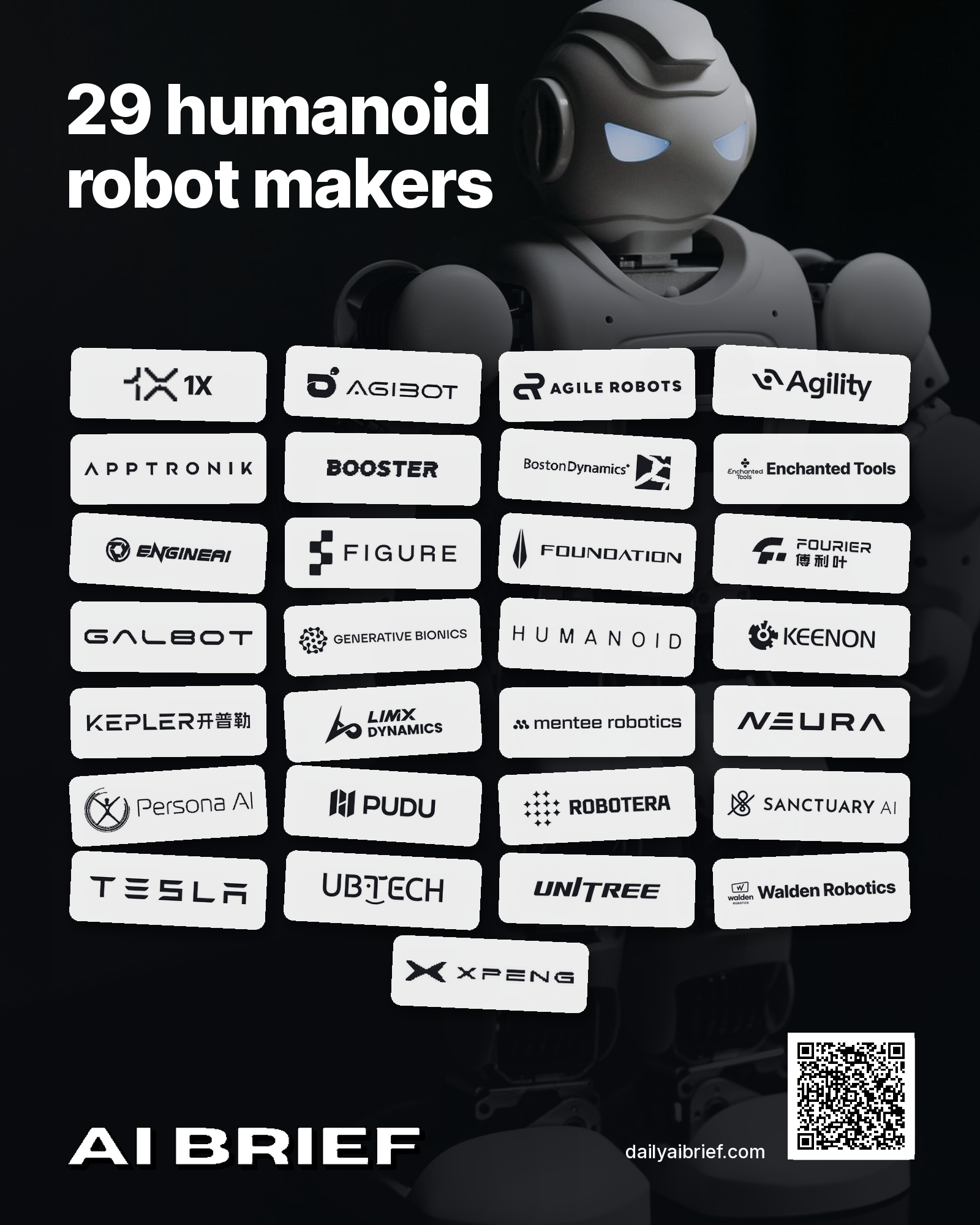
Companies building humanoid robots, from startups to Tesla and Boston Dynamics

 Tensordyne
This Tensordyne whitepaper presents Napier, an inference-focused AI processor and rack-scale system based on the company’s TDN Math logarithmic number system. It examines infrastructure requirements for large mixture-of-experts and agentic models, compares major inference architecture approaches, and details the TDN AIP processor, TDN72 pod, TDN Link fabric, and Napier Ultra configuration. The paper reports simulation-based performance, cost, and accuracy-validation results, including Tensordyne’s projected comparison of one Napier rack with a nine-rack Nvidia Rubin plus Groq deployment; the chip is reported as taped out and in fabrication.
Read moreDaily AI Brief: the AI news that matters, in your inbox.