
OpenAI details how it contains frontier models, including a pause after a DNS exploit
Nov 18, 2026
AI Safety
OpenAI has set out how it fights adversarial distillation, in which an actor uses a frontier model's outputs without authorisation to train another model with similar capabilities but without the same safeguards, the company said on 20 November. It says this is a particular risk in dual-use areas such as cybersecurity and biology.
The company says it focuses on protecting its models' internal reasoning, or chain of thought, which can carry information the final answer leaves out and is especially valuable training data. In an internal adaptive red-teaming test, the average success rate of attacks that tried to recover reasoning from an earlier prompt fell from 54.0% against GPT-6 Astra with its original safeguards to 0.2% against GPT-6.2 Astra. With GPT-6.2 Astra and Sol, reasoning is now tied to the conversation that produced it and dropped if an earlier message is rewritten, and older model families can no longer read it.
In an internal study, a student model trained on exact reasoning traces from coding and defensive security work generally learned more cyber capability than one trained on the reasoning summaries users can see, which OpenAI says shows protecting traces can limit capability transfer. Its defences combine adversarial training, input and output classifiers, API controls and investigations of coordinated campaigns.
OpenAI says it has seen multiple unauthorised distillation campaigns this year, with weekly enforcement actions ranging from thousands to tens of thousands of accounts and rising sharply over the summer. It calls adversarial distillation a national security risk and notes it briefed Congress in February on activity indicating that DeepSeek was attempting to distill US frontier models.
Consider subscribing to one of our newsletters like Cybersecurity AI Weekly, AI Policy Brief or Daily AI Brief.
Also, consider following us on social media:
Weekly newsletter about AI in Cybersecurity.
 Tensordyne
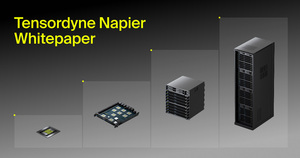
This Tensordyne whitepaper presents Napier, an inference-focused AI processor and rack-scale system based on the company’s TDN Math logarithmic number system. It examines infrastructure requirements for large mixture-of-experts and agentic models, compares major inference architecture approaches, and details the TDN AIP processor, TDN72 pod, TDN Link fabric, and Napier Ultra configuration. The paper reports simulation-based performance, cost, and accuracy-validation results, including Tensordyne’s projected comparison of one Napier rack with a nine-rack Nvidia Rubin plus Groq deployment; the chip is reported as taped out and in fabrication.
Read moreDaily AI Brief: the AI news that matters, in your inbox.