Scality Launches AI Inference Factory for On Premises Deployment
Oct 08, 2026
Data Centers
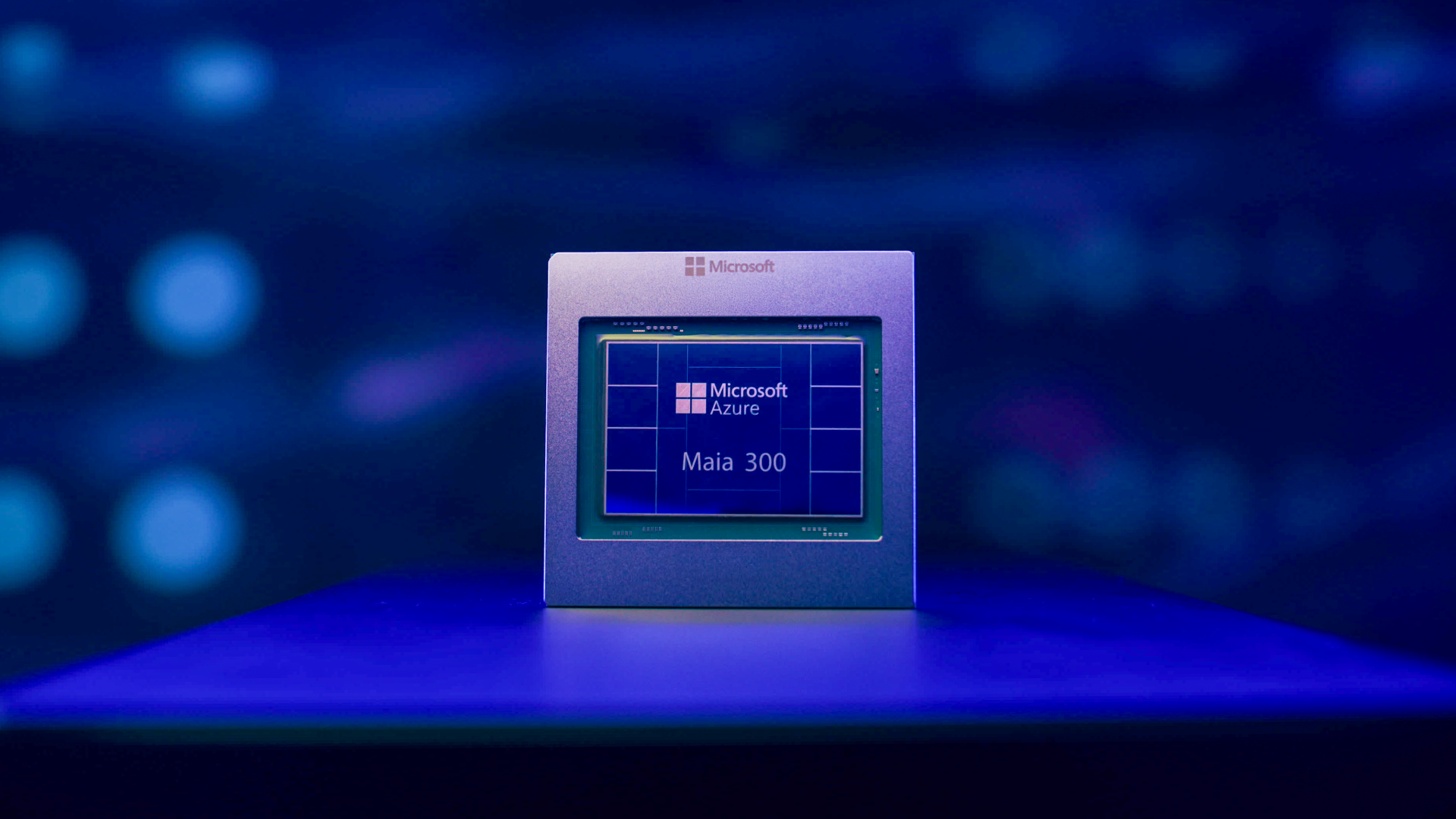
Microsoft will expand Azure Maia to deployments spanning multiple gigawatts from 2027, when Maia will become its primary inference system, the company said in a blog post. Maia 300 will begin production deployments that year.
Maia 200 is already serving Microsoft Copilot and the MAI model team. GitHub Copilot and Microsoft Foundry will begin using it by the end of 2026. The system runs models from OpenAI and Microsoft, along with open source model families, across deployments in the United States, Europe and Australia.
Maia 300 is designed for long context reasoning, conversational services and tasks involving multiple agent steps. Microsoft expects it to process 40 percent more tokens per megawatt than leading systems based on GPUs. A rack with 96 accelerators will provide up to seven times the token throughput of Maia 200, with 27.6 terabytes of HBM capacity and 1.7 petabytes per second of aggregate memory bandwidth.
Consider subscribing to one of our newsletters like Silicon Brief or Daily AI Brief.
Also, consider following us on social media:
Weekly coverage of AI hardware developments including chips, GPUs, cloud platforms, and data center technology.


 Tensordyne
This Tensordyne whitepaper presents Napier, an inference-focused AI processor and rack-scale system based on the company’s TDN Math logarithmic number system. It examines infrastructure requirements for large mixture-of-experts and agentic models, compares major inference architecture approaches, and details the TDN AIP processor, TDN72 pod, TDN Link fabric, and Napier Ultra configuration. The paper reports simulation-based performance, cost, and accuracy-validation results, including Tensordyne’s projected comparison of one Napier rack with a nine-rack Nvidia Rubin plus Groq deployment; the chip is reported as taped out and in fabrication.
Read moreDaily AI Brief: the AI news that matters, in your inbox.