ASUS Expands AI Infrastructure From Cloud to Edge
Sep 05, 2026
Data Centers
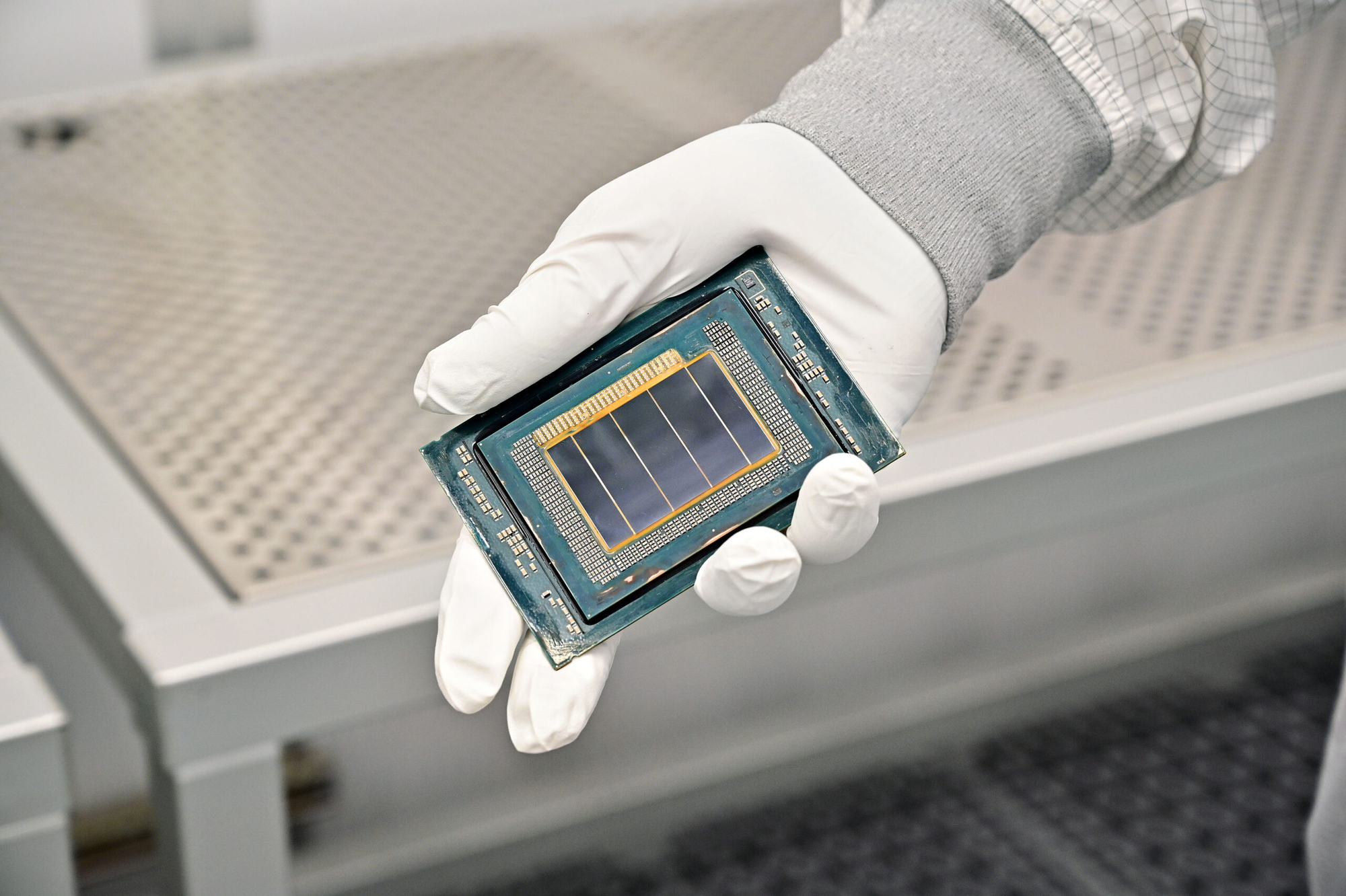
Intel Corporation unveiled its new Panther Lake processors, the first built on its 18A semiconductor process, announced in a press release. The Intel Core Ultra series 3 chips mark the next generation of the company’s AI PC platform and are set to enter high-volume production at Intel’s Fab 52 facility in Chandler, Arizona, later this year.
Panther Lake uses a scalable, multi-chiplet architecture designed for consumer and commercial AI PCs, gaming systems, and edge devices. The processors feature up to 16 performance and efficiency cores, a new Intel Arc GPU with up to 12 Xe cores, and up to 180 trillion operations per second of AI acceleration. Intel expects the first units to ship before the end of 2025, with general availability beginning January 2026.
Intel also previewed its Xeon 6+ server processor, codenamed Clearwater Forest, the company’s first 18A-based server product. Scheduled for release in the first half of 2026, it will feature up to 288 efficient cores and a 17% instructions-per-cycle increase over the prior generation.
The 18A process introduces Intel’s RibbonFET transistor architecture and PowerVia backside power delivery system, enabling improved performance and energy efficiency. Production at Fab 52 builds on Intel’s $100 billion domestic expansion initiative, reinforcing its U.S.-based manufacturing and research operations.
Consider subscribing to one of our newsletters like Silicon Brief or Daily AI Brief.
Also, consider following us on social media:
Weekly coverage of AI hardware developments including chips, GPUs, cloud platforms, and data center technology.


 Tensordyne
This Tensordyne whitepaper presents Napier, an inference-focused AI processor and rack-scale system based on the company’s TDN Math logarithmic number system. It examines infrastructure requirements for large mixture-of-experts and agentic models, compares major inference architecture approaches, and details the TDN AIP processor, TDN72 pod, TDN Link fabric, and Napier Ultra configuration. The paper reports simulation-based performance, cost, and accuracy-validation results, including Tensordyne’s projected comparison of one Napier rack with a nine-rack Nvidia Rubin plus Groq deployment; the chip is reported as taped out and in fabrication.
Read moreDaily AI Brief: the AI news that matters, in your inbox.