NVIDIA Expands Hyperion Autonomous Vehicle Platform in Europe
Oct 21, 2026
Autonomous Vehicles
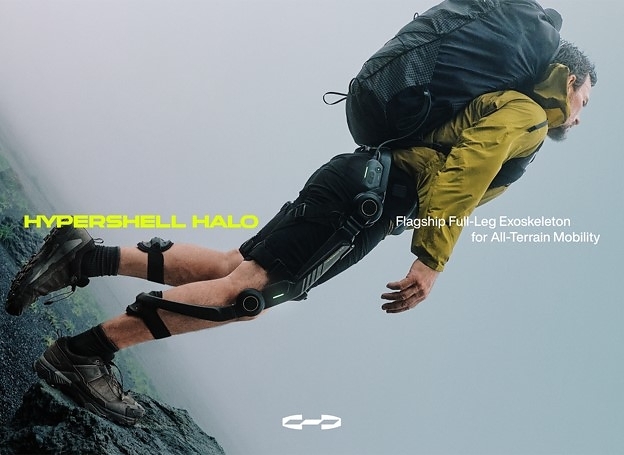
Hypershell unveiled its Halo full leg exoskeleton at IFA 2026 in Berlin, the company announced in a press release. The device uses HyperIntuition 2.0 AI motion control and four motors to coordinate powered hip and knee joints.
More than 30 sensors feed motion data to the HyperCore Pro AI chip. Hypershell says Halo can anticipate movement intent about 200 milliseconds in advance and adjust assistance up to 2,500 times per second. Its motors provide up to 1,490 W of peak output for propulsion, weight bearing support, descent control, landing cushioning, and knee protection.
Halo weighs 2.6 kg, folds to less than 8 liters, and provides up to 20 km of range. Prices start at $2,299, €2,299, or £2,199. Sales and phased deliveries are scheduled to begin in November 2026 in the United States, Canada, Europe, the United Kingdom, and China.
Consider subscribing to one of our newsletters like Robotics Brief or Daily AI Brief.
Also, consider following us on social media:
Weekly coverage of AI-driven robotics advances in industrial automation, autonomous vehicles, and robotic systems.


 Tensordyne
This Tensordyne whitepaper presents Napier, an inference-focused AI processor and rack-scale system based on the company’s TDN Math logarithmic number system. It examines infrastructure requirements for large mixture-of-experts and agentic models, compares major inference architecture approaches, and details the TDN AIP processor, TDN72 pod, TDN Link fabric, and Napier Ultra configuration. The paper reports simulation-based performance, cost, and accuracy-validation results, including Tensordyne’s projected comparison of one Napier rack with a nine-rack Nvidia Rubin plus Groq deployment; the chip is reported as taped out and in fabrication.
Read moreDaily AI Brief: the AI news that matters, in your inbox.