US Army Develops Autonomous AI Agents for Cyberattacks
Oct 19, 2026
Defense
The U.S. Army's Criminal Investigation Division is looking for a cloud-hosted commercial platform that uses behavioural analytics, machine learning and AI to track adversaries who plan against the military on the darknet and on encrypted apps such as Signal, Telegram and Discord, DefenseScoop reports, citing a request for information released this week.
The division wants tools that flag early signs of "mobilization to violence," translate slang and recognise coded symbols with natural language processing and computer vision, and link pseudonymous accounts across platforms into single profiles, including through blockchain and cryptocurrency transaction graphs. It also asks how vendors would keep human analysts in the loop when validating alerts, mask investigators' digital footprints and archive deleted or short-lived content as evidence. The Army says it wants to move from a "reactive footing" to a "proactive model."
Consider subscribing to one of our newsletters like Cybersecurity AI Weekly, Defense AI Brief or Daily AI Brief.
Also, consider following us on social media:
Weekly newsletter about AI in Cybersecurity.
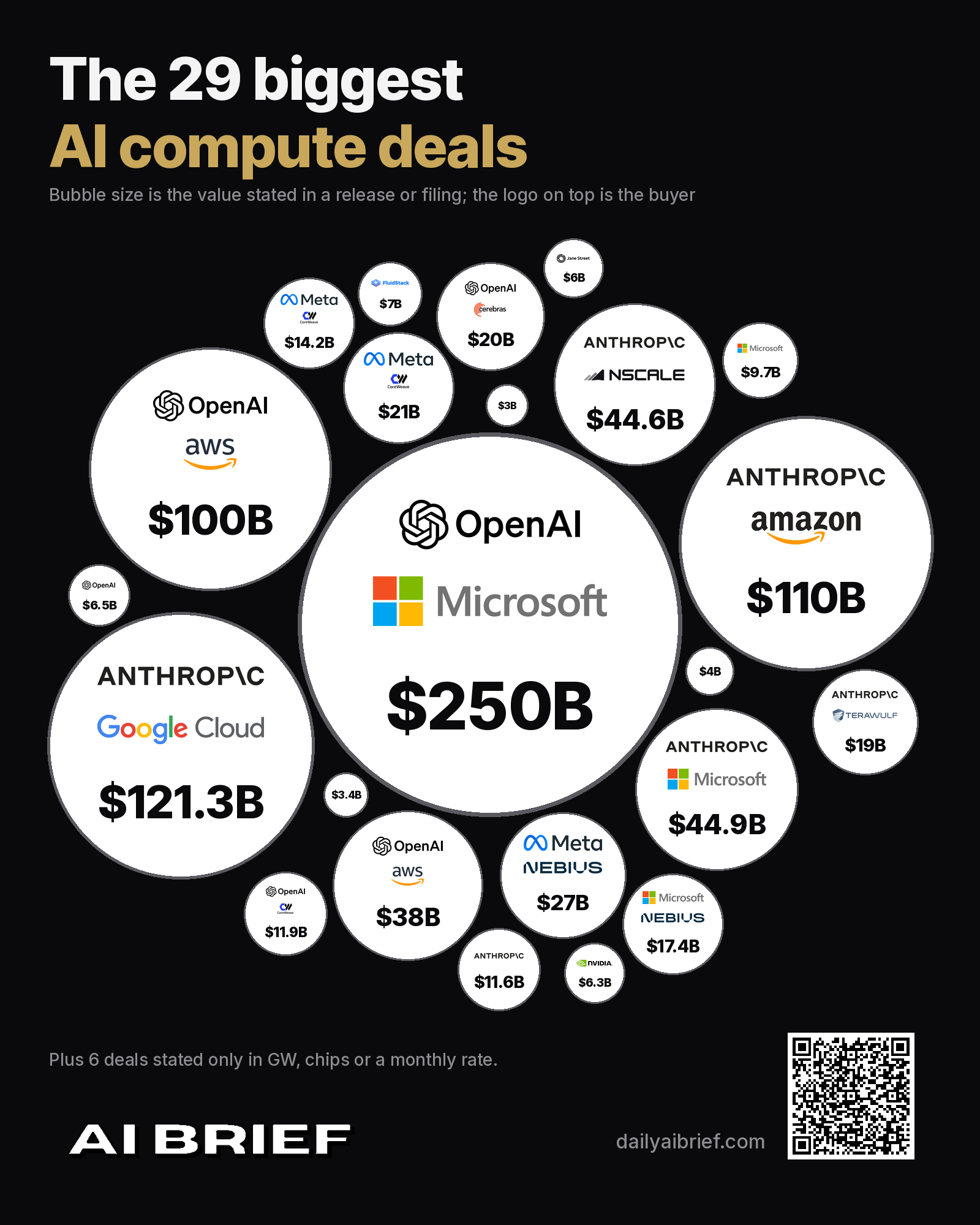
The largest announced contracts to buy chips or cloud capacity for AI

 Tensordyne
This Tensordyne whitepaper presents Napier, an inference-focused AI processor and rack-scale system based on the company’s TDN Math logarithmic number system. It examines infrastructure requirements for large mixture-of-experts and agentic models, compares major inference architecture approaches, and details the TDN AIP processor, TDN72 pod, TDN Link fabric, and Napier Ultra configuration. The paper reports simulation-based performance, cost, and accuracy-validation results, including Tensordyne’s projected comparison of one Napier rack with a nine-rack Nvidia Rubin plus Groq deployment; the chip is reported as taped out and in fabrication.
Read moreDaily AI Brief: the AI news that matters, in your inbox.