Satlyt to Test AI Computing Software in Orbit
Oct 14, 2026
Funding
India's Technology Development Board has agreed to provide ₹64.05 crore to Bengaluru-based Astrome Technologies to develop a constellation of AI-powered electronic intelligence (ELINT) satellites, Analytics India Magazine reported. The money comes from the government's Research, Development and Innovation Fund as optionally convertible debt, covering half of the project's estimated ₹128.11 crore cost.
Astrome plans microsatellites of about 50 kg each in low Earth orbit. Each will carry a payload that detects and analyses signals across a broad frequency range, with AI-based software on the ground processing the data and links between satellites to share it. More satellites are meant to give wider coverage and more frequent observation of areas of interest.
The project aims to take the technology from early lab stage (TRL-4) to flight-proven (TRL-9). "Through the RDI Fund, TDB is supporting Indian enterprises working on frontier technologies," said TDB Secretary Rajesh Kumar Pathak.
Consider subscribing to one of our newsletters like Defense AI Brief or Daily AI Brief.
Also, consider following us on social media:
Your weekly intelligence briefing on the technology shaping modern warfare and national security.
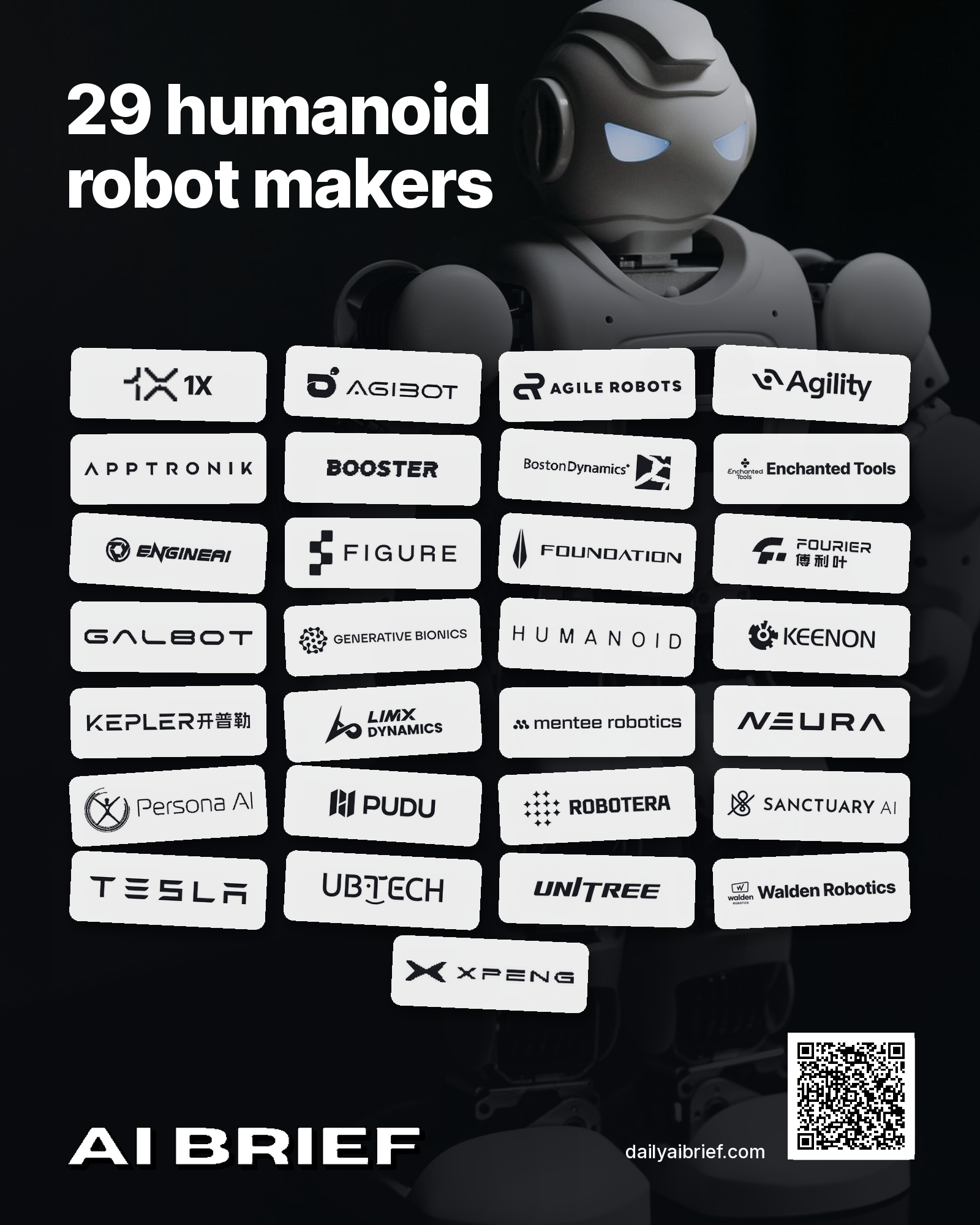
Companies building humanoid robots, from startups to Tesla and Boston Dynamics

 Tensordyne
This Tensordyne whitepaper presents Napier, an inference-focused AI processor and rack-scale system based on the company’s TDN Math logarithmic number system. It examines infrastructure requirements for large mixture-of-experts and agentic models, compares major inference architecture approaches, and details the TDN AIP processor, TDN72 pod, TDN Link fabric, and Napier Ultra configuration. The paper reports simulation-based performance, cost, and accuracy-validation results, including Tensordyne’s projected comparison of one Napier rack with a nine-rack Nvidia Rubin plus Groq deployment; the chip is reported as taped out and in fabrication.
Read moreDaily AI Brief: the AI news that matters, in your inbox.