
TIER IV Releases Autonomous Racing Kart Reference Design
TIER IV released a public reference design for autonomous racing kart systems based on Autoware. It includes driving software, a simulator, hardware specifications, and development and evaluation tools.
24 Sep 2026
TIER IV said in a press release that it released a reference design for autonomous racing kart systems in a public GitHub repository. Built on Autoware, the design includes autonomous driving software, a racing kart simulator, vehicle and hardware specifications, and tools for development and evaluation.
Robotics Brief covers stories like this, every Thursday. Free.
The Society of Automotive Engineers of Japan used the design as a common platform for its Autonomous Driving AI Challenge. About 600 participants across 240 teams used it during qualifying and final rounds from July to September 2026.
The final rounds took place on September 19 and 20, with simulation and physical racing kart challenges. The common platform allowed teams to focus on autonomous driving algorithms and AI models rather than building complete systems.
Where this comes from
PR Newswire TIER IV releases a reference design for autonomous racing kart systems, used by Autonomous Driving AI Chall...In this story
More from Robotics
Nov 23 Embo raises $110 million seed round to build world models for humanoid robots Nov 23 Swiss grocery robot startup Theseus Robotics gets €455,000 from Y Combinator Nov 23 TUM robot AI model stops and asks for help when it reaches its limits Nov 23 Swiss robotics startup coprod raises $6 million to speed up custom robot building Nov 23 Ant Group leads $100 million round in humanoid robot maker Simplexity at $1.6 billion valuation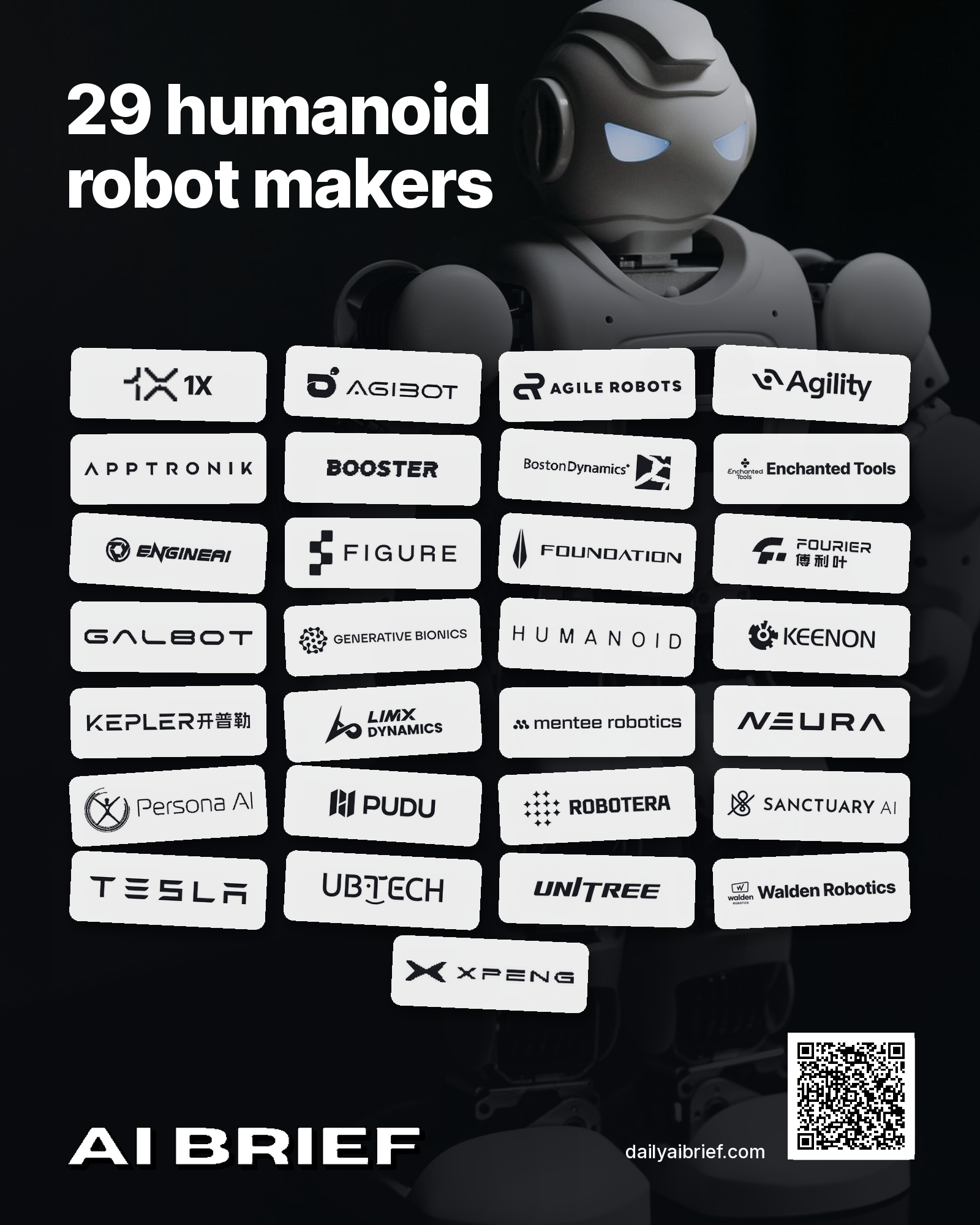
Humanoid Robot Makers
Companies building humanoid robots, from startups to Tesla and Boston Dynamics
Whitepaper

Tensordyne Napier: What If One Rack Could Do the Work of Nine?
 Tensordyne
This Tensordyne whitepaper presents Napier, an inference-focused AI processor and rack-scale system based on the company’s TDN Math logarithmic number system. It examines infrastructure requirements for large mixture-of-experts and agentic models, compares major inference architecture approaches, and details the TDN AIP processor, TDN72 pod, TDN Link fabric, and Napier Ultra configuration. The paper reports simulation-based performance, cost, and accuracy-validation results, including Tensordyne’s projected comparison of one Napier rack with a nine-rack Nvidia Rubin plus Groq deployment; the chip is reported as taped out and in fabrication.
Read moreYou may also like
Autoware 2.0 Adds End to End AI Driving Models 2 Nov 2026 TIER IV Open Sources End to End Autonomous Driving AI Models for Autoware 11 Nov 2026 TIER IV and Komatsu start building autonomous driving systems for three dump trucks 13 Nov 2026 OpenAI Tests Astra for Hardware and Vehicle Design 3 Nov 2026 GAC Takes Eight China SAE Awards, Including AI Body Design Project 1 Nov 2026 14 Year Old Developer Releases Autark to Coordinate AI Agents 11 Nov 2026Daily AI Brief: the AI news that matters, in your inbox.