Milliman MedInsight Introduces MIKE for Healthcare Analytics
Sep 14, 2026
Healthcare
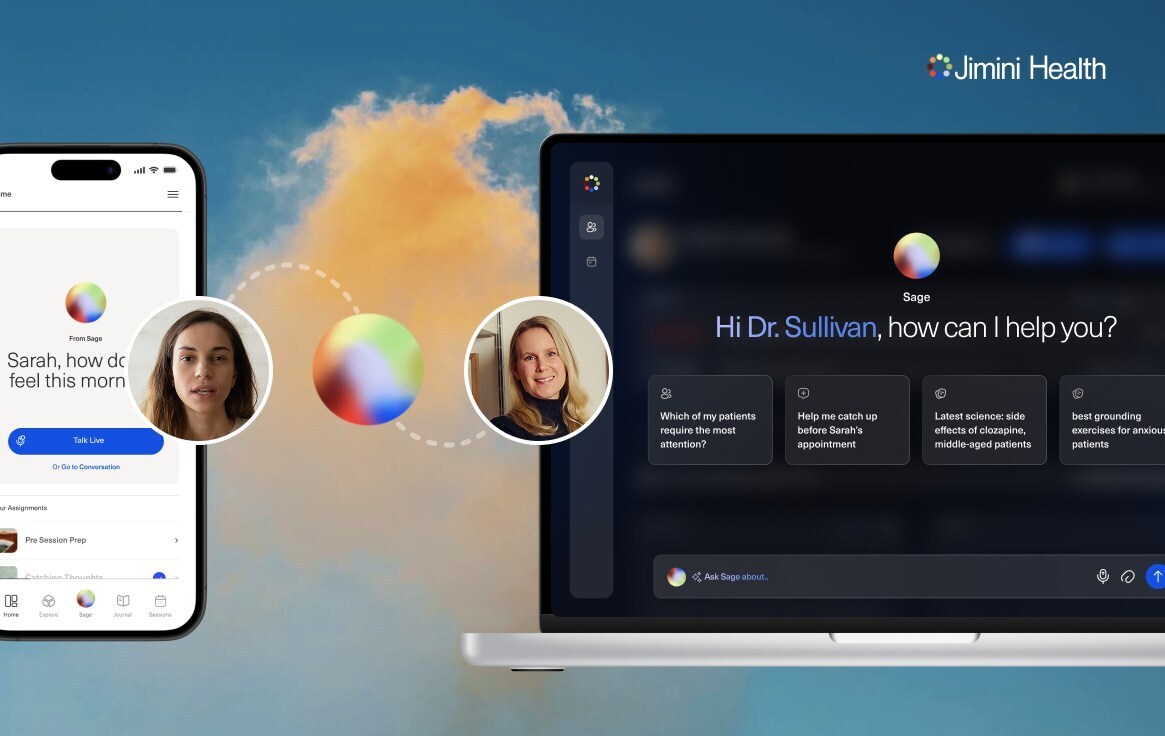
Jimini Health has released a new white paper titled "A Clinical Safety Framework for AI in Mental Health," which presents a roadmap for ensuring AI innovation in mental healthcare is clinician-led, interpretable, and safe, announced in a press release. The company has also strengthened its advisory board by adding Dr. Pushmeet Kohli from Google DeepMind and Dr. Seth Feuerstein from Yale University.
The white paper emphasizes the importance of continuous clinical oversight, explicit reasoning, evaluation-driven deployment, and alignment to clinical safety values in AI-powered mental health solutions. Jimini Health's proprietary AI assistant, Sage, supports clinicians and patients by assisting with therapy session preparations and follow-ups.
Jimini Health's commitment to safety is further demonstrated by its multi-state clinical practice, where its technology is tested by its own clinicians before being used by partners. The company is also planning clinical trials in collaboration with U.S. universities to expand its capabilities and support for patients.
Consider subscribing to one of our newsletters like Life AI Weekly or Daily AI Brief.
Also, consider following us on social media:
Weekly coverage of AI applications in healthcare, drug development, biotechnology research, and genomics breakthroughs.


 Tensordyne
This Tensordyne whitepaper presents Napier, an inference-focused AI processor and rack-scale system based on the company’s TDN Math logarithmic number system. It examines infrastructure requirements for large mixture-of-experts and agentic models, compares major inference architecture approaches, and details the TDN AIP processor, TDN72 pod, TDN Link fabric, and Napier Ultra configuration. The paper reports simulation-based performance, cost, and accuracy-validation results, including Tensordyne’s projected comparison of one Napier rack with a nine-rack Nvidia Rubin plus Groq deployment; the chip is reported as taped out and in fabrication.
Read moreDaily AI Brief: the AI news that matters, in your inbox.