Inception launches Mercury 3 diffusion language model
Oct 19, 2026
Language Models
Inception, the startup behind the Mercury family of diffusion language models, has told customers it will wind down its Mercury API. In a notice emailed to API customers on 12 November, which AI Brief received as a customer, the company said the API "will remain fully available through December 28, 2026."
"After this date, you will no longer have access to the service or any data submitted to the platform," the notice says, urging customers to retrieve their data before then. It gives no reason for the decision and does not say what happens to the company or its models. Inception has not posted a public announcement.
Signs of the retreat were already visible. Inception's models page says Mercury 2 and Mercury 2.5 are no longer available to new users and that existing customers keep access until 15 November, even as it still advertises Mercury 3 at half price. Mercury 3 is no longer served through OpenRouter, according to a developer bug report filed on 12 November.
Inception's Mercury models generate text by diffusion, producing tokens in parallel rather than one at a time, and the company has marketed them on speed of more than 1,000 tokens per second.
Consider subscribing to one of our newsletters like Daily AI Brief.
Also, consider following us on social media:
Daily report covering major AI developments and industry news, with both top stories and complete market updates
 Tensordyne
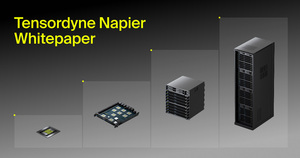
This Tensordyne whitepaper presents Napier, an inference-focused AI processor and rack-scale system based on the company’s TDN Math logarithmic number system. It examines infrastructure requirements for large mixture-of-experts and agentic models, compares major inference architecture approaches, and details the TDN AIP processor, TDN72 pod, TDN Link fabric, and Napier Ultra configuration. The paper reports simulation-based performance, cost, and accuracy-validation results, including Tensordyne’s projected comparison of one Napier rack with a nine-rack Nvidia Rubin plus Groq deployment; the chip is reported as taped out and in fabrication.
Read moreDaily AI Brief: the AI news that matters, in your inbox.