Formic Raises $50 Million to Expand Factory Robotics Platform
Oct 24, 2026
Funding
Finite State raised $27 million in Series C funding led by private funds managed by The O.H.I.O. Fund, the Columbus, Ohio company said. CIBC Innovation Banking, Energy Impact Partners, Energize Capital and National Grid Partners also participated.
Finite State will use the capital to expand its international operations and add more autonomous capabilities to its product security platform. The software analyzes firmware and other software inside connected products, including vehicles, medical devices, industrial equipment and consumer electronics.
The platform finds known and zero-day vulnerabilities and helps manufacturers fix the exploitable ones, and the company says it continuously generates software bills of materials (SBOMs), VEX reports and signed compliance packages. Finite State ties the raise to a surge of AI-discovered flaws, including a PHP vulnerability found by AI-powered research in October.
Consider subscribing to one of our newsletters like Cybersecurity AI Weekly, AI Funding Brief or Daily AI Brief.
Also, consider following us on social media:
Weekly newsletter about AI in Cybersecurity.
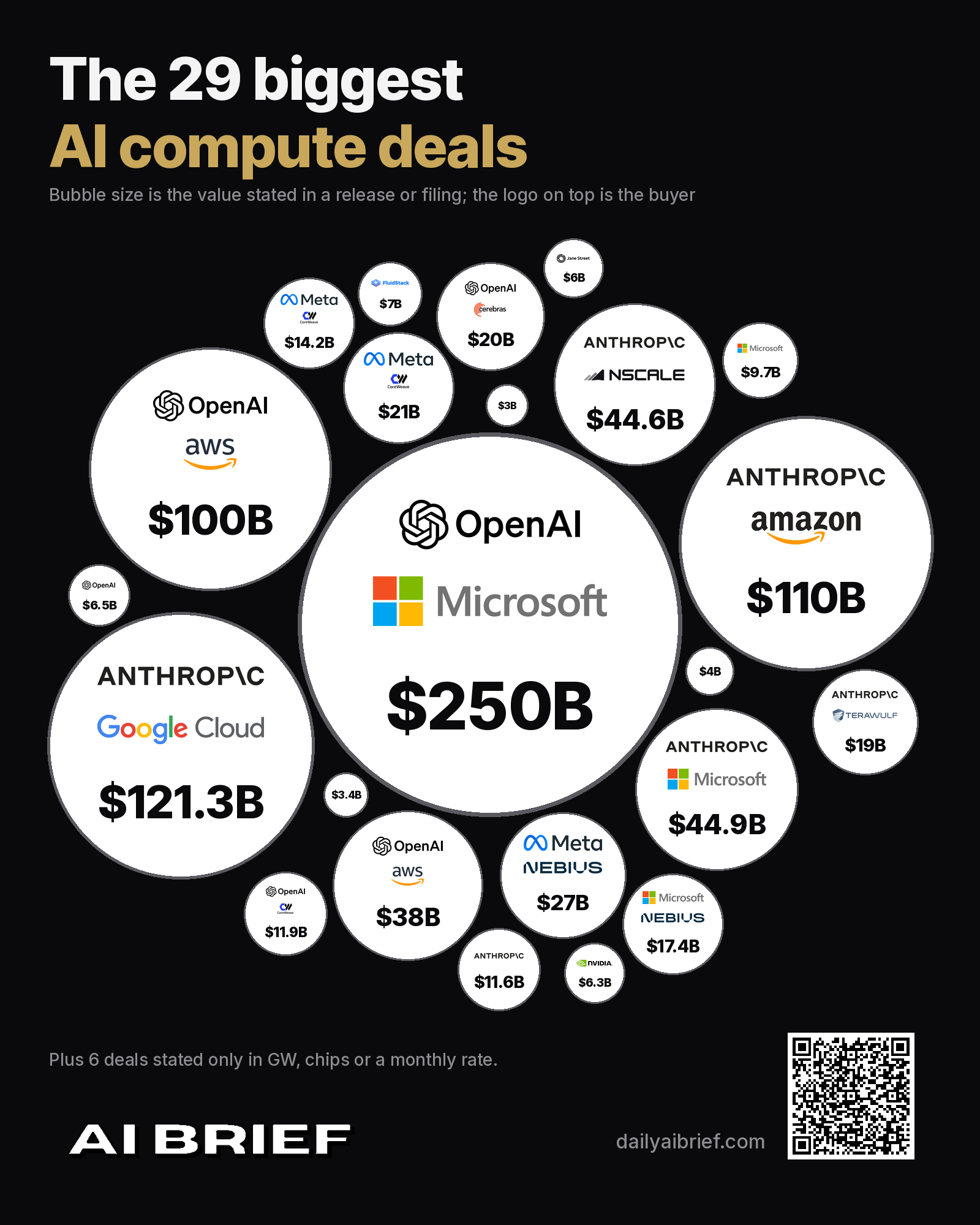
The largest announced contracts to buy chips or cloud capacity for AI

 Tensordyne
This Tensordyne whitepaper presents Napier, an inference-focused AI processor and rack-scale system based on the company’s TDN Math logarithmic number system. It examines infrastructure requirements for large mixture-of-experts and agentic models, compares major inference architecture approaches, and details the TDN AIP processor, TDN72 pod, TDN Link fabric, and Napier Ultra configuration. The paper reports simulation-based performance, cost, and accuracy-validation results, including Tensordyne’s projected comparison of one Napier rack with a nine-rack Nvidia Rubin plus Groq deployment; the chip is reported as taped out and in fabrication.
Read moreDaily AI Brief: the AI news that matters, in your inbox.