Huawei Unveils Grid Interactive AI Data Center Solution
Sep 17, 2026
Data Centers
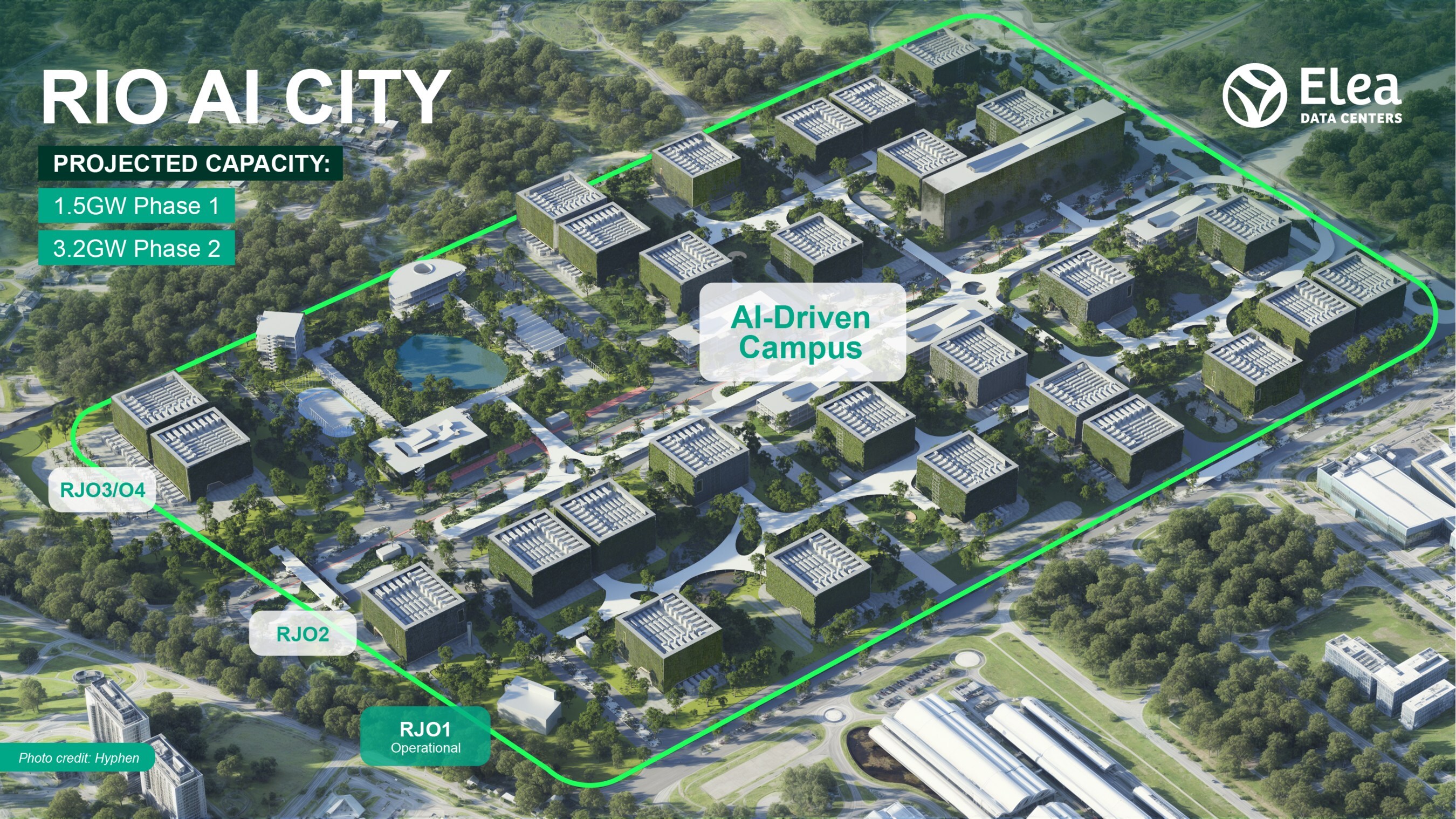
Elea Data Centers has announced the launch of Rio AI City, a landmark data center project in Rio de Janeiro, Brazil, with a capacity of up to 3.2 GW of renewable energy. In a press release, Elea detailed that the project will initially provide 1.5 GW of energy, with the first phase expected to be operational by 2026.
Located in the Olympic Park region, Rio AI City will be powered entirely by certified renewable energy and will feature waterless cooling systems. The project is part of a broader urban revitalization effort, integrating with the Mata Maravilha project to create a multifunctional urban ecosystem.
The initiative is supported by the Rio de Janeiro City Hall and aims to position the city as a global technology hub. It is expected to generate over 10,000 high-skilled jobs and attract significant investment, reinforcing Rio's role in the digital economy.
Consider subscribing to one of our newsletters like Silicon Brief or Daily AI Brief.
Also, consider following us on social media:
Weekly coverage of AI hardware developments including chips, GPUs, cloud platforms, and data center technology.


 Tensordyne
This Tensordyne whitepaper presents Napier, an inference-focused AI processor and rack-scale system based on the company’s TDN Math logarithmic number system. It examines infrastructure requirements for large mixture-of-experts and agentic models, compares major inference architecture approaches, and details the TDN AIP processor, TDN72 pod, TDN Link fabric, and Napier Ultra configuration. The paper reports simulation-based performance, cost, and accuracy-validation results, including Tensordyne’s projected comparison of one Napier rack with a nine-rack Nvidia Rubin plus Groq deployment; the chip is reported as taped out and in fabrication.
Read moreDaily AI Brief: the AI news that matters, in your inbox.