
UK FCA Clarifies AI Rules for Financial Firms
Oct 21, 2026
Regulation
The UK's financial regulators have told financial firms and market infrastructures that AI is making cyber attacks faster and cheaper, and set out how they should respond. The Prudential Regulation Authority, the Financial Conduct Authority and the Bank of England published a joint document of effective practices on cyber risk relating to AI on 19 November, alongside a consultation on cyber risk and resilience management.
Advanced AI systems can analyse source code, find vulnerabilities and map attack paths at great speed, so attackers can exploit weaknesses within hours or days rather than weeks or months, the regulators write. They cite the UK AI Security Institute's finding that performance in some areas is doubling every eight months. Firms should therefore move from traditional vulnerability management to continuous exposure management, and treat cyber risk as a core business risk for boards rather than a purely technical issue.
The document covers the tools and controls around AI systems used in cyber defence, which it calls the harness, as well as supply chain risk, identity and access management, and recovery from AI-enabled attacks such as data poisoning and prompt injection. It warns firms not to over-rely on AI and says meaningful human oversight remains essential for key decisions, according to the publication.
The effective practices are not binding. The consultation, which clarifies how firms should meet existing rules rather than proposing new ones, closes on 26 February 2027, according to the Bank of England.
Consider subscribing to one of our newsletters like Finance AI Weekly, Cybersecurity AI Weekly or Daily AI Brief.
Also, consider following us on social media:
Weekly newsletter about AI in Cybersecurity.
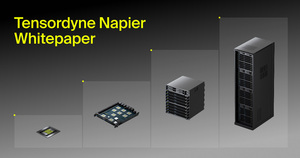
 Tensordyne
This Tensordyne whitepaper presents Napier, an inference-focused AI processor and rack-scale system based on the company’s TDN Math logarithmic number system. It examines infrastructure requirements for large mixture-of-experts and agentic models, compares major inference architecture approaches, and details the TDN AIP processor, TDN72 pod, TDN Link fabric, and Napier Ultra configuration. The paper reports simulation-based performance, cost, and accuracy-validation results, including Tensordyne’s projected comparison of one Napier rack with a nine-rack Nvidia Rubin plus Groq deployment; the chip is reported as taped out and in fabrication.
Read moreDaily AI Brief: the AI news that matters, in your inbox.