WisPaper Adds Citation Verification to AI Research Agent
Aug 03, 2026
Scientific Research
WisPaper announced in a press release a new approach to scientific workflows that supports concurrent research execution. The system addresses the limitations of sequential research processes by enabling multiple research paths to progress in parallel.
Traditional research requires a step-by-step structure where literature review, hypothesis formation, experimentation, and validation occur in sequence. WisPaper reduces dependencies between these stages, allowing researchers to advance several hypotheses or problem statements at once. Processes such as literature analysis, experiment setup, and result generation can now proceed independently.
The platform shifts the researcher's role toward higher-level coordination. Instead of managing one investigation at a time, users can define questions, set priorities, and interpret results across multiple concurrent studies. This model mirrors how larger research teams operate but is now accessible to individual researchers.
WisPaper functions as a full-chain research accelerator that integrates literature retrieval, analysis, experiment design, execution, and paper writing in one environment. The company states that this approach can expand the speed and scope of scientific exploration across disciplines.
Consider subscribing to one of our newsletters like Daily AI Brief.
Also, consider following us on social media:
Daily report covering major AI developments and industry news, with both top stories and complete market updates

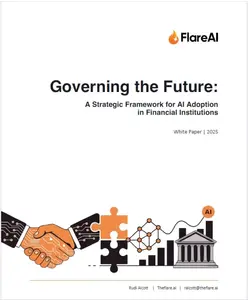
This whitepaper explores the transformative impact of artificial intelligence on the financial industry, focusing on the governance challenges and regulatory demands faced by banks. It provides a strategic framework for AI adoption, emphasizing the importance of a unified AI approach to streamline compliance and reduce operational costs. The document offers actionable insights and expert recommendations for banks with fewer than 2,000 employees to become leaders in compliant, customer-centric AI.
Read more