Thomson Reuters Updates CoCounsel for Tax and Audit Work
Oct 22, 2026
AI Agents
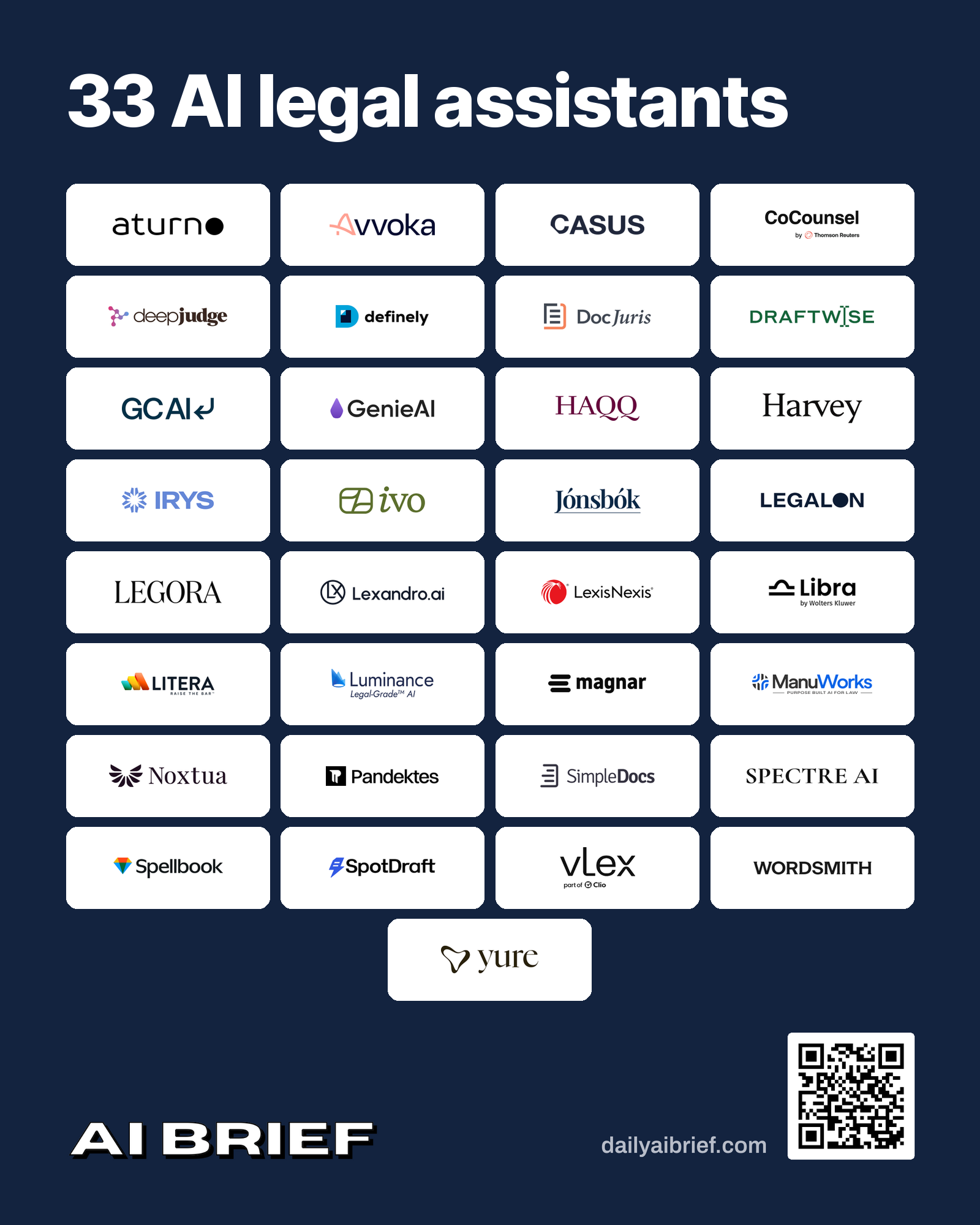
Thomson Reuters is adding regulatory intelligence from CUBE to CoCounsel Legal, its AI assistant for corporate legal teams and law firms, extending its regulatory coverage to users in more than 150 countries, IT Brief reports. CoCounsel Legal users will be able to search laws, rules, regulations and recent regulatory developments through a connection between Thomson Reuters' AI agents and CUBE's regulatory AI agents, so Thomson Reuters does not have to ingest, structure or maintain the underlying data itself.
CUBE said benchmark testing compared its regulatory identification agent with two frontier AI models across 13 queries covering the UK, Spain and the UAE, and that its system found three to four times more essential regulation. For guidance, codes and supervisory material, the gap ranged from six to 17 times, depending on the model. Thomson Reuters subject matter experts also reviewed the content.
CUBE says its regulatory intelligence covers more than 12,000 issuing bodies across 750 jurisdictions and is checked by 250 subject matter experts. CoCounsel Legal already includes Westlaw, Practical Law and Reuters content.
Consider subscribing to one of our newsletters like Legal AI Weekly, Enterprise AI Brief or Daily AI Brief.
Also, consider following us on social media:
The source for the Legal AI software news, analysis, emerging applications: contract review, e-discovery, research.

 Tensordyne
This Tensordyne whitepaper presents Napier, an inference-focused AI processor and rack-scale system based on the company’s TDN Math logarithmic number system. It examines infrastructure requirements for large mixture-of-experts and agentic models, compares major inference architecture approaches, and details the TDN AIP processor, TDN72 pod, TDN Link fabric, and Napier Ultra configuration. The paper reports simulation-based performance, cost, and accuracy-validation results, including Tensordyne’s projected comparison of one Napier rack with a nine-rack Nvidia Rubin plus Groq deployment; the chip is reported as taped out and in fabrication.
Read moreDaily AI Brief: the AI news that matters, in your inbox.