UK FCA Clarifies AI Rules for Financial Firms
Oct 21, 2026
Regulation
New Zealand's Commerce Commission has published guidance explaining how the country's competition and consumer protection laws apply when businesses use AI. The guidance covers the Fair Trading Act and the Commerce Act, highlights risks that could put businesses in breach and sets out practical steps to manage them.
"Whether a decision is made by a person, an algorithm, or an AI system, the business remains accountable for the outcome," said deputy chair Anne Callinan. She said businesses must make sure the information they give is accurate, their decisions comply with the law and consumers are treated fairly.
Callinan said the regulator's focus is not on regulating AI technology itself but on its effects on consumers, competition and markets. Policymakers and regulators will keep considering whether new tools or safeguards are needed, she said, "but businesses have clear obligations today."
The Commission is urging boards and senior leaders to treat AI as a governance issue: to monitor where and how AI is used, how it influences decisions and outcomes, and whether safeguards are in place, and to build competition and consumer protection checks into their AI risk frameworks. It will host a free webinar on the guidance with the AI Forum on 24 November, according to the Commission's announcement.
Consider subscribing to one of our newsletters like AI Policy Brief or Daily AI Brief.
Also, consider following us on social media:
Weekly report on AI regulations, safety standards, government policies, and compliance requirements worldwide.
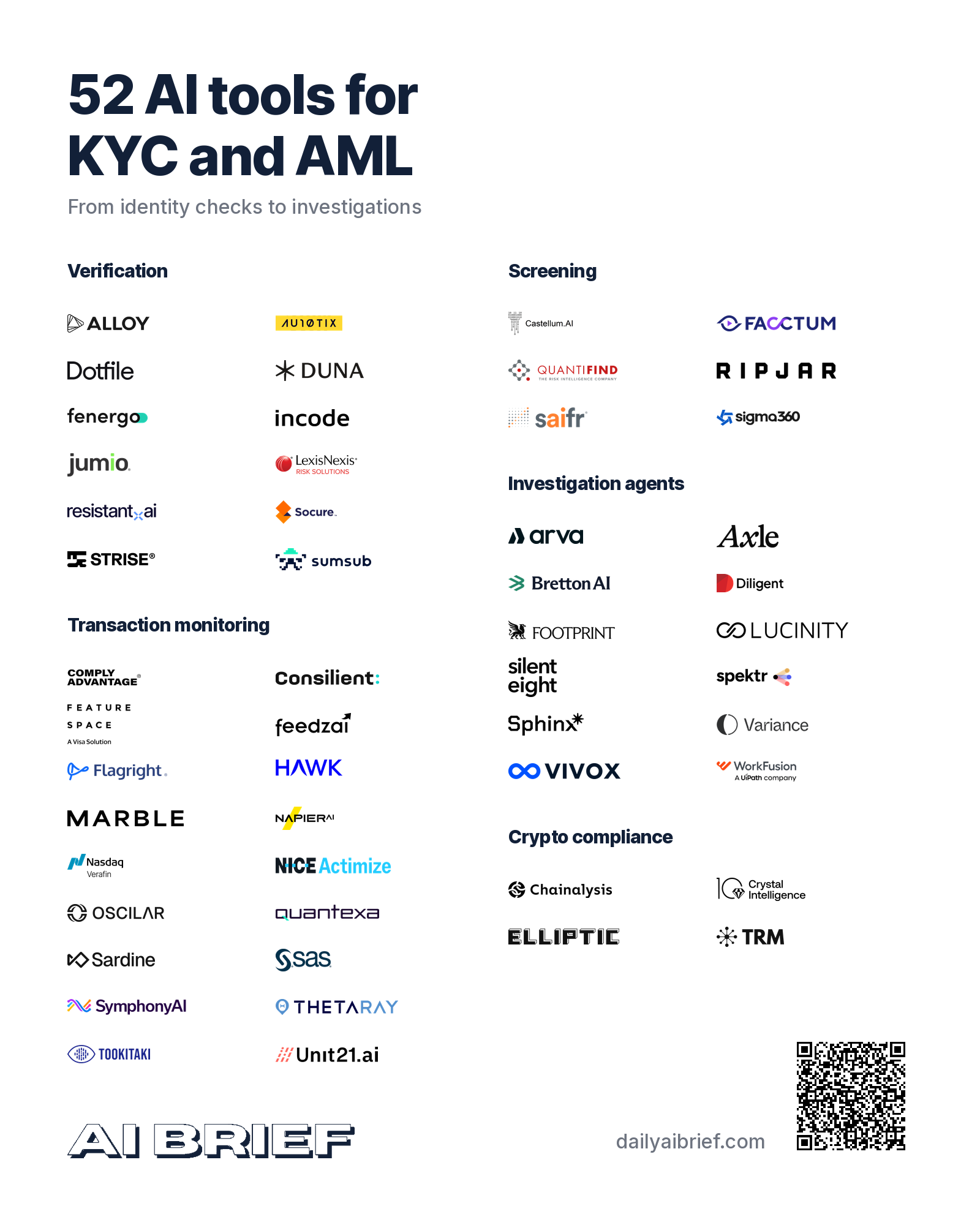
AI products that automate customer checks and anti money laundering work.

 Tensordyne
This Tensordyne whitepaper presents Napier, an inference-focused AI processor and rack-scale system based on the company’s TDN Math logarithmic number system. It examines infrastructure requirements for large mixture-of-experts and agentic models, compares major inference architecture approaches, and details the TDN AIP processor, TDN72 pod, TDN Link fabric, and Napier Ultra configuration. The paper reports simulation-based performance, cost, and accuracy-validation results, including Tensordyne’s projected comparison of one Napier rack with a nine-rack Nvidia Rubin plus Groq deployment; the chip is reported as taped out and in fabrication.
Read moreDaily AI Brief: the AI news that matters, in your inbox.