
myrtle.ai Sets STAC Records for Gradient Boosted Tree Inference
Myrtle.ai says VOLLO recorded latency below 2 microseconds across three gradient boosted tree models and processed up to 50 million inferences per second.
6 Oct 2026
myrtle.ai said in a press release that VOLLO built on its April low latency inference record, setting new STAC-ML Markets benchmark records for gradient boosted tree inference.
Silicon Brief covers stories like this, every Monday. Free.
In STAC audited tests, VOLLO recorded 99th percentile latency below 2 microseconds across all three models. For the smallest model, it processed 50 million inferences per second with 99th percentile latency of 1.77 microseconds. Myrtle.ai says the results reduced latency by more than 30% and increased throughput by at least five times compared with the previous best results.
The tests used an AMD Alveo V80LL Compute Accelerator in a Blackcore ICON 3132-SM+ server. Developers can also test their own models on VOLLO without using FPGA tools.
Where this comes from
PR Newswire myrtle.ai's VOLLO sets new STAC-ML records for gradient-boosted tree inferenceIn this story
More from Data Centers
Nov 24 Applied Optoelectronics signs $2.2 billion minimum supply deal with hyperscale customer Nov 24 Analog Devices fiscal 2026 revenue rises 38% to $15.2 billion as AI lifts data centre sales Nov 24 Axelera AI in talks to raise $400 million and seek EU chip subsidies, Bloomberg reports Nov 24 Kingsoft Cloud revenue rises 40% as AI cloud billings more than double Nov 24 US Commerce Department moves to add Megaspeed to Entity List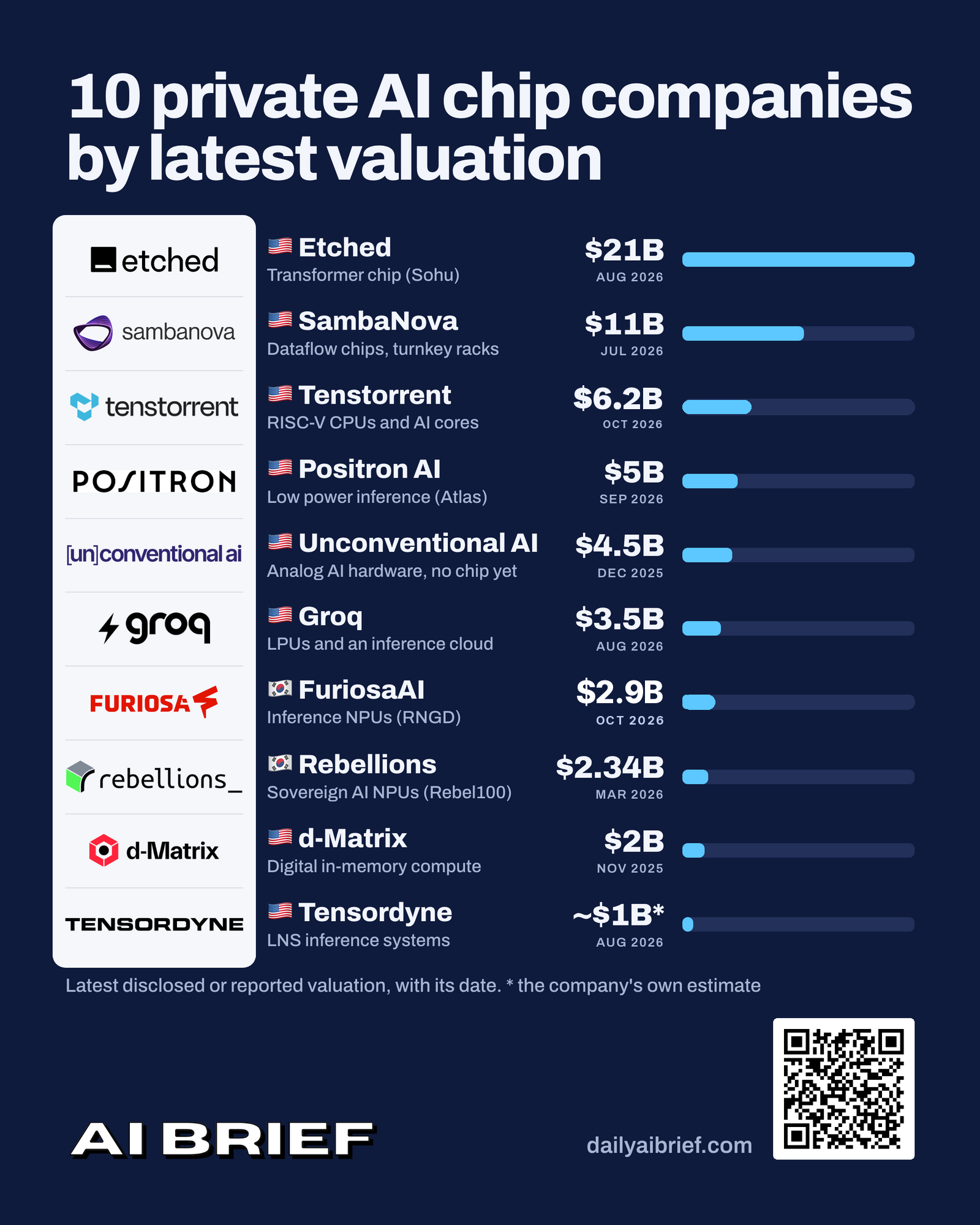
Whitepaper

Tensordyne Napier: What If One Rack Could Do the Work of Nine?
 Tensordyne
This Tensordyne whitepaper presents Napier, an inference-focused AI processor and rack-scale system based on the company’s TDN Math logarithmic number system. It examines infrastructure requirements for large mixture-of-experts and agentic models, compares major inference architecture approaches, and details the TDN AIP processor, TDN72 pod, TDN Link fabric, and Napier Ultra configuration. The paper reports simulation-based performance, cost, and accuracy-validation results, including Tensordyne’s projected comparison of one Napier rack with a nine-rack Nvidia Rubin plus Groq deployment; the chip is reported as taped out and in fabrication.
Read moreYou may also like
Marlowe raises $277 million at $1.15 billion valuation for AI inference sites 23 Nov 2026 MLPerf Training v6.1 adds first LLM post-training benchmark as Rubin and TPUv7 debut 16 Nov 2026 Luminal raises $25 million to run AI inference on chips beyond Nvidia's 12 Nov 2026 Tohoku University and AISIN Build AI Chip With 65.7 Millisecond Startup 2 Nov 2026 Microsoft releases seven MAI models at Ignite, led by MAI Code 2, and opens licensed weights 17 Nov 2026 Mistral AI Releases Mistral Large 4 Weights 29 Oct 2026Daily AI Brief: the AI news that matters, in your inbox.