Apate.AI Sends Undercover AI Agents to Gather Scam Intelligence
Oct 15, 2026
AI Agents
The IRS is piloting an agentic AI tool to handle the routine steps of potential fraud cases, Jim Clifford, director of return integrity and compliance services in the agency's Taxpayer Service Division, said at ACT-IAC's Service Delivery and Experience Summit, FedScoop reports.
The IRS already uses machine learning models to flag anomalies in tax returns. The agent would work after that point, organising correspondence with taxpayers and reading the documents they send. "What we want the agentic AI to do is review the response, summarize it, build a case, and hand it off to an employee at the point where it's really ready to make a decision," Clifford told FedScoop. He said "making judgments" will always stay with a person.
Clifford gave no timeline for deployment. He said the pilot is being developed in a separate workstream and will be scaled to other parts of the IRS "once it's tested and proven to be successful." He said the agency faces about 1 billion attempts each month by fraudsters to obtain unauthorised information. The Government Accountability Office estimates the federal government loses between $116 billion and $304 billion a year to tax fraud, according to FedScoop.
Consider subscribing to one of our newsletters like AI Policy Brief or Daily AI Brief.
Also, consider following us on social media:
Weekly report on AI regulations, safety standards, government policies, and compliance requirements worldwide.

 Tensordyne
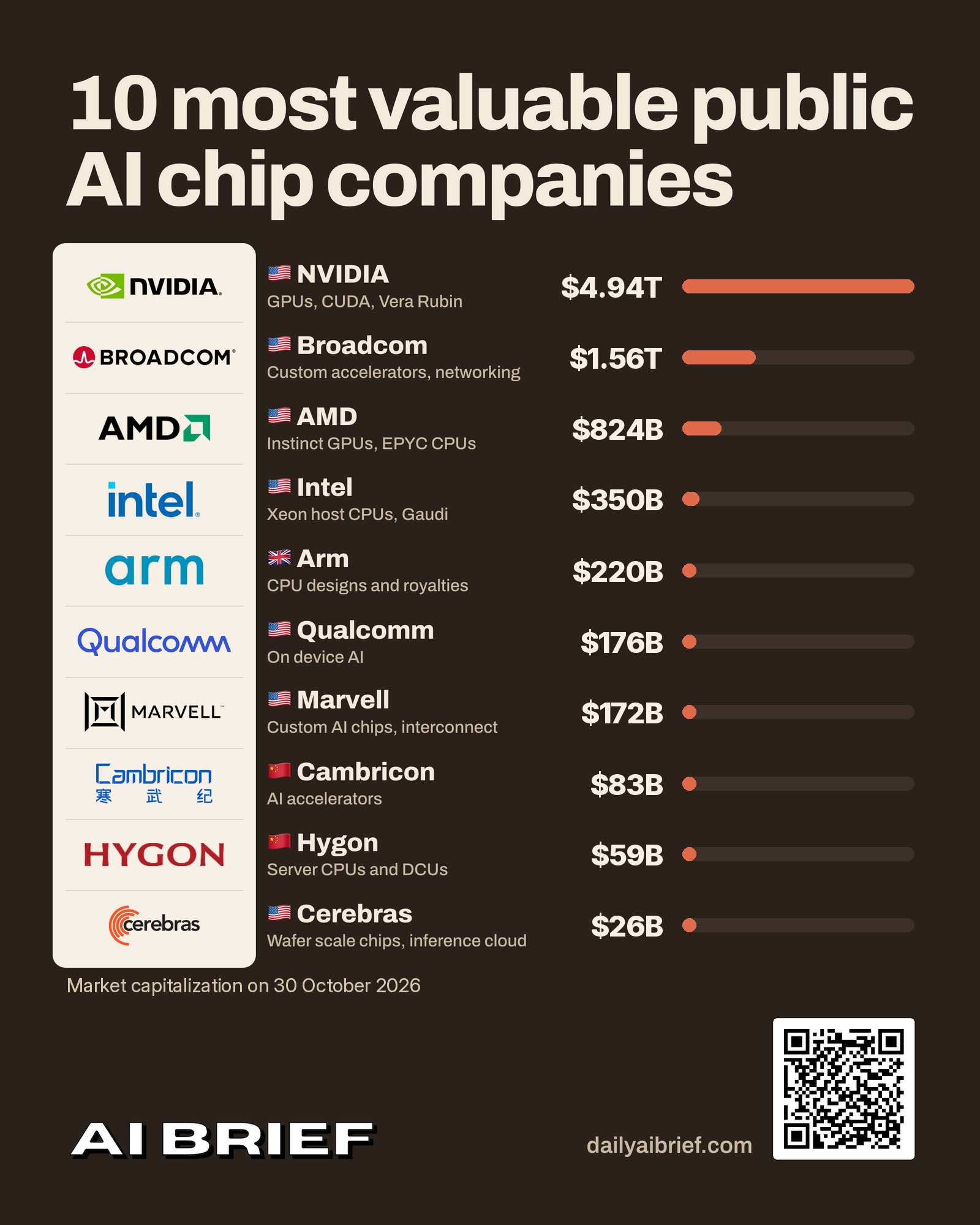
This Tensordyne whitepaper presents Napier, an inference-focused AI processor and rack-scale system based on the company’s TDN Math logarithmic number system. It examines infrastructure requirements for large mixture-of-experts and agentic models, compares major inference architecture approaches, and details the TDN AIP processor, TDN72 pod, TDN Link fabric, and Napier Ultra configuration. The paper reports simulation-based performance, cost, and accuracy-validation results, including Tensordyne’s projected comparison of one Napier rack with a nine-rack Nvidia Rubin plus Groq deployment; the chip is reported as taped out and in fabrication.
Read moreDaily AI Brief: the AI news that matters, in your inbox.