FLÆ Robotics raises over €1 million for hotel AI agent
Oct 14, 2026
Funding
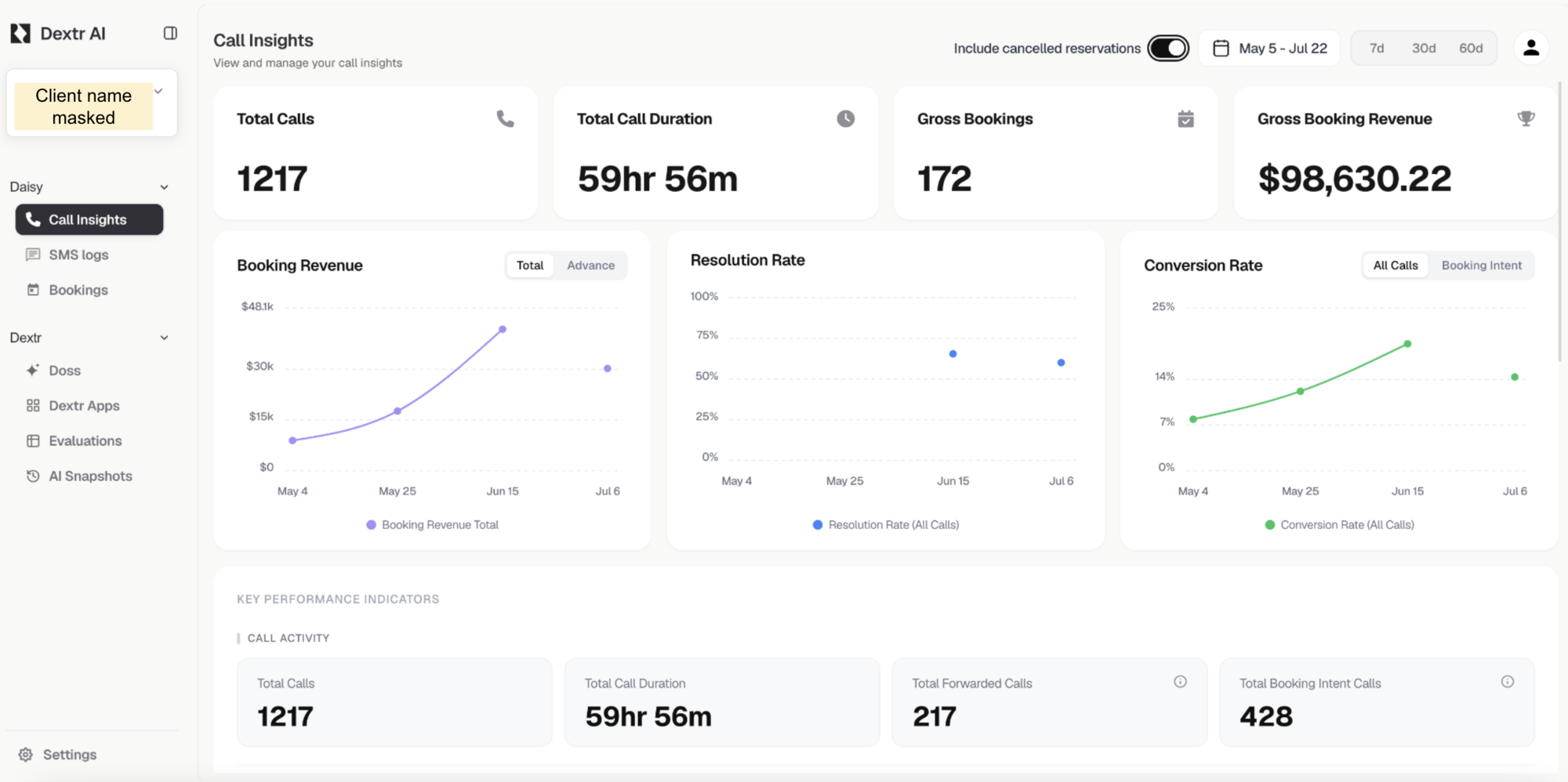
Dextr AI has raised $6.7 million in a seed round led by Elevation Capital, with participation from Foundation Capital, according to The Economic Times. The company sells AI agents to hotels, resorts and spas, covering voice AI, guest management, back office operations, staff management, sales and marketing.
Dextr operates in the US, Canada, the UK and Europe, including properties under Hilton, Wyndham, Best Western and IHG. The company says it processes more than one million interactions a month and handles tens of millions of dollars in payments through phone reservations each month. It plans to expand its deployments across global hospitality markets, including India.
Dextr also offers DOSS Gen 1, which its website describes as a control layer that lets hotel staff manage AI agents, workflows and property systems in natural language.
Consider subscribing to one of our newsletters like AI Funding Brief or Daily AI Brief.
Also, consider following us on social media:

 Tensordyne
This Tensordyne whitepaper presents Napier, an inference-focused AI processor and rack-scale system based on the company’s TDN Math logarithmic number system. It examines infrastructure requirements for large mixture-of-experts and agentic models, compares major inference architecture approaches, and details the TDN AIP processor, TDN72 pod, TDN Link fabric, and Napier Ultra configuration. The paper reports simulation-based performance, cost, and accuracy-validation results, including Tensordyne’s projected comparison of one Napier rack with a nine-rack Nvidia Rubin plus Groq deployment; the chip is reported as taped out and in fabrication.
Read moreDaily AI Brief: the AI news that matters, in your inbox.