
Cambridge Heartwear Wins £184 Million NHS Tender for ECG Wearable
Cambridge Heartwear secured a £184 million NHS tender for HeartSense, a reusable ECG wearable that combines multiple channel monitoring, AI analysis and wireless charging.
6 Oct 2026
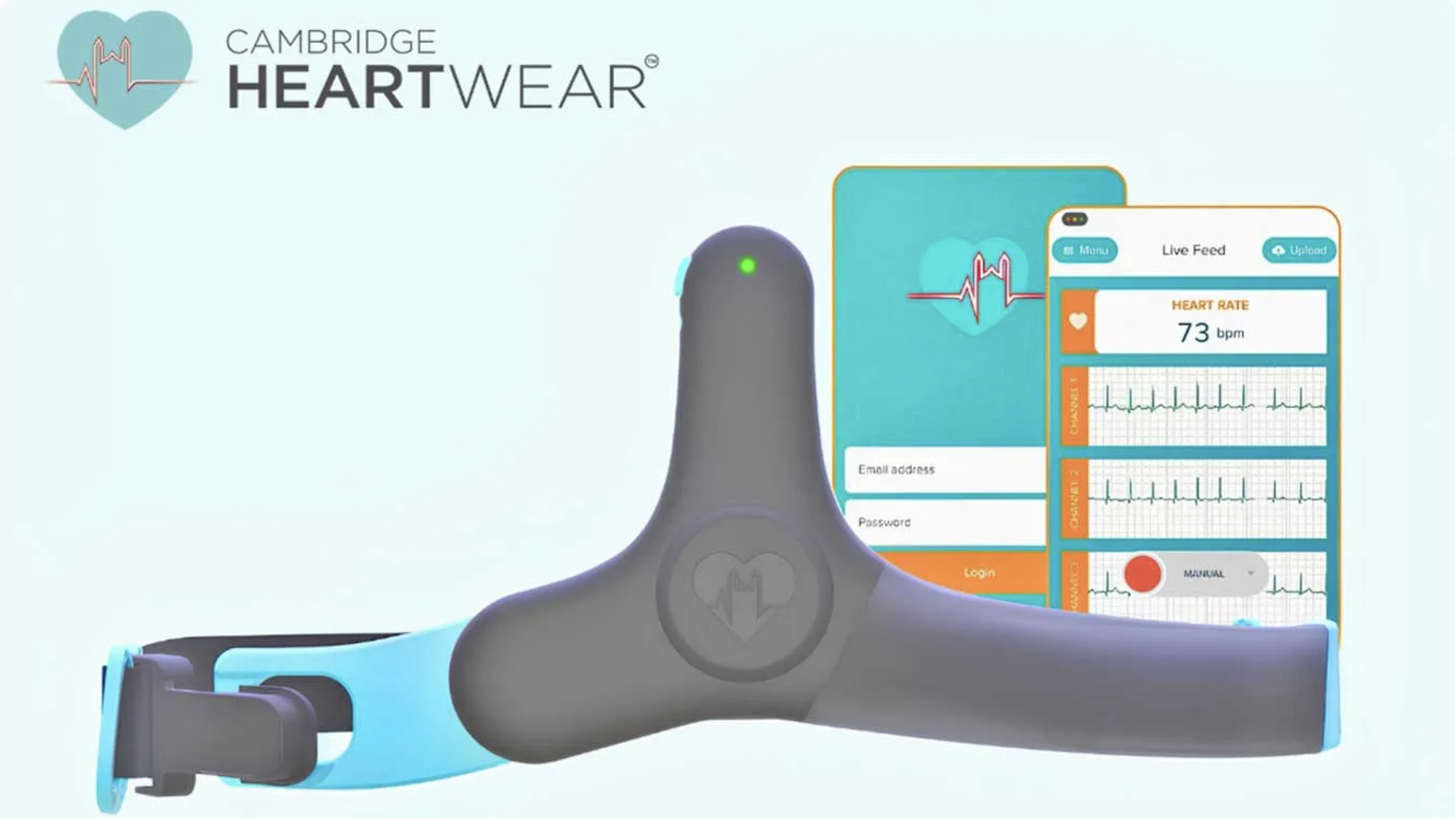
Cambridge Heartwear secured a £184 million tender with the NHS Supply Chain for its HeartSense ECG wearable, the company announced in a press release. The agreement allows NHS Integrated Care Boards to deploy the device across primary and secondary care.
AI in Europe covers stories like this, on Mondays, Tuesdays, Wednesdays, Thursdays, and Fridays. Free.
HeartSense combines multiple channel ECG monitoring, adaptive AI and wireless charging in a reusable device. It sends continuous ECG data to a mobile phone, allowing patients to record heart rhythm information outside hospitals and share it with clinicians.
The device is UKCA approved and manufactured in Britain. Cambridge Heartwear said an application for FDA 510(k) clearance is in progress.
Where this comes from
PR Newswire Cambridge Heartwear Awarded £184 Million NHS Tender for World's First Medical-Grade, Wirelessly Charged, Re...In this story
More from Life Sciences
Nov 24 Innovaccer adds xAI's Grok Voice to its Gravity Voice healthcare AI agents Nov 23 UK regulators open AI in Mental Health Airlock sandbox Nov 23 Twin Health says AI-guided GLP-1 programme saved one employer $3.09 million Nov 23 GE HealthCare adds AI assistant and AI protocoling to Imaging 360 Nov 23 AI second reader has helped review 62,661 chest X-rays at two English hospitalsWhitepaper

Tensordyne Napier: What If One Rack Could Do the Work of Nine?
 Tensordyne
This Tensordyne whitepaper presents Napier, an inference-focused AI processor and rack-scale system based on the company’s TDN Math logarithmic number system. It examines infrastructure requirements for large mixture-of-experts and agentic models, compares major inference architecture approaches, and details the TDN AIP processor, TDN72 pod, TDN Link fabric, and Napier Ultra configuration. The paper reports simulation-based performance, cost, and accuracy-validation results, including Tensordyne’s projected comparison of one Napier rack with a nine-rack Nvidia Rubin plus Groq deployment; the chip is reported as taped out and in fabrication.
Read moreYou may also like
Kardi AI Raises €5.3 Million for Heart Monitoring Expansion 11 Nov 2026 Taiwan hospital accelerator T+ MedIC names AI ECG and CT screening tools as first winners 13 Nov 2026 IntelliProve raises €2.7 million to measure vital signs through any camera 19 Nov 2026 Knit Health raises $35 million to roll out its healthcare world model 19 Nov 2026 NHS starts recruiting for AI breast screening trial of nearly 700,000 women 23 Nov 2026 Heartflow Sues Elucid Over Cardiac Imaging AI 27 Oct 2026Daily AI Brief: the AI news that matters, in your inbox.