
FBI warns ARTEX lets attackers automate intrusions at machine speed
Nov 14, 2026
Cybersecurity
Network and email security company Barracuda says hackers who breached its cloud environment used a stolen cloud access key and the open-source ARTEX AI penetration testing framework, BleepingComputer reports.
The attacker accessed about 10 Barracuda cloud accounts over 44 hours on 1 and 2 November, and the intrusion was discovered on 4 November. The key had been given to a third-party AI vendor for an earlier project and was never retired. "That is on us," Barracuda said. It believes the key was stolen in October from a configuration file in the vendor's GitHub repository.
Using credentials found along the way, the attacker moved through Barracuda's data analytics environment, source code repositories and Kubernetes clusters, and targeted cryptocurrency secrets such as private keys and seed phrases. Barracuda believes the attack was financially motivated but does not rule out a diversion. Labels, probing methods and hunting routines matched ARTEX, and the company says the attack resembled a recent incident at cloud host Railway.
The attacker reached a system holding customer integration credentials for Barracuda XDR, though Barracuda found no evidence they were taken. It asked potentially affected customers to revoke and recreate those credentials, according to BleepingComputer.
Consider subscribing to one of our newsletters like Cybersecurity AI Weekly or Daily AI Brief.
Also, consider following us on social media:
Weekly newsletter about AI in Cybersecurity.
 Tensordyne
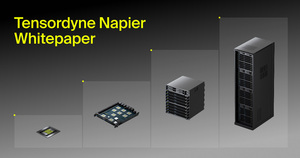
This Tensordyne whitepaper presents Napier, an inference-focused AI processor and rack-scale system based on the company’s TDN Math logarithmic number system. It examines infrastructure requirements for large mixture-of-experts and agentic models, compares major inference architecture approaches, and details the TDN AIP processor, TDN72 pod, TDN Link fabric, and Napier Ultra configuration. The paper reports simulation-based performance, cost, and accuracy-validation results, including Tensordyne’s projected comparison of one Napier rack with a nine-rack Nvidia Rubin plus Groq deployment; the chip is reported as taped out and in fabrication.
Read moreDaily AI Brief: the AI news that matters, in your inbox.