Cisco Talos Finds Volta Infostealer Using AI Models to Profile Victims
Oct 31, 2026
Cybersecurity
Researchers at Varonis have detailed TheMailer, a phishing kit that uses large language models to run most of an attack, including rewriting lures until they get past spam filters, Dark Reading reports.
Buyers pay between $3,000 and $6,000 in cryptocurrency for a lifetime licence, plug in their own API key and choose a model from options including Claude, ChatGPT, DeepSeek, Grok, Gemini and Mistral. They only need to bring mail servers, proxies and target lists. The kit can write lures from a short prompt or a real brand email, personalise each message, remove signs of AI writing and tailor content to each mail provider.
"Every recipient gets their own version of the email, subject line, and attachment, so a bulk campaign no longer looks like one," said Varonis researcher Daniel Kelley, pointing to seller screenshots of a campaign of nearly 25,000 emails and a list of more than 145,000 targets. He called it "opportunistic phishing with the polish of something targeted" and expects more kits to follow.
Varonis recommends enforcing SPF, DKIM and DMARC, monitoring lookalike and new domains, and checking links through full redirect chains at the time of the click, according to Dark Reading.
Consider subscribing to one of our newsletters like Cybersecurity AI Weekly or Daily AI Brief.
Also, consider following us on social media:
Weekly newsletter about AI in Cybersecurity.
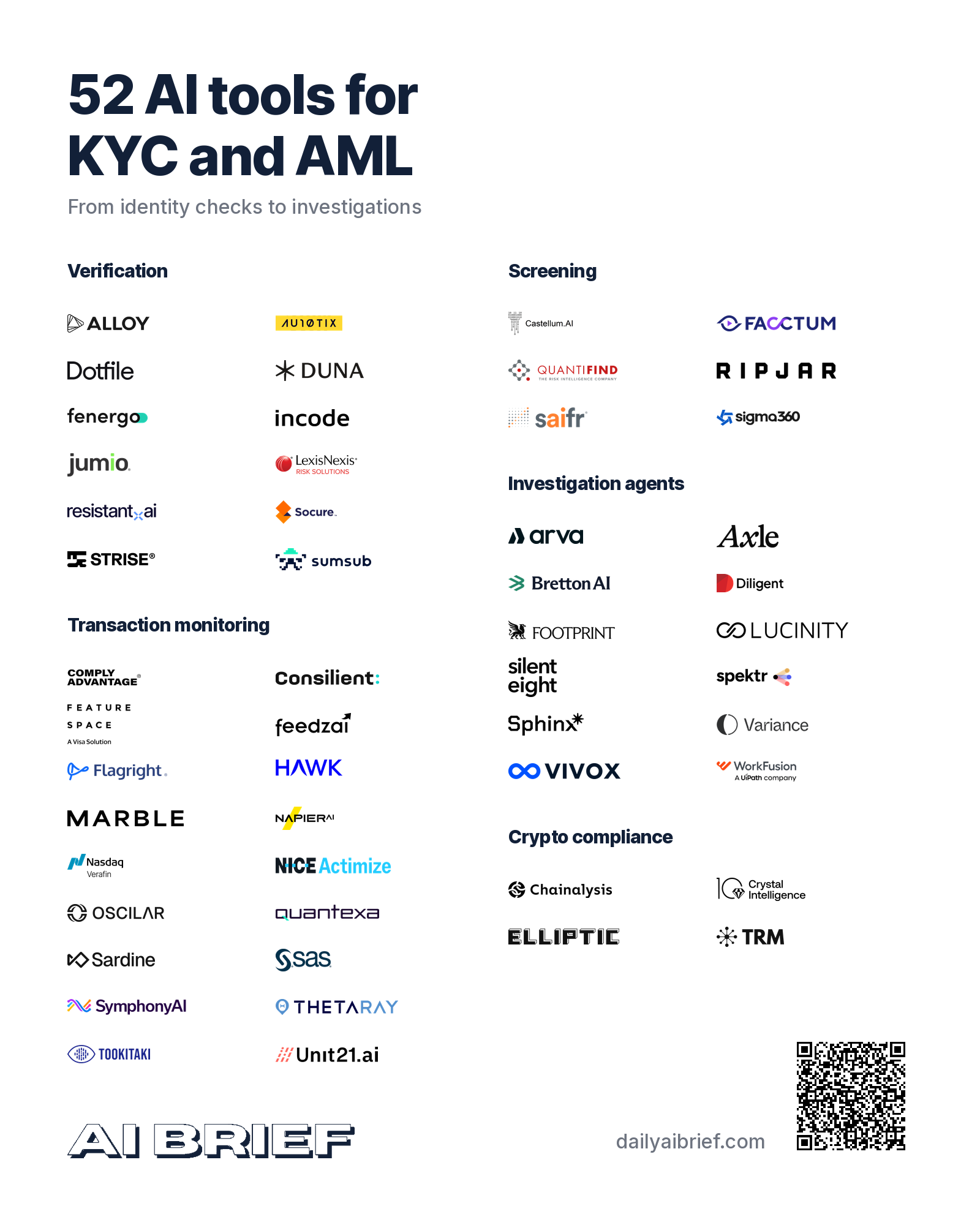
AI products that automate customer checks and anti money laundering work.

 Tensordyne
This Tensordyne whitepaper presents Napier, an inference-focused AI processor and rack-scale system based on the company’s TDN Math logarithmic number system. It examines infrastructure requirements for large mixture-of-experts and agentic models, compares major inference architecture approaches, and details the TDN AIP processor, TDN72 pod, TDN Link fabric, and Napier Ultra configuration. The paper reports simulation-based performance, cost, and accuracy-validation results, including Tensordyne’s projected comparison of one Napier rack with a nine-rack Nvidia Rubin plus Groq deployment; the chip is reported as taped out and in fabrication.
Read moreDaily AI Brief: the AI news that matters, in your inbox.