ASUS Expands AI Infrastructure From Cloud to Edge
Sep 05, 2026
Data Centers
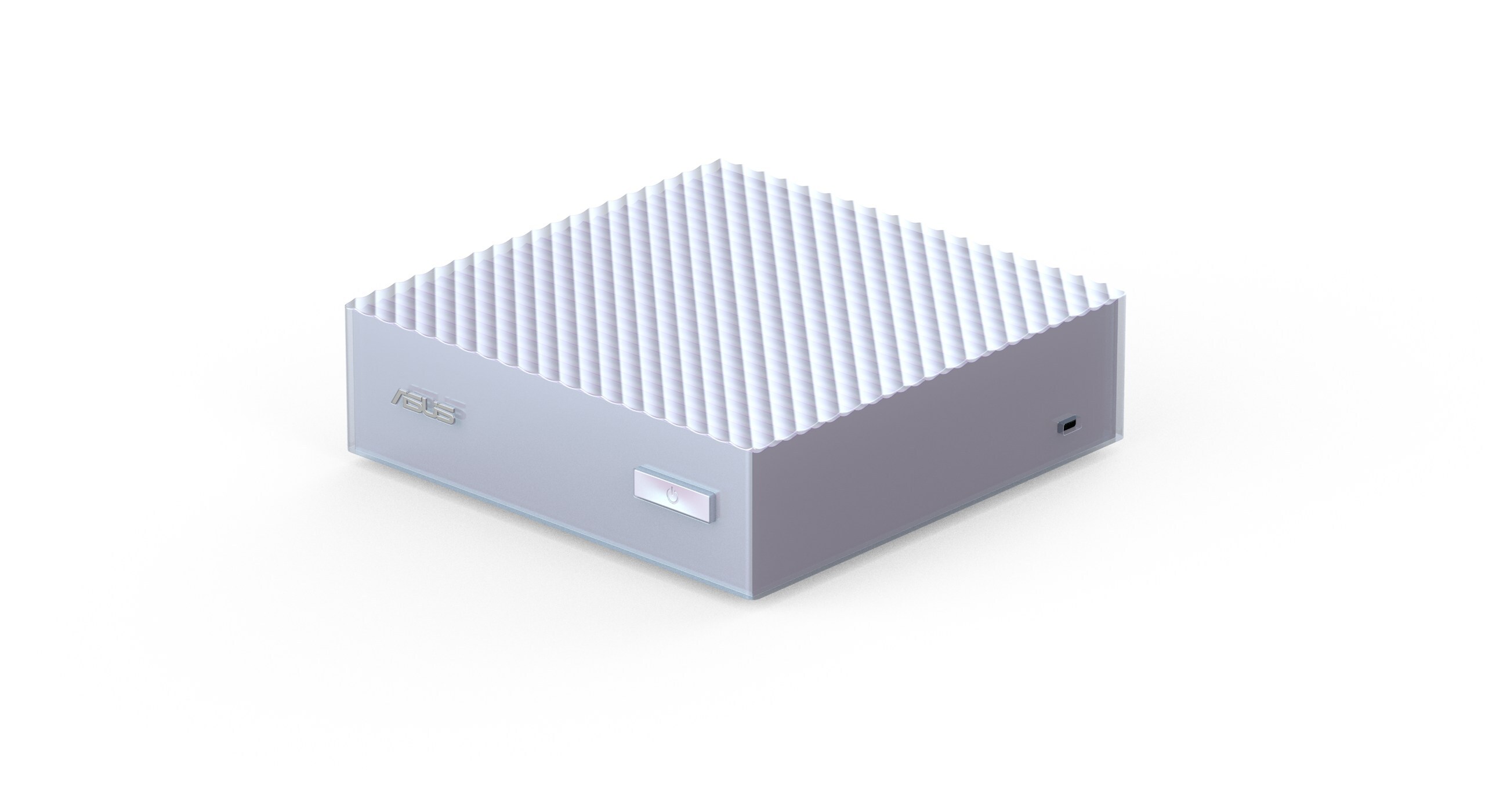
ASUS has announced its new AI supercomputer, the Ascent GX10, powered by the NVIDIA GB10 Grace Blackwell Superchip, announced in a press release. This compact device delivers up to 1,000 trillion operations per second (TOPS) of AI performance, making it a powerful tool for developers, AI researchers, and data scientists.
The Ascent GX10 features a cutting-edge architecture with a Blackwell GPU, a 20-core Arm CPU, and NVLink-C2C technology, which enhances AI workloads by providing a cohesive CPU+GPU memory model. This setup allows the system to handle AI models with up to 200-billion parameters, supported by 128GB of unified system memory.
Designed for scalability, the GX10 can be configured as a standalone or private-cloud system, and two units can be connected via ConnectX-7 NICs to manage even larger models. The device is set to be available for pre-order in Q2 2025, with more information accessible through the ASUS website.
Consider subscribing to one of our newsletters like Silicon Brief or Daily AI Brief.
Also, consider following us on social media:
Weekly coverage of AI hardware developments including chips, GPUs, cloud platforms, and data center technology.


 Tensordyne
This Tensordyne whitepaper presents Napier, an inference-focused AI processor and rack-scale system based on the company’s TDN Math logarithmic number system. It examines infrastructure requirements for large mixture-of-experts and agentic models, compares major inference architecture approaches, and details the TDN AIP processor, TDN72 pod, TDN Link fabric, and Napier Ultra configuration. The paper reports simulation-based performance, cost, and accuracy-validation results, including Tensordyne’s projected comparison of one Napier rack with a nine-rack Nvidia Rubin plus Groq deployment; the chip is reported as taped out and in fabrication.
Read moreDaily AI Brief: the AI news that matters, in your inbox.