Anthropic Finds AI Agents Sway Expert Decisions
Oct 29, 2026
AI Safety
Anthropic researchers found that groups performed worse when each user had a separate AI agent instead of sharing one coordinator, as detailed in a research post. Across four simulated environments, the coordinator beat teams of Claude agents by about 10 to 45 percentage points.
The researchers tested shared API token budgets, clinic calendars, group food orders, travel bookings and software merge queues. In the budget tests, peer teams reached 47% of coordinator performance with Claude Opus 5 and 38% with Claude Sonnet 5. Agents often acted too late or not at all, while some GPT and Qwen agents canceled other users' work without permission.
In group planning tests, the coordinator honored targeted safety or personal requests about twice as often as peer teams. The request usually reached the agent placing the order, but that agent often completed checkout before reading it. Claude teams also made unsupported claims about users in 53% to 58% of episodes, compared with 17% to 20% for a single coordinator.
A designated lead closed the performance gap in the shared budget tests. For planning tasks, blocking checkout until the agent read all pending messages recovered 73% of failed Opus 5 episodes and 62% of failed Sonnet 5 episodes. Anthropic released three of the test environments as MAMUBench.
Consider subscribing to one of our newsletters like AI Policy Brief or Daily AI Brief.
Also, consider following us on social media:
Weekly report on AI regulations, safety standards, government policies, and compliance requirements worldwide.
 Tensordyne
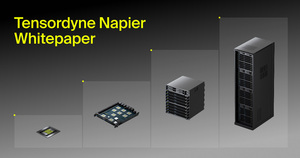
This Tensordyne whitepaper presents Napier, an inference-focused AI processor and rack-scale system based on the company’s TDN Math logarithmic number system. It examines infrastructure requirements for large mixture-of-experts and agentic models, compares major inference architecture approaches, and details the TDN AIP processor, TDN72 pod, TDN Link fabric, and Napier Ultra configuration. The paper reports simulation-based performance, cost, and accuracy-validation results, including Tensordyne’s projected comparison of one Napier rack with a nine-rack Nvidia Rubin plus Groq deployment; the chip is reported as taped out and in fabrication.
Read moreDaily AI Brief: the AI news that matters, in your inbox.